Community Gardens and Urban Farm: Land Acquisition

by Lucy Weiss*

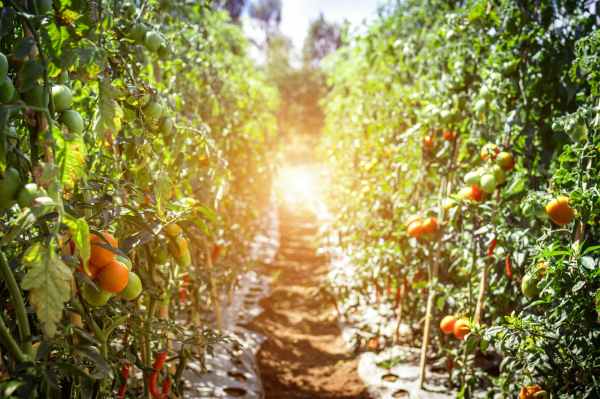
Community gardens and urban farms are often thought of in conjunction with one another. After all, they share similarities; both are places where people, typically small-scale producers, come together to grow fruits and vegetables, and both provide consumers access to local produce. Both community gardens and urban farms benefit those who grow/purchase fresh produce, and the environment more generally. They recharge groundwater, prevent erosion, and mitigate dust impacts to cities. Community gardens and urban farms also face similar challenges including land acquisition, rising water rates, and climate change. Despite their overlaps, it is worth noting the distinctions between community gardens and urban farms, because these differences can  affect how they function. Urban farms typically have the goal of turning a profit whereas community gardens, which are run by residents and non profit organizations, tend to orient themselves toward education and facilitating relationships between people and nature. These divergent goals result in different models of operation. For instance, urban farms have fewer people doing more of the labor and getting paid for it. In community gardens, however, individuals often have their own plots of land and pay a membership fee to garden. Produce grown at community gardens is also eaten by individuals rather than sold for profit. Land acquisition also functions differently for urban farms and community gardens, which I will discuss in this post. 

Continue reading “Community Gardens and Urban Farm: Land Acquisition”

Changelab Solutions Webinar on Food Systems and Health Inequity

by Kyle Winterboer*

ChangeLab Solutions works nationwide to bring about healthier and equitable communities through law and policy. Their ongoing six-part virtual engagement series “Uprooting the Structural Drivers of Health Inequity” is focused on ways that organizations and advocates are addressing inequity in their efforts to improve outcomes. Their recent webinar was the fifth installations of the series, was focused on food systems, and featured an expert panel discussing Policy Solutions for a Values-Based Food System.

Previous episodes can be found on their website, and a recording of Monday’s Panel will be made available at: https://www.changelabsolutions.org/product/food-systems

Below find a list of the expert panelists. Additionally, find a summary by one of the Resnick Center’s Summer Research Assistants, Kyle Winterboer, who attended the webinar on Monday, June 28, 2021.

Expert Panel:

  • Jose Oliva, campaigns director, HEAL Food Alliance
  • Karen Bassarab, senior program officer, Food Communities & Public Health, Johns Hopkins Center for a Livable Future
  • Vinny Eng, community organizer and founding member, SF New Deal 
  • Abbey Piner, project lead, Community Food Strategies, Center for Environmental Farming Systems, North Carolina State University
  • LaShauna Austria, Founder, Kindred Seedlings Farm, and Racial Equity Coach, Community Food Strategies
  • Nessia Berner Wong, senior policy analyst, ChangeLab Solutions (moderator)
Continue reading “Changelab Solutions Webinar on Food Systems and Health Inequity”

Website Powered by WordPress.com.

Up ↑