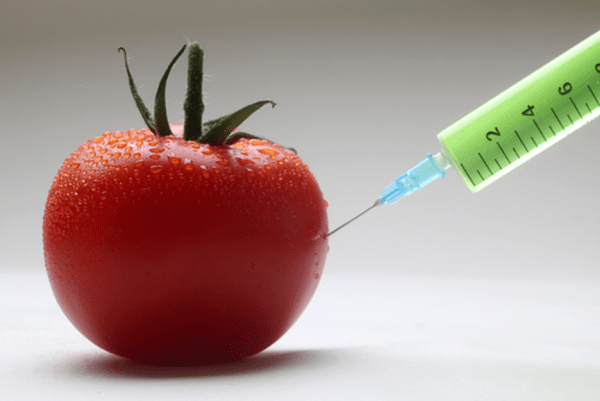
Edible Vaccines: The Intersection of Agriculture, Medicine, and Regulation

by Chidera Anthony-Wise*

Farmers might just be the new pharmacists. 

Through scientific breakthroughs, plant products can be genetically modified to deliver immunity against diseases. These “edible vaccines” present remarkable possibilities at the intersection of agriculture and biotechnology. 

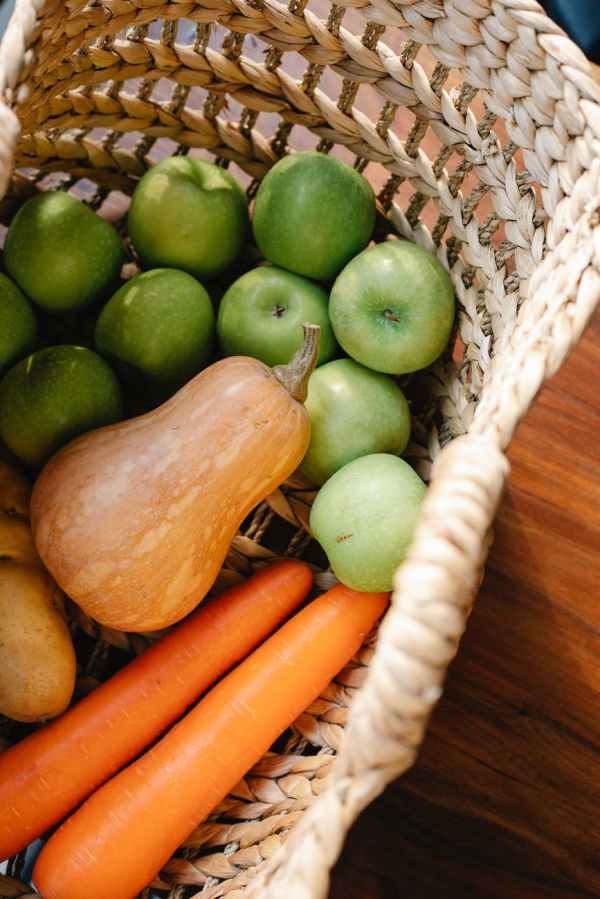
One such possibility is to assist immunization efforts on national and global scales. Many low-income nations and US cities such as Chelsea, Massachusetts and Hyde Park, New York lack essential access to vaccines due to expensive costs, maintenance challenges, and improper distribution. The use of common fruits and vegetables as vehicles to immunity could, for this reason, be a tool toward achieving equity. In addition to disease protection, edible vaccines can also be used to alleviate malnutrition because highly nutritious foods, such as tomatoes, lettuce, bananas, corn, and rice, are frequently used as host plants. 

History

In the 1990s, Dr. Charles Arntzen and his team spearheaded the production of an early edible vaccine, a surface protein antigen A derived from Streptococcus mutans successfully expressed in tobacco. This edible vaccine has the capability of alleviating infectious endocarditis, or bacteria occupation in the inner lining of the heart. Arntzen and his colleagues went on to develop a heat-labile toxin, B subunit in potatoes to potentially treat hepatitis B. There is a large focus on protein production in relation to edible vaccine efficacy, as antibodies and protective white blood cells are created by the immune system in the presence of spike (S) proteins. Therefore, to showcase that plant-derived hepatitis B surface antigen could generate a mucosal immune response, host plant potatoes have been optimized to become protein-rich. Other edible vaccine examples include transgenic carrots against HIV and E coli, lettuce against malaria, and spinach against rabies.

Continue reading “Edible Vaccines: The Intersection of Agriculture, Medicine, and Regulation”
The Urgent Need to Update the Regulation of GM Crops

by Alice Carli*

Humans have been altering plants for upwards of 10,000 years through a wide variety of techniques for genetic modification. In the 20th century, scientists developed transgenic genetic engineering, which combines DNA from two or more sources to achieve a desired trait. This discovery fundamentally altered our ability to manipulate crops and opened a Pandora’s box of commercial possibilities and political conflicts. More recently, the advent of CRISPR and other precision gene editing technologies has resurfaced tensions around the role of genetically modified (“GM”) crops in our agricultural and food systems.

Despite these longstanding tensions, the U.S. has the world’s largest production of GM crops by acreage, and it is estimated that over 75% of processed foods on our supermarket shelves contain genetically engineered ingredients.

At the same time, the country faces systemic sustainability challenges exacerbated by climate change and intensive monoculture farming. These include flooding, soil degradation, air and water pollution, and biodiversity collapse. Significant and holistic changes to U.S. agriculture are needed to tackle these problems.

If regulated effectively, GM crops have the potential to make U.S. agriculture more sustainable and climate resilient. When designed with climate-smart features, these crops can significantly enhance nutrient or photosynthesis efficiency, provide flood, drought, and disease resistance, and even improve soil carbon sequestration.

Continue reading “The Urgent Need to Update the Regulation of GM Crops”

Discovering agricultural careers with the USDA: a summer program for teens

by Rosalie Winters*

[This is one in a series of occasional posts by Los Angeles high school students working with and studying food systems.]

This summer I attended the AgDiscovery program at Lincoln University in Jefferson City, Missouri. AgDiscovery is a program for high school students, and it is run by the USDA at multiple land grant universities nationwide. It aims to help teenagers explore careers in agricultural sciences. Each program across the country is unique, specializing in animal science, plant science, agribusiness, or a combination of the three, with pieces added that may explore topics like agricultural history or urban farming. You are only allowed to apply to one school, so it is important to choose one that includes things you are passionate about. The program at Lincoln is a combination, providing students with an introduction to the many moving parts that make up the country’s agricultural systems. This appealed to me because while I was very interested in agriculture, I knew almost nothing about it. 

The program at Lincoln included four distinct components. The first of these was a lecture series on varying agricultural topics. For example, we heard an etymologist speaking about different invasive species of insects and how they can affect various crops; a speaker discussing native plants and showing us some of the different species native to Missouri; and had a lesson on scientific writing and how to put together research. These informative lectures allowed us to gain a background for the things that we were seeing and experiencing in person. 

Continue reading “Discovering agricultural careers with the USDA: a summer program for teens”

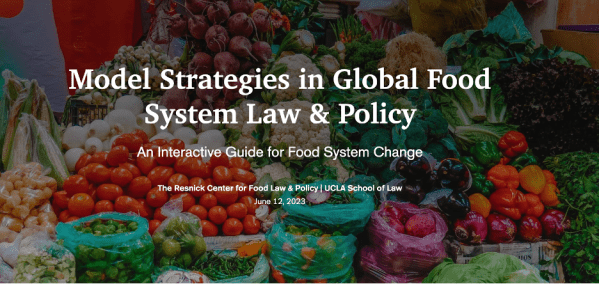
Just Released: Model Strategies in Global Food System Law & Policy

The Resnick Center for Food Law & Policy is thrilled to present: “Model Strategies in Global Food System Law and Policy,” an interactive issue brief series designed to democratize sustainable, equitable, and inclusive systems-thinking approaches to food governance.

This project was made possible due to a generous gift by the non-profit Seeding the Future Van Lengerich Foundation

Drawing from laws, policies, and research from around the world, the series makes the case for a paradigm shift in how we conceptualize and govern food. Rather than adopt narrowly-defined and siloed laws and policies, public and private policymakers should advance food system laws and policies , i.e., solutions that are holistic, multi-disciplinary, and which account for the diverse set of actors, activities, and feedback loops that comprise the food system.

The Resnick Center invites policymakers and other stakeholders to explore the featured model strategies and accompanying issue briefs to learn how countries around the world are successfully leveraging laws and policies to respond to the most pressing and complex food system challenges.

View the interactive story map here.

From Covid 19 to War in Ukraine: Anatomy of the Global Food Crisis in 2022

by Hilal Elver*

In March 2020 the world was shut down along with much of the global economy to avoid the spread of the powerful virus COVID-19. Suddenly, the so-called “efficient” global food supply chains were dismantled, harvests were left in the soil, food workers returned to their homes, the major organizing principle of supply and demand balance all but disappeared, and quite simply, the global food market as we knew it came alarmingly close to collapse. COVID-19 arrived at a time that food production was historically high, and prices low, but constraints on the movements of people and goods left many people without food, and global food systems entered an unusual stalemate. These results were not entirely unpredictable, but the world was unprepared to cope with the challenge. This was true in many countries and regions in both the Global North and Global South. As a result, the number of hungry people has increased by 150 million since the outbreak of the pandemic.

While the world was still struggling with many variants of Covid-19, and full recovery is not yet in sight, the February 24, 2022, invasion of Ukraine by the Russian Federation brought about a further deterioration in global food trade as these two countries happened to be major players in the global grain market.  Today’s food markets are heavily reliant on international food trade. Since the early 1990s, nearly a quarter of all food produced crosses international borders. The high dependency on global grain imports for the food security of many countries in the Middle East and Africa is causing a severe food crisis in many parts of the world.

FAO State of Hunger and Malnutrition Report 2022

On July 6, 2022, in the middle of multiple unresolved crises, the United Nations Food and Agriculture Organization (FAO), World Food Program (WFP), International Fund for Agriculture Development (IFAD) (Those three are called UN Rome-based institutions), World Health Organization (WHO), and United Nations Children Fund (UNICEF) published their annual flagship report on progress toward ending hunger, achieving food security, and improving nutrition. The major message of the State of Food Security and Nutrition in the World Report (SOFI) was that “the world is moving in the wrong direction” to end hunger, food insecurity, and all forms of malnutrition. The SOFI 2022 report projects that nearly 670 million people, or 8% of the world’s population, will be affected by hunger in 2030, instead of the “zero hunger” target Nr. 2 of the Sustainable Development Goals (SDG) that were adopted by the United Nations in 2015. SOFI assesses the relevance of conflicts, including the most recent war in Ukraine, along with climate extremes and economic shocks. Additionally, for the first time, the report adds growing inequalities as major drivers of food insecurity and malnutrition.

Continue reading “From Covid 19 to War in Ukraine: Anatomy of the Global Food Crisis in 2022”

ENVIRONMENT AND HUMAN RIGHTS DURING ARMED CONFLICT: NORMATIVE AND LEGAL FRAMEWORK

Protection of Right to Food and Environment in Times of Armed Conflict

by Hilal Elver*

The following is the keynote address given by Hilal Elver to the Geneva Academy on June 8, 2022. Footnotes at end of article.

Internal and international armed conflicts are one of the major reasons for increased food insecurity and malnutrition. Despite well-established norms of international human rights law and international humanitarian law protecting the right to food, hunger and  malnutrition, as well as famine has skyrocketed in last few years. There is a shocking failure in addressing criminal acts of deliberate starvation and other severe violations of a fundamental human right: the “right to food.” This non-compliance by States and other political actors as well as the reluctance to implement existing international norms to protect human rights and the environment in times of war is a critical failure of international community.

Most recently, the war in Ukraine has elevated catastrophic hunger and malnutrition levels to the top of the global agenda. The war has raised awareness of ongoing widespread hunger and malnutrition even beyond Ukraine, as the parties to the conflict are the major players of global agricultural trade.

Article 11 of the International Covenant on Economic Social and Cultural Rights specifically recognizes “the fundamental right of everyone to be from hunger,” which further imposes an obligation on States to ensure “the satisfaction of, at the very least, the minimum essential level” of this right under all circumstances, including the times of war. Freedom from hunger is accepted as part of customary international law, rendering it binding for all states regardless of whether they are party to the Covenant. States cannot put aside or postpone the realization of this core component of the body of economic and social rights. According to their international legal obligations, States must continue to take deliberate and targeted steps using all appropriate means to fulfill these rights, even in times of conflict.  Yet, 60% of the people suffering from hunger and malnutrition globally live in conflict-ridden places, mostly in the Middle East and Africa.

Continue reading “ENVIRONMENT AND HUMAN RIGHTS DURING ARMED CONFLICT: NORMATIVE AND LEGAL FRAMEWORK”

JOB POST! Center for Biological Diversity: Food and Agriculture Policy Specialist

Happy holiday season! Welcome to a new feature of On Food Law – job postings in food law and policy. As we come across them, we will post links to current job openings – the title of the post will always start with “Job Post” (for searches).

We will also post job openings on our Instagram stories (@uclafoodlawcenter).

Please keep in mind that we are not vetting or monitoring these openings, just posting. And please send any food law and policy job openings to winters@law.ucla.edu.

Click here for the CENTER FOR BIOLOGICAL DIVERSITY: Food and Agriculture Policy Specialist listing.

Commentary – It is Time for the United States to Learn About the Right to Food.

by Hilal ElverMichael T. RobertsDiana R.H. Winters, and Melissa Shapiro

Cross-posted on HilalElver.org

On US Election Day 2021, the state of Maine voted in favor of a constitutional “right to food”—a historic development for a country that has long refused to recognize the human right to food.

Will the US finally acknowledge that this right actually exists?

Maine is officially the first US state to recognize a right to food. On Election Day this year, more than 60% of voters agreed that Maine should amend the state constitution “to declare that all individuals have a natural, inherent and unalienable right to grow, raise, harvest, produce and consume the food of their own choosing for their own nourishment, sustenance, bodily health and well-being.” Put simply, those in Maine will have agency over how they procure their food within the bounds of food safety laws and quality controls. The “right to food” amendment, which was proposed by Rep. Billy Bob Faulkingham (R-Winter Harbor) and received bipartisan support, was welcomed by a diverse constituency comprising small farmers, libertarians, liberals and those who believe that local producers should not have to compete with corporate food interests.

 Observing how Maine practically applies the “right to food” amendment in furtherance of the stated objective is critical. It will be necessary for Maine legislators to work closely with other state agencies to ensure that emerging programs and policies do not violate federal and state laws. It is also important for future decision-making to involve open consultation and participation from civil society and private sector. Being a trailblazer means that the path forward is not always clear; but those who have already dismissed the historic amendment as an empty promise or inoperable language are missing the point: Maine’s constitutional amendment is a transformative step towards the United States’ formal recognition of the human right to food.

Continue reading “Commentary – It is Time for the United States to Learn About the Right to Food.”

Community Gardens and Urban Farm: Land Acquisition

by Lucy Weiss*

Community gardens and urban farms are often thought of in conjunction with one another. After all, they share similarities; both are places where people, typically small-scale producers, come together to grow fruits and vegetables, and both provide consumers access to local produce. Both community gardens and urban farms benefit those who grow/purchase fresh produce, and the environment more generally. They recharge groundwater, prevent erosion, and mitigate dust impacts to cities. Community gardens and urban farms also face similar challenges including land acquisition, rising water rates, and climate change. Despite their overlaps, it is worth noting the distinctions between community gardens and urban farms, because these differences can  affect how they function. Urban farms typically have the goal of turning a profit whereas community gardens, which are run by residents and non profit organizations, tend to orient themselves toward education and facilitating relationships between people and nature. These divergent goals result in different models of operation. For instance, urban farms have fewer people doing more of the labor and getting paid for it. In community gardens, however, individuals often have their own plots of land and pay a membership fee to garden. Produce grown at community gardens is also eaten by individuals rather than sold for profit. Land acquisition also functions differently for urban farms and community gardens, which I will discuss in this post. 

Continue reading “Community Gardens and Urban Farm: Land Acquisition”

Website Powered by WordPress.com.

Up ↑