Edible Vaccines: The Intersection of Agriculture, Medicine, and Regulation

by Chidera Anthony-Wise*

Farmers might just be the new pharmacists. 

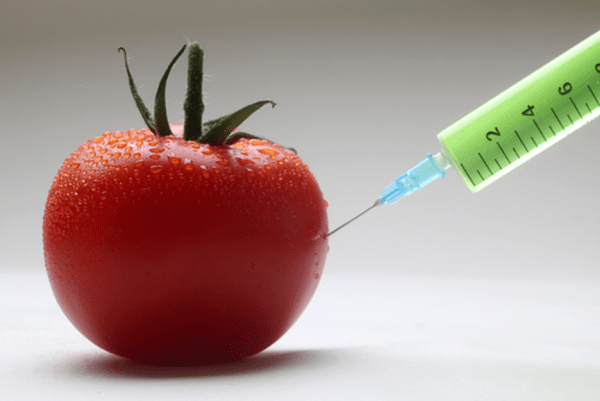
Through scientific breakthroughs, plant products can be genetically modified to deliver immunity against diseases. These “edible vaccines” present remarkable possibilities at the intersection of agriculture and biotechnology. 

One such possibility is to assist immunization efforts on national and global scales. Many low-income nations and US cities such as Chelsea, Massachusetts and Hyde Park, New York lack essential access to vaccines due to expensive costs, maintenance challenges, and improper distribution. The use of common fruits and vegetables as vehicles to immunity could, for this reason, be a tool toward achieving equity. In addition to disease protection, edible vaccines can also be used to alleviate malnutrition because highly nutritious foods, such as tomatoes, lettuce, bananas, corn, and rice, are frequently used as host plants. 

History

In the 1990s, Dr. Charles Arntzen and his team spearheaded the production of an early edible vaccine, a surface protein antigen A derived from Streptococcus mutans successfully expressed in tobacco. This edible vaccine has the capability of alleviating infectious endocarditis, or bacteria occupation in the inner lining of the heart. Arntzen and his colleagues went on to develop a heat-labile toxin, B subunit in potatoes to potentially treat hepatitis B. There is a large focus on protein production in relation to edible vaccine efficacy, as antibodies and protective white blood cells are created by the immune system in the presence of spike (S) proteins. Therefore, to showcase that plant-derived hepatitis B surface antigen could generate a mucosal immune response, host plant potatoes have been optimized to become protein-rich. Other edible vaccine examples include transgenic carrots against HIV and E coli, lettuce against malaria, and spinach against rabies.

Continue reading “Edible Vaccines: The Intersection of Agriculture, Medicine, and Regulation”

Food, community, and belonging: Our Seat at the Table

by Marin Milken*

[This is one in a series of occasional posts by Los Angeles high school students working with and studying food systems.]

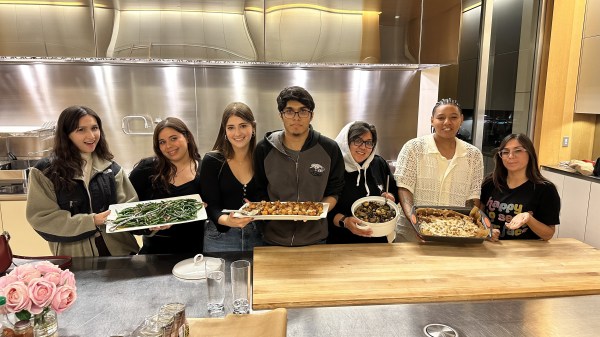
Inspired by the meals I made for my family and friends during the pandemic, I founded Our Seat at the Table to engage with questions of food, community and belonging. Though there are various food-related initiatives that Our Seat will continue to tackle through its programming, I wanted our first endeavor to help with the widespread national issue of food insecurity. Food insecurity, in simplest terms, is when people neither have enough to eat, nor know where their next meal is coming from. The latest State of Food Security and Nutrition in the World (SOFI) report indicates that in comparison to 2019, the number of people worldwide affected by hunger has risen by over 122 million. In the United States, food insecurity is addressed through Supplemental Nutrition Assistance Program (SNAP) benefits, which aim supplement low-income families’ groceries, so that they can access the food that they need to be food secure. But key findings in a recent report from the Robert Wood Johnson foundation highlight and demonstrate that SNAP benefits don’t cover the cost of moderately priced meals in 78% of US counties. With this statistic in mind, it’s unlikely that SNAP benefits are able to cover the costs of healthier options, such as organic produce. Programs such as SNAP – and its inability to adequately address the food needs for so many in this country – highlight a large systemic gap between those who are food insecure and food secure, despite SNAP being touted as a successful safety net for those who are food insecure.

Continue reading “Food, community, and belonging: Our Seat at the Table”

From Covid 19 to War in Ukraine: Anatomy of the Global Food Crisis in 2022

by Hilal Elver*

In March 2020 the world was shut down along with much of the global economy to avoid the spread of the powerful virus COVID-19. Suddenly, the so-called “efficient” global food supply chains were dismantled, harvests were left in the soil, food workers returned to their homes, the major organizing principle of supply and demand balance all but disappeared, and quite simply, the global food market as we knew it came alarmingly close to collapse. COVID-19 arrived at a time that food production was historically high, and prices low, but constraints on the movements of people and goods left many people without food, and global food systems entered an unusual stalemate. These results were not entirely unpredictable, but the world was unprepared to cope with the challenge. This was true in many countries and regions in both the Global North and Global South. As a result, the number of hungry people has increased by 150 million since the outbreak of the pandemic.

While the world was still struggling with many variants of Covid-19, and full recovery is not yet in sight, the February 24, 2022, invasion of Ukraine by the Russian Federation brought about a further deterioration in global food trade as these two countries happened to be major players in the global grain market.  Today’s food markets are heavily reliant on international food trade. Since the early 1990s, nearly a quarter of all food produced crosses international borders. The high dependency on global grain imports for the food security of many countries in the Middle East and Africa is causing a severe food crisis in many parts of the world.

FAO State of Hunger and Malnutrition Report 2022

On July 6, 2022, in the middle of multiple unresolved crises, the United Nations Food and Agriculture Organization (FAO), World Food Program (WFP), International Fund for Agriculture Development (IFAD) (Those three are called UN Rome-based institutions), World Health Organization (WHO), and United Nations Children Fund (UNICEF) published their annual flagship report on progress toward ending hunger, achieving food security, and improving nutrition. The major message of the State of Food Security and Nutrition in the World Report (SOFI) was that “the world is moving in the wrong direction” to end hunger, food insecurity, and all forms of malnutrition. The SOFI 2022 report projects that nearly 670 million people, or 8% of the world’s population, will be affected by hunger in 2030, instead of the “zero hunger” target Nr. 2 of the Sustainable Development Goals (SDG) that were adopted by the United Nations in 2015. SOFI assesses the relevance of conflicts, including the most recent war in Ukraine, along with climate extremes and economic shocks. Additionally, for the first time, the report adds growing inequalities as major drivers of food insecurity and malnutrition.

Continue reading “From Covid 19 to War in Ukraine: Anatomy of the Global Food Crisis in 2022”

Addressing Student Food Insecurity with a SNAP

by Kyle Winterboer*

As students return to in-person school, it is an important time to revisit the issue of food insecurity across America’s educational system. Particularly in Higher Education, recent studies suggest student food insecurity levels had reached as high as 38% in Spring 2020 and 5.8 of every 10 students experienced some form of basic needs insecurity. These rates have dramatically increased throughout the duration of the pandemic because students sent home for lock-down no longer had access to the already limited forms of support available in person on campuses.

A common tool used to fight food insecurity is the Supplemental Nutrition Assistance Program (SNAP). Despite its successes in reducing hunger and the economic benefits the program introduces to stimulate local economies, SNAP has many limitations and needs reform to better address food insecurity. One such limitation is that policy makers have long denied students access to SNAP. While the past decade has brought some expansions to grant students access, significant barriers remain. Barriers include restrictive student eligibility criteria and mixed messaging that leaves students misinformed of their eligibility. This policy failure leaves students hungry, many of whom would otherwise be eligible for aid if they were not pursuing higher education.

To show the real human impacts of these policy failings, journalist Alejandra Salgado details student stories in an article that appeared in CalMatters and was shared by Civil Eats: Colleges Rush to Sign Students Up for Food Aid, as Pandemic Rules Make More Eligible | Civil Eats

To provide additional context to the policies described in Salgado’s reporting, the below contains insights from Resnick Center Research Assistant Kyle Winterboer in this policy area. This research comes from his time with the student led research advocacy group “unBox”, the assistance of the UCLA CalFresh Initiative, his own application process amidst the pandemic, and from his time implementing a little known policy solution across UCLA departments to better support students in their SNAP applications.

The Resnick Center thanks the unBox Project and the UCLA CalFresh Initiative for readily sharing information for this report, and their continued dedication to the mission of ensuring equitable access to food for all.

Continue reading “Addressing Student Food Insecurity with a SNAP”

Upcoming Webinar

By Diana Winters

Please let me draw your attention to this exciting upcoming webinar in the Faegre Drinker Food Webinar series, to be held at 10am PT on June 15, 2021:

Litigation Considerations Arising From the Pandemic – This presentation will explore litigation trends in the food practice area arising from the COVID-19 pandemic. Covered topics include types of litigated claims, state and federal defenses, and jurisdictional questions, among others.

The webinar will be led by Molly Flynn, a partner at Faegre Drinker, and Rita Mansuryan, an associate at Faegre Drinker and a Research Affiliate with the Resnick Center, as well as an Advisory Board member.

I am sure it will be terrific. You can register for the webinar here.

A Historical Perspective on Regulating Eating Places Amid a Pandemic

by Brian Fink*

The ferocity and turmoil of the Covid-19 pandemic has, at times, been compared to the so-called Spanish Flu of 1918–1920.  Dr. Anthony Fauci, the nation’s top infectious disease expert, said in July 2020 that the Covid-19 pandemic could reach the same tragic magnitude as the Spanish Flu.  The United States lost about 675,000 people to that virus.  In February 2021, it had already lost 500,000 to the new one.  There are many comparisons to be made, and the present feels frighteningly familiar.

That is why I decided to see for myself how we regulated restaurants, bars, and the rest of the budding American hospitality industry during the Spanish Flu.  To do that, I analyzed scores of newspaper stories and advertisements from between 1918 and 1920.

What I discovered was déjà vu: a global pandemic, mask mandates, forced quarantines, fake news and newspapers fanning the flames of fear, eating places and entertainment venues shuttered, curfews and restricted hours of service, restaurants struggling to survive, businesses deemed essential and nonessential, anti-vaxxers, hairbrained explanations of how the virus started, an economy on the brink, and, oh, the fighting and the politics.

Continue reading “A Historical Perspective on Regulating Eating Places Amid a Pandemic”

Two Important Food Policy Roadmaps

by Diana Winters

Today marks the one-year anniversary of the day the World Health Organization declared Covid-19 to be a global pandemic, and over this past year, the preexisting weaknesses, incapacities, and inequities of the national and global food system have been glaringly evident. From food and supply shortages, to disease outbreaks in meat production facilities, to the breakdown in school lunch distribution networks, to an enormous rise in food insecurity, the pandemic emergency brought the dangers of consolidation in the food system and shortsighted agricultural and nutrition policy to the forefront of public awareness.

Two recent reports, one by the New York City Mayor’s Office of Food Policy, and one by the Center for Good Food Purchasing, have outlined roadmaps toward a stronger food system.

Food Forward NYC is organized around five goals supporting a framework to lead to a ore healthy, equitable, and sustainable food system in a decade’s time. These goals are: (1) All New Yorkers have multiple ways to access healthy, affordable, and culturally appropriate food; (2) New York City’s food economy drives economic opportunity and provides good jobs; (3) The supply chains that feed New York City are modern, efficient, and resilient; (4) New York City’s food is produced, distributed, and disposed of sustainably; and to (5) Support the systems and knowledge to implement the 10-year food policy plan. Each of these goals will require collaboration among multiple stakeholders, and the Office of Food Policy will issue a biennial report as to the City’s progress.

The Good Food Purchasing Program roadmap for the post-pandemic food system we need also posits a ten-year timeframe for the building of a stronger and better food system. The roadmap is built around five core values that support the Center for Good Food Purchasing’s program: Valued Workforce; Local Economies; Animal Welfare; Nutrition; and Environmental Sustainability, all of which are guided by equity, transparency, and accessibility. The roadmap is organized around three key pillars of success: (1) the power of partnerships; (2) shared goals and infrastructure, and; (3) transformational policies.

Both of these reports seek to utilize the observations and lessons drawn from the pandemic emergency’s impact on the food system so that as we rebuild, we recreate as well.

Op-ed: How to Feed America Better Post-Covid

By Veronica Goodman*

When teachers locked up their classrooms last March, few thought that a year later schools would still be shuttered and that millions of children would lack access to essential services, such as meals, and that millions of jobs would be lost, leaving many individuals and families struggling to put food on the table. America’s hunger crisis is now so acute that a recent analysis found that the number of children not getting enough to eat was ten times higher during the pandemic, while nearly 1 in 6 adults – or close to 24 million Americans – reported that their households did not have enough to eat sometimes or often in the past seven days.  

The sharp rise of hunger during the pandemic is yet another woeful legacy of the Trump administration’s mishandling of the Covid crisis, including trying to deny access to food relief by placing unnecessary bureaucratic barriers on states and even attempting to kick nearly 700,000 unemployed people off of food assistance in the midst of a once-in-a-century public health crisis. President Biden has thankfully made quick progress to address the hunger crisis through executive action and proposed legislation, but there is more work to be done to make our federal anti-hunger policy more resilient going forward for the next crisis, and to address the structural barriers to food affordability and access.

In his first week in office, President Biden signed an executive order that will help alleviate the hunger crisis by increasing benefits of the Pandemic-EBT program (P-EBT) and the Supplemental Nutrition Assistance Program (SNAP), as well as calling for the Agriculture Department to modernize the Thrifty Food Plan to better reflect the cost of a market basket of foods upon which SNAP benefits are based. Biden’s American Rescue Plan will also significantly bolster food assistance programs around the country. Collectively, these changes should make food aid more generous and better targeted.

However, many anti-hunger innovations were born of necessity during the pandemic, and these should serve as lessons learned going forward to better prepare for a future crisis. The P-EBT program has been a success at bridging the gap in nutrition for low-income children who used to obtain meals through programs at their schools, but who could no longer do so with schools closed. This program should be studied to see if it can be converted to a Summer EBT option going forward. Furthermore, to stay ahead of a future crisis, researchers at the Center on Budget and Policy Priorities have suggested that Congress “leverage the P-EBT structure to create a permanent authorization for states to issue replacement benefits (similar to P-EBT, and perhaps renamed “emergency-” or E-EBT) in case of lengthy school or child care closures resulting from a future public health emergency or natural disaster.” This would make it easier for states to act quickly and not rely on Congressional action should schools need to close in the future. Finally, Rep. Suzanne Bonamici has introduced a bill that would more effectively allow schools to distribute free meals to students and other community members in need, and to extend meal service for afterschool meals and snack programs. These measures would make our systems nimbler and more responsive should a future disruption, national or local, occur.

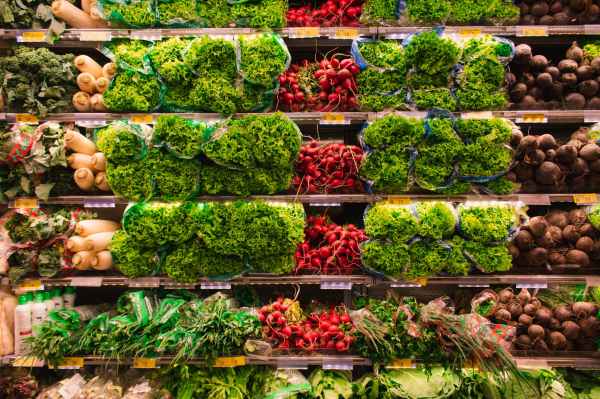
America’s hunger crisis did not start with the pandemic, and policymakers should go further to address three key underlying causes and structural barriers to food access and affordability. First, the White House should focus on stricter antitrust enforcement in the food industry. The U.S. food and agriculture industry is concentrated, with a few large firms dominating many markets, which can drive up consumer prices on basic nutrition staples. Second, Congress should enact the HOPE Act, introduced by Reps. Joe Morelle and Jim McGovern and Senator Kirsten Gillibrand (D-NY) which would create online accounts that enable low-income families to apply once for all social programs they qualify for, rather than forcing them to run a bureaucratic gauntlet that makes it difficult for low-income Americans to get public assistance. Third, Congress should take up legislation, such as the bipartisan Healthy Food Access for All Americans (HFAAA) Act put forth by Sens. Mark R. Warner, Jerry Moran, Bob Casey, Shelley Moore Capito, that incentivizes food providers to set up shop in rural and hard-to-reach communities to improve food access for the estimated 40 million Americans living in “food deserts” that lack a nearby grocery store or food pantry or bank.

Food insecurity is not just a moral issue, it also has economic and social costs. Adults who go hungry are less productive and are more likely to suffer from chronic illness. Hungry children are more likely to get sick and fall behind in school. One in five Black and Hispanic households report they are unable to afford food. Poor nutrition and soaring rates of metabolic disease are a drag on the economy and contribute to rising healthcare costs and early deaths in minority and low-income families that are disproportionately more likely to experience poor nutrition and health as a result of food insecurity. And a boost in food assistance programs has even been found to speed economy recovery during a downturn and serve as an “automatic stabilizer”, an added bonus of fighting hunger during the Covid recession.

It’s time for a new national commitment to wiping out hunger and malnutrition in America. The pandemic and the associated hunger crisis have taught us valuable lessons that we should use so that we can be better prepared to face a future crisis and to curb hunger in America.

*Veronica Goodman is the Director of Social Policy at the Progressive Policy Institute. In her role, she develops and analyzes policies designed to help lift more Americans out of poverty and to strengthen the middle class, focusing on social mobility, inequality, labor, and modernizing social services. Veronica earned graduate degrees in economics and public management from Johns Hopkins University, and her undergraduate degree from The George Washington University.

You can find Goodman’s full paper on a comprehensive federal approach to the hunger crisis here.

Roberts Guest Lectures

by Michael T. Roberts

I had the opportunity to guest lecture on historical perspectives involving food law and Covid-19 via Zoom in two classes last week. The first lecture/discussion was at the University of Arkansas School of Law’s LL.M. program series sponsored by Professor Susan Schneider on Food, Law, and Covid-19. My presentation title was on “Learning from the Past: Pandemics and Food Security in Historical Context.”

The second lecture/discussion was here at UCLA in Professor Monica Smith’s anthropology class on Covid-19 Foodways: Changes and Challenges for the Future. I presented on legal perspectives on Covid-19 changes in the context of the development of international food law in the 20th century. 

These opportunities have underscored for me how understanding the history of food security and the development of modern food law is critical as we move to the future.

Resnick Center faculty and staff recent speaking events

Executive Director Michael T. Roberts recently spoke by Zoom for the San Marino Rotary Club on the “Role of Food Law in everyday consumer products: Olive Oil and Honey. How do we know what’s in our plates?” Regarding the presentation, he commented, “I was thoroughly impressed with the quality of questions from the members. We ran 30 minutes overtime, as questions about Ractopamine (animal drug) and Isotopes (chemical fingerprinting) surfaced.” A video of the talk is here.

Also this week, Assistant Director Diana Winters participated in a Duke Law Food Law Society Zoom panel on Slaughterhouses and Covid-19, with David Muraskin from Public Justice, Hannah Connor from the Center for Biological Diversity, and Delcianna Winders, the Director of Lewis & Clark Law School’s Animal Law Litigation Clinic. The panel discussed failures in food safety and worker protection regulation that have led to the rampant spread of Covid-19 in meat processing plants.

Website Powered by WordPress.com.

Up ↑