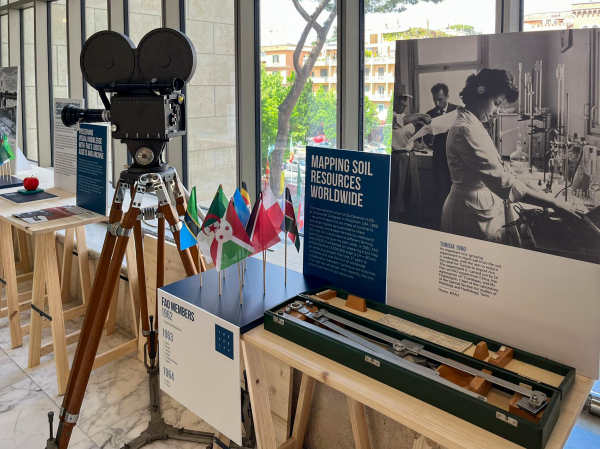
Executive Director Roberts on Partnering with the FAO on its Constitution Exhibition

by Michael T. Roberts

This post is the first of two by Executive Director Roberts on the FAO’s constitutional framework.

The Resnick Center is honored to be a partner to the Food and Agriculture Organization of the United Nations (FAO). The FAO was established in 1945 when its Constitution was signed and ratified by nations meeting in Quebec, Canada.  It was created as part of U.S. President Franklin D. Roosevelt’s broader efforts to advance the “Freedom from Want,” an aspiration he articulated in response to the catastrophic human suffering caused by hunger and malnutrition. The vision of an international organization grounded in governance principles was also central to the post-World War II global reordering.

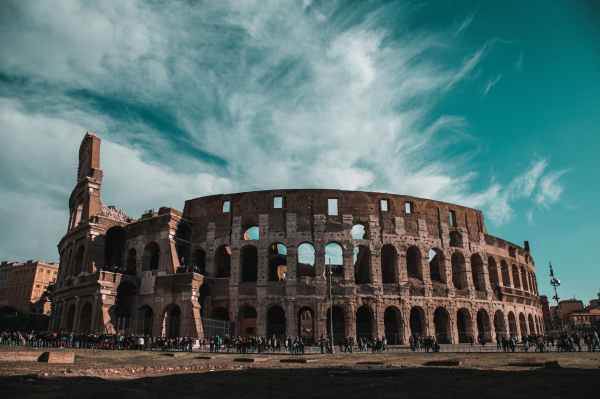
In May, I was honored to attend the next phase of a Constitution Exhibition in Rome – a project that I helped create that celebrates and contextualizes the role of the FAO Constitution in shaping the organization’s operations and aspirations. The exhibition complements my ongoing research and writing on the development of FAO’s constitutional framework from 1943 to 1945, as well as its further development and subsequent application in global food governance through 1965.

Continue reading “Executive Director Roberts on Partnering with the FAO on its Constitution Exhibition”

Exploring the Legal and Policy Implications Behind ‘High on the Hog’: Potential Solutions Forward (Part 4 of 4)

There are a variety of policy solutions that have the potential to help elevate and preserve Black cuisine and resolve inequities faced by Black Americans in the American food system. This post will explore ideas that relate to the preservation of Black culinary tradition, supporting Black farmers and culinary professionals, and increasing the access of culturally-relevant foods to Black communities in order to honor the richness of America’s culinary landscape. 

Preservation of Black Culinary Traditions

The preservation of Black culinary traditions is important to ensure that Black communities are able to celebrate their cultural heritage and to allow for greater recognition of Black people’s contributions to the culinary world. Initiatives like funding programs and grants to support culinary research, education, and documentation of traditional Black food practices could help with this cultural preservation. Furthermore, educational initiatives that introduce Black American cuisine into school curricula have the ability to educate young people about the cuisine’s significance and influence on American food. FoodCorps is an AmeriCorps grantee that has begun undertaking this type of initiative. During black history month of this year (February 2023), the organization held educational programming at elementary schools which taught black history through a culinary lens. 

Continue reading “Exploring the Legal and Policy Implications Behind ‘High on the Hog’: Potential Solutions Forward (Part 4 of 4)”

Exploring the Legal and Policy Implications Behind ‘High on the Hog’: Black Farmers, Land Loss and Its Implications (Part 3 of 4)

Throughout “High on the Hog”, one can see a deep connection between Black American culinary traditions and farming. However, this connection has been threatened by a variety of policies that have limited Black American land ownership and access. For example, certain policies by the USDA, which has earned itself a description as “the last plantation,” such as allowing local (mostly white) farmers to determine Black farmers’ eligibility for USDA funding, have led to Black Americans’ loss of land. In Pigford v. Glickman, the racial discrimination class-action brought against the USDA by Black farmers, the USDA agreed to the largest civil-rights settlement in U.S. history of $1.25 billion. However, many eligible Black farmers have not been compensated

The number of Black farmers in America has decreased dramatically over the past 100 years, with less than 2 percent of farms in the United States owned or operated by Black Americans. This figure is a significant decrease from 1920, when 14.3% of American farms were operated by Black farmers. While there was a small increase in the number of Black farmers from 1.3% to 1.4% between 2007 and 2012, both Black rural and urban farmers continue to face challenges including land access, zoning laws, and financing. Public policies in the agricultural sector have historically disproportionately favored large-scale farmers and contributed to the marginalization of Black farmers. 

Continue reading “Exploring the Legal and Policy Implications Behind ‘High on the Hog’: Black Farmers, Land Loss and Its Implications (Part 3 of 4)”

Exploring the Legal and Policy Implications Behind ‘High on the Hog’: Intellectual Property and Cultural Erasure (Part 2 of 4)

In “High on the Hog” episode three, we learn the stories of Hercules Posey and James Hemings, the enslaved private chefs of George Washington and Thomas Jefferson respectively. They were widely known and widely praised, yet there are no written recipes attributed to either chef. In Stephen Satterfield’s conversation with Hatchet Hall chefs Brian Dunsmoor and Martin Draluck, the chefs hint at the idea that Martha Washington’s widely praised recipe books may in fact contain recipes developed by the enslaved Hercules. 

Dishes like macaroni and cheese have become an American staple, yet most Americans are unaware that the dish was perfected and popularized by Hemings. Black Americans have long been culinary pioneers in this country and have shaped American cuisine at large. The erasure of Black American’s culinary contributions diminishes Black people’s role in America’s cultural tapestry and perpetuates the idea that Black cuisine is isolated from American cuisine at large. 

Furthermore, cultural erasure of Black culinary traditions is a significant risk because Black communities historically have faced limited access to resources and opportunities in the food industry. Unequal access to capital and credit have likely hindered the ability of Black chefs, restaurateurs, and food entrepreneurs to establish and grow their businesses. The lack of representation and access further perpetuates the erasure of Black culture within the food industry and hampers the promotion and preservation of Black culinary traditions.

Continue reading “Exploring the Legal and Policy Implications Behind ‘High on the Hog’: Intellectual Property and Cultural Erasure (Part 2 of 4)”

Exploring the Legal and Policy Implications Behind ‘High on the Hog’: The Rise of Black Culinary Tradition (Part 1 of 4)

This four-part blog series is inspired by the Netflix docu-series, “High on the Hog: How African American Cuisine Transformed America.” I will delve into the legal and public policy implications behind the narratives presented by series host, Stephen Satterfield, throughout the show’s four episodes. This blog series aims to explore the impact of laws and policies on the development and preservation of Black Americans’ culinary heritage. 

There’s little doubt that the history of slavery in the Black American story is a factor in the culture’s culinary development. “Soul food is the African-American version [of comfort food] —  a cuisine forged during several centuries as a response to persistent trauma from slavery and oppression,” says lawyer, public policy advisor, and culinary historian Adrian Miller

Continue reading “Exploring the Legal and Policy Implications Behind ‘High on the Hog’: The Rise of Black Culinary Tradition (Part 1 of 4)”

A Historical Perspective on Regulating Eating Places Amid a Pandemic

by Brian Fink*

The ferocity and turmoil of the Covid-19 pandemic has, at times, been compared to the so-called Spanish Flu of 1918–1920.  Dr. Anthony Fauci, the nation’s top infectious disease expert, said in July 2020 that the Covid-19 pandemic could reach the same tragic magnitude as the Spanish Flu.  The United States lost about 675,000 people to that virus.  In February 2021, it had already lost 500,000 to the new one.  There are many comparisons to be made, and the present feels frighteningly familiar.

That is why I decided to see for myself how we regulated restaurants, bars, and the rest of the budding American hospitality industry during the Spanish Flu.  To do that, I analyzed scores of newspaper stories and advertisements from between 1918 and 1920.

What I discovered was déjà vu: a global pandemic, mask mandates, forced quarantines, fake news and newspapers fanning the flames of fear, eating places and entertainment venues shuttered, curfews and restricted hours of service, restaurants struggling to survive, businesses deemed essential and nonessential, anti-vaxxers, hairbrained explanations of how the virus started, an economy on the brink, and, oh, the fighting and the politics.

Continue reading “A Historical Perspective on Regulating Eating Places Amid a Pandemic”

Food Policy with Senator Tom Harkin – a Repast Interview

We are so pleased to share this terrific new episode of Repast, where Michael Roberts interviews Senator Tom Harkin on his years in Congress and his significant impact on food policy, the Harkin Institute and its focus on wellness and nutrition–including the Institute’s upcoming symposium on food as medicine--and the opportunities Senator Harkin sees for food policy with the Biden administration.

You can listen to the episode here.

Roberts Guest Lectures

by Michael T. Roberts

I had the opportunity to guest lecture on historical perspectives involving food law and Covid-19 via Zoom in two classes last week. The first lecture/discussion was at the University of Arkansas School of Law’s LL.M. program series sponsored by Professor Susan Schneider on Food, Law, and Covid-19. My presentation title was on “Learning from the Past: Pandemics and Food Security in Historical Context.”

The second lecture/discussion was here at UCLA in Professor Monica Smith’s anthropology class on Covid-19 Foodways: Changes and Challenges for the Future. I presented on legal perspectives on Covid-19 changes in the context of the development of international food law in the 20th century. 

These opportunities have underscored for me how understanding the history of food security and the development of modern food law is critical as we move to the future.

Study Food History and Culture in Italy With UCLA Next Summer

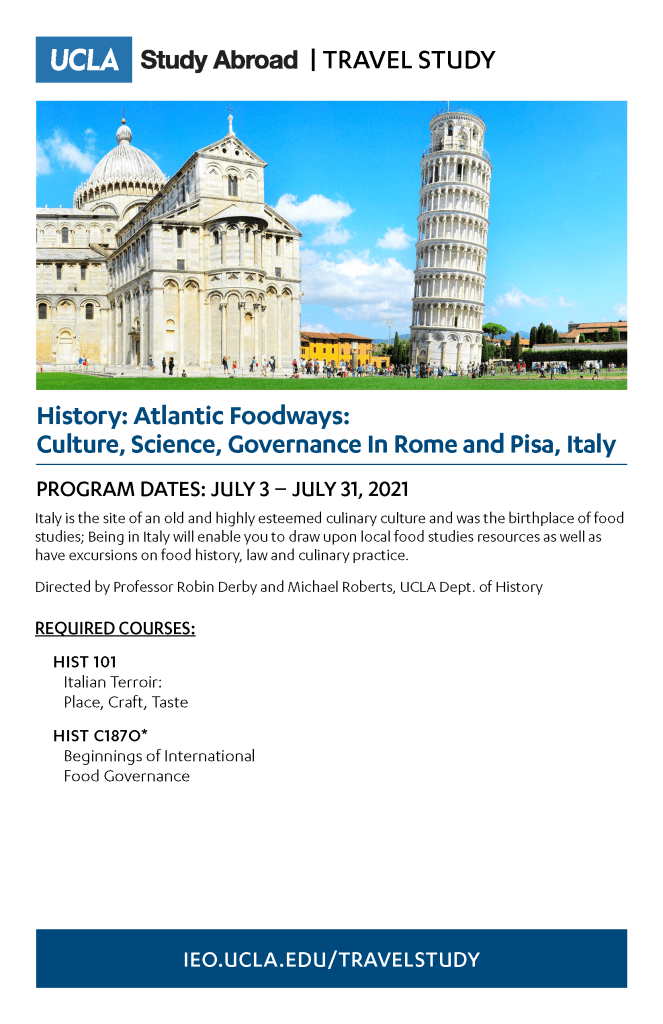
Aaahhh, travel. Let’s dream of July in Rome, experiencing Italy’s food culture and learning Italian food history through the concept of terroir. Study this complex food culture with Robin Derby, Professor of History, UCLA, and Michael Roberts, Executive Director of the Resnick Center for Food Law & Policy, observing sustainable food production, tasting local cuisine, and learning about the emergence of international food governance through the twentieth century. Click here for more information.

Website Powered by WordPress.com.

Up ↑