Feeding Children During the Pandemic – HER teleconference

by Diana Winters

There has been a recent spate of articles about several studies showing that a very high number of patients who ended up hospitalized with Covid-19 had underlying health conditions, with obesity being one of the most common.[1]  These studies are largely observational and preliminary, but have still garnered attention.  At the same time, concerns about supply chain disruption and increased economic insecurity have also highlighted the need to prepare for a rise in global hunger and malnutrition.  With this backdrop, as well as the announcements that many schools across the country will be closed for the rest of the school year, Healthy Eating Research (HER) held a teleconference for media on feeding children during the pandemic, which discussed availability, distribution, and nutritional content.  HER is a national program of the Robert Wood Johnson Foundation (RWJF), which supports research on policy, systems, and environmental strategies that promote healthy eating among children.  The call addressed many issues around feeding children during this crisis, including the following.

During a normal school year, schools across the country provide approximately 30 million children with free and reduced-price school meals.  These meals provide up to two-thirds of these children’ daily nutritional needs.  As of right now, however, 48 states have closed their schools because of the Covid-19 pandemic, and 30 states have announced that schools are closed until the fall.  The impact of this on the availability and quality of food for children is immense.

There has been significant federal legislation to address feeding children during the pandemic.  This legislation includes Pandemic EBT, where states can request waivers to provide SNAP benefits for the families of children eligible for free or reduced-price lunch, emergency benefits, where all SNAP beneficiaries can receive emergency benefits, funds to bolster new SNAP enrollees, and legislation to adapt the emergency feeding of children during school closures to encompass summer feeding nutritional standards.

All of these actions are taking place while the Trump administration is simultaneously trying to weaken nutritional standards for school lunches.  In mid-April, a federal court struck down a 2018 Agriculture Department rule that reversed nutrition standards for sodium and whole grains in school meal programs.

Moreover, the Trump administration has taken action to cut down on SNAP benefits.  The four major reforms the administration has pushed–including making it harder for states to request time limit waivers, restricting states’ ability to make families categorically eligible based on their eligibility for another program, standardizing the method for determining state allowances, and denying noncitizens citizenship or green cards if they participate in federal aid programs—are currently stalled during the pandemic.

Dr. Sara Bleich, Professor of Public Health Policy at the Harvard Chan School of Public Health, estimates that the SNAP rolls will go up to higher numbers than during the 2008 recession because of the unprecedented unemployment figures.

More legislation is needed to protect children from food insecurity and the resulting health detriments, said Dr. Bleich.  Dr. Bleich explained that we should look for the government to increase the size of SNAP benefits, which is a proven policy intervention to stimulate the economy and improve health, to provide personal protective equipment (PPE) for food service staff, and to provide more funding for school districts impacted by the school year closures.

Elisabet Eppes, MPH, Program Innovation Director at the National WIC Association, spoke about how the WIC (Women, Infants and Children) program is adapting to the pandemic.  WIC is a special supplemental nutrition program for pregnant and postpartum women, and their infants and small children.  It is a federal program, administered and run by states, that provides nutrition education, health care referrals, breast feeding support, and nutrition funding.  It is provided through paper vouchers and electronic benefit cards.

The WIC program is facing steep challenges during the pandemic.  Many WIC office are closed as the staff helps with other pandemic-related tasks.  WIC participants are having trouble acquiring WIC food because of food supply problems at grocery stores.  At the same time, more families need WIC right now because of increased unemployment.  WIC agencies are adapting to the pandemic, and legislation has been passed and is pending to provide the program with extra money and to ease administrative requirements.  Moreover, states are exploring possibilities for online orders and curbside pickups.

The impact of the pandemic on feeding children is immense, and its effects will be felt for years to come, on our nation’s public health and on its economy.  These issues are of critical importance.


[1] The articles here can be found linked on the Resnick Center’s guide to food law and Covid-19 resources, found here.


Meat Production and Covid-19 – Shortages Coming?

by Diana R. H. Winters

One of the country’s largest pork processing facilities announced that it is closing indefinitely.  The Smithfields Foods, Inc. plant in Sioux Falls, South Dakota will close after almost 300 of its workers tested positive for coronavirus.  The plant employs 3700 workers and produces about four percent of the pork production in the United States.

Other major meat producers, including JBS USA and Tyson, have closed facilities after workers tested positive, and in some instances, died.

These closures illuminate significant worker safety problems at meat production plants.  Manufacturers have been slow to provide protective equipment to low-wage workers standing close together to process meat and have pressured employees to remain working even if sick.

Moreover, these closures are one of many Covid-19 food supply chain issues resulting from the shutdown, which also include the inability of food producers to repackage food meant for institutional or restaurant use for retail use.  The New York Times reported on the resulting massive food waste this past weekend.

All of the articles linked in this post can be found in the Resnick Center’s and the UCLA Law Library’s resource guide to Covid-19 and food law.  Here in the blog we will occasionally highlight important trends and stories we see emerging.  Please explore our guide, and forward relevant material for inclusion in the guide.


Resnick Center Launches Covid-19 and Food Law Resource Guide

Today, the Resnick Center in conjunction with the UCLA School of Law Hugh and Hazel Darling Law Library launched a Covid-19 and Food Law Resource Guide.  The guide will provide resources on the intersection of Covid-19 and food law and policy for scholars, researchers, and officials, which comports with the Resnick Center’s mission to provide cutting-edge legal research and scholarship in food law and policy.

This library guide will consist mainly at its start of substantive popular press articles, links to various open-access repositories of media reports, and helpful government sites. Over time, this library guide will be populated by legal scholarship and reflective, analytical publications relevant to legal scholarship that will be organized by subject matter and in some cases annotated.

If you come across interesting material at the intersection of Covid-19 and food law and policy, please submit it to be considered for this guide to the Resnick Center.

By 2030 50% of American adults will be obese, and 25% will be severely obese

by Diana R. H. Winters

If the predictions from a recent New England Journal of Medicine article (pay-walled, but 3 free articles a month available with account creation) come true, the implications–for our nation’s health, for our health care system, and for our economy–are vast.  The study shows that by 2030, almost half of American adults will be obese and a quarter will be severely obese.  The study authors were meticulous in their methods to increase the reliability of their projections.

The study found that there is great variation among states, with over 29 states projected to have higher than 50% obesity, and a large variation in the prevalence of obesity according to income.  Severe obesity will be much more common among low-income adults than higher income adults.

The study also notes that the health consequences of this magnitude of obesity in the population are enormous, and will likely increase socioeconomic disparities.

Although the researchers are light on policy suggestions, the authors do write that, “a range of sustained approaches to maintain a healthy weight over the life course, including policy and environmental interventions at the community level that address upstream social and cultural determinants of obesity, will probably be needed to prevent further weight gain across the BMI distribution.”

In the New York Times, Jane E. Brody notes in covering this study that the United States has done very little to address the food environment that has led to such a marked increase in obesity (since 1990, obesity in the United States has doubled).  Policy interventions such as taxes on sugar-sweetened beverages, portion control, and partnering with restaurants and food manufacturers to reformulate food to be more healthy would be a start.

In fact, another article published today in the New York Times shows that multifaceted policy intervention can have a huge effect on consumption.  It is four years since Chile passed a series of sweeping laws to combat obesity including raising taxes on sugar-sweetened beverages, and “advertising restrictions on unhealthy foods, bold front-of-package warning labels and a ban on junk food in schools,” and there has been a marked drop in the consumption of sugar-sweetened beverages.  That article cited a public health policy professor from Harvard University who said “the early results suggested that a raft of food policies, not just stand-alone measures like soda taxes, were needed to address a growing obesity crisis that is affecting nations rich and poor.”

As the study and these articles note, time is short.  The costs of obesity at this magnitude are enormous – on quality of life, on health care spending, on the economy, on socioeconomic disparities.  We need these policies, and we need them now.


Food Law Conference – March 2-3

by Diana R. H. Winters

I will be attending CLE International’s Annual Food Law Conference on March 2-3, 202, in San Francisco.  This is a terrific conference, which I highly recommend.

This is one of the few food law conferences where you can hear from both defense and plaintiff’s counsel, industry associations, and advocacy organizations.  I learned so much last year.   Michael T. Roberts, the Resnick Center‘s Executive Director, is a Co-Chair, and I am speaking on state law regulation on Tuesday, March 3.  The featured speaker is Laura Eichhorn Kurpad, Esq., Associate Chief Counsel US Food and Drug Administration, to give us views from the FDA.  You can find more info here: https://web.cvent.com/event/091ab345-25cd-4928-adf0-9212b7768bd5/summary?RefId=cle.com%20more%20info

Seriously, this conference is the cream of the crop!  Hope to see you there.

The FAO’s Food Fraud Conference

by Michael T. Roberts

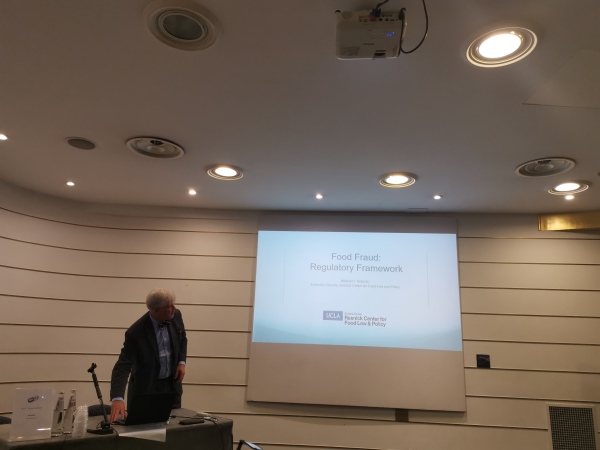
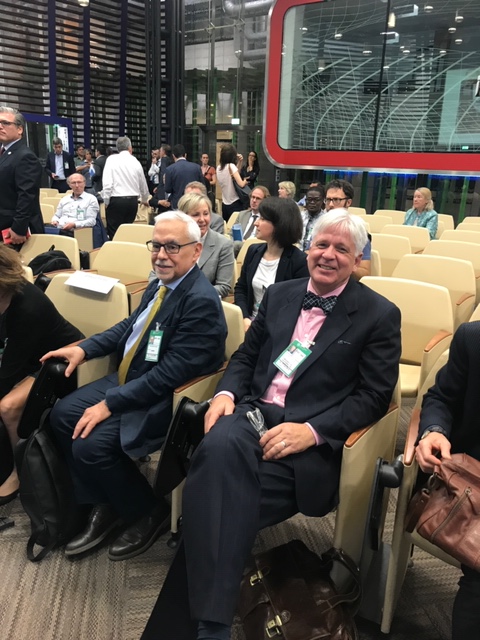
I just returned from an exceptionally productive, four-day Food Fraud Workshop hosted by the UN’s Food and Agriculture Organization (FAO) in Rome. Our participation in the workshop was the first project for the Resnick Center following its MOU with the FAO earlier this year.

In connection with the workshop, I have had the privilege of working with the FAO Legal Department in the drafting of a background paper on the regulation of food fraud. Given the Center’s publication of two white papers on food fraud, this experience is particularly rewarding.

The workshop had a number of interesting law and science presentations. I delivered a keynote presentation on the regulatory framework that governs food fraud both internationally and domestically. I was also happy to be joined by colleagues from various countries, including Dr. Sun Juanjuan from Renmin University School of Law in China, with whom the center collaborates with closely. Overall, the proceedings reinforced for me the important role of law and governance strategies in addressing food fraud. There is a lot of work to be done, but I look forward to being involved in this global effort.

Roberts.Rome2

Once again, scientists say not to give children juice

by Diana R. H. Winters

In my house, I frown on recreational juice drinking by my children.  My kids get juice on their birthdays, sometimes.

I am happy to say that a panel of scientists has issued new nutritional guidelines for children supporting my draconian approach.  Kids under five should drink milk and water, and every once in a while, a half of a cup of 100% fruit juice.

And although I am delighted to have these recommendations to hand to my poor kids when they ask for juice, I do wish this wasn’t news, because as coverage of this study explains, “[r]ecommendations to limit juice are not new.”

Dr. Richard Besser, president and chief executive of the Robert Wood Johnson Foundation says, “When we talk about empty calories that are consumed through beverages and the number of calories people get from sugar-sweetened drinks, we’re not just talking about soda . . . Juice is another source of calories that nutritionally aren’t terrific.”


An Ongoing Regulatory Failure – Antibiotics in Animal Feed

by Diana R. H. Winters

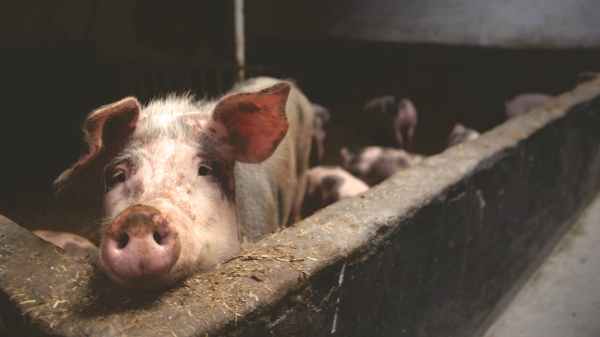
A few weeks back, the New York Times published an article about continuing publicity campaigns by drugmakers to sell antibiotics to farmers for use in healthy animals.  In “Warning of ‘Pig Zero’: One Drugmaker’s Push to Sell More Antibiotics,” Danny Hakim and Matt Richtel discuss the recent (and not-so-recent) regulatory attempts to curtail antibiotic use in animal feed and show how one drugmaker has worked to maneuver around these obstacles to continue selling massive amounts of antibiotics to farmers.

Particularly striking in this article is the explanation of how antibiotic overuse affects human health:

“The connection of overuse of antibiotics in livestock to human health takes two         paths: As bacteria develop defenses against drugs widely used in animals, those defense mechanisms can spread to other bacteria that infect humans; and, resistant germs are transmitted from livestock to humans — through undercooked meat, farm-animal feces seeping into waterways, waste lagoons that overflow after natural disasters like Hurricane Florence, or when farm workers and others come into contact with animals.”

And how this connection is misconstrued by pharmaceutical companies:

“Mr. Simmons of Elanco has long played down livestock’s role in spreading resistant microbes to humans.

‘The most serious pathogens are not related to antibiotics used in food animals,’ he said. ‘Of the 18 major antibiotic-resistant threats that the C.D.C. tracks, only two, campylobacter and nontyphoidal salmonella, are associated with animals.’

But such oft-repeated statements, made even in Elanco’s securities filings, refer only to food-borne strains like antibiotic-resistant salmonella that can be found in raw chicken, for example, while ignoring the myriad ways pathogens can be transferred.”

Also striking is the discussion of research linking the rise in C.Diff. infections, as well as in E. coli and MRSA infections, and the use of antibiotics in livestock:

“There is a growing body of research establishing links between Clostridium difficile, or C. diff, in livestock and humans, viewed by the C.D.C. as an urgent threat. Broad-spectrum antibiotics in livestock provide “a survival advantage to antibiotic-resistant C. difficile strains,” according to a 2018 study by Australian researchers. Similar studies exist for E. coli and methicillin-resistant Staphylococcus aureus, known as MRSA — the C.D.C. even lists different animals like cows, goats, sheep and deer that can pass E. coli to humans.”

Disturbing on many levels, the article highlights how federal attempts to regulate antibiotics, while laudable, have fallen short.


See our prior post on a previous N.Y. Times article on this issue here.

Resnick Center Partners with UN on Global Food Initiatives

UPDATE (June 26, 2019): Please see here for the FAO’s press release regarding this partnership: http://www.fao.org/partnerships/academia/news/news-article/en/c/1198206/ 


Reprinted from UCLA Law News and Events (https://law.ucla.edu/news-and-events/in-the-news/2019/06/resnick-center-partners-with-un-on-global-food-initiatives/)

The Resnick Center for Food Law and Policy at UCLA School of Law has entered into a partnership with the United Nations Food and Agriculture Organization (FAO) on a series of research and advisory initiatives to confront global food security, nutrition, safety and quality.

The parties signed a memorandum of understanding at an FAO event in Rome on June 10, where leaders in global food policy gathered for a series of talks on the future of food. Michael Roberts, executive director of the Resnick Center, attended and served as a featured participant in a roundtable discussion on academic perspectives of global nutrition policy.

The agreement establishes a working relationship between the Resnick Center and the UN, including an initial project involving food fraud that builds on recent research by UCLA Law scholars. Hilal Elver S.J.D. ’09, who serves as the Resnick Center’s global distinguished fellow and the UN’s Special Rapporteur on the Right to Food, was instrumental in building the partnership between the center and the FAO.

“FAO is glad to partner with UCLA, one of the most prestigious academic institutions around the world,” FAO director-general José Graziano da Silva said in a statement. “Promoting healthy food systems has become a top priority [in] sustainable development, and this cannot be done with [inadequate] regulation. … UCLA law school expertise, in particular on food law, will surely contribute to address this key challenge.”

The collaboration continues the close relationship between the Resnick Center and the FAO. Graziano da Silva visited UCLA Law in February 2019, where he emphasized that simply providing food to hungry people around the world is not enough. Rather, he said, serving healthy food should be a paramount concern.

“We need to reposition our food systems from feeding people to nourishing people,” Graziano da Silva told an audience of UCLA Law students and professionals in the field. “Obesity and overweight are growing faster than hunger. It is an epidemic. The right to healthy food should be a key dimension for zero hunger and for the right to food itself.”

IMG_4148

Food Law CLE at UCLA – June 6-7

The Resnick Center is collaborating with CLE International to present the fourth annual Food Law Conference at the UCLA Faculty Center on June 6 and 7, 2019.  This conference brings together an amazing group of practitioners, regulators, academics, and stakeholders to present on numerous important food law topics, including standards and food fraud, preemption, and class actions.  You can find the full brochure with a schedule of events here, and you can register here.

Please join us!

Website Powered by WordPress.com.

Up ↑