Executive Director Roberts on Partnering with the FAO on its Constitution Exhibition

by Michael T. Roberts

This post is the first of two by Executive Director Roberts on the FAO’s constitutional framework.

The Resnick Center is honored to be a partner to the Food and Agriculture Organization of the United Nations (FAO). The FAO was established in 1945 when its Constitution was signed and ratified by nations meeting in Quebec, Canada.  It was created as part of U.S. President Franklin D. Roosevelt’s broader efforts to advance the “Freedom from Want,” an aspiration he articulated in response to the catastrophic human suffering caused by hunger and malnutrition. The vision of an international organization grounded in governance principles was also central to the post-World War II global reordering.

In May, I was honored to attend the next phase of a Constitution Exhibition in Rome – a project that I helped create that celebrates and contextualizes the role of the FAO Constitution in shaping the organization’s operations and aspirations. The exhibition complements my ongoing research and writing on the development of FAO’s constitutional framework from 1943 to 1945, as well as its further development and subsequent application in global food governance through 1965.

Continue reading “Executive Director Roberts on Partnering with the FAO on its Constitution Exhibition”

Regional spotlight: Food Equity in Pennsylvania

The following is a guest post by Mallory Hersh* about her work in food equity.

During the pandemic, I had more free time than expected, and began to cook to accommodate my father’s recently-diagnosed food allergies. A few successful dinners later, I was whipping up healthy treats and baked goods in my spare time and delivering them around the neighborhood. 

But as I became more involved in conversations about food–how to source organic ingredients; the best forums for recipe swaps–I became increasingly aware that not everyone had the same access that I did to the foods that I took for granted. In the U.S., more than 34 million people, including 9 million children, experience food insecurity, often lacking consistent access to nutritious meals. Looking to help make a difference, I got involved with my high school’s service club, specifically aiming to spend my time with local community fridges and food pantries. I was selected to be the liaison between my school and Weaver’s Way Community Fridge, a community fridge that was connected to a local grocery store in Ambler, Pennsylvania.

Continue reading “Regional spotlight: Food Equity in Pennsylvania”

Introducing the Food, Race, and Equity Initiative, Part II

by Heliya Izadpanah and Lavanya Sathyamurthy*

This is Part II of a two-part post.

Why Start Here?

by Lavanya Sathyamurthy


UCLA, home to the Resnick Center for Food Law and Policy and the Critical Race Studies Program, is the perfect place to start a movement focused on infusing issues of equity into food law curricula. The Resnick Center for Food Law and Policy adopts a multi-faceted approach to legal research and scholarship, through courses, conferences, and academic collaboration. The Center offers various classes at the law school. Specifically, the ‘Food Law and Policy Seminar’ exposed me to a wide variety of approaches to food law. As my classmates presented on the right to food and food advertising to children, I realized that food law intersects with every area of law. Immediately, I wanted to connect food law with my background in critical race studies and, more specifically, my experiences as an Asian-American navigating the higher education food landscape. I wrote my paper about the importance of data disaggregation among racial groups within the Asian-American diaspora in crafting solutions to combat food insecurity at the University of California campuses.

Continue reading “Introducing the Food, Race, and Equity Initiative, Part II”

Restricted Access to the “First Food”: Dissecting Breastfeeding Injustices 

August was Breastfeeding Awareness Month. But as Chidera Anthony-Wise discusses below, this issue is critical year-round.

by Chidera Anthony-Wise*

Introduction 

The first food countless infants receive upon arrival into the world is breast milk. The health benefits of breastfeeding are remarkable for babies and mothers. Breast milk strengthens nervous system development and ocular ability of infants. Through breastfeeding, antibodies are introduced to infant immune systems, combatting various diseases. Conditions such as asthma, cardiovascular disease, obesity, type 1 diabetes, and sudden infant death syndrome (SIDS) are less likely among babies that are breastfed. Similarly, lactation is associated with a reduced risk in ovarian and breast cancers and type 2 diabetes in nursing mothers. According to the World Health Organization (WHO), it is strongly recommended to exclusively breastfeed babies for the first 6 months of life and subsequently accompany solid foods with breastmilk for up to 2 years or beyond. Still, there are a plethora of challenges that hinder the adherence to this expert advice. 

Breast milk offers all the nutrients, proteins, and hydration a baby needs for those first 6 months. The release of breast milk is through a “supply and demand” mechanism. If a nursing mother does not have preexisting health conditions that would limit milk production, a full supply of breast milk is dependent on feeding frequency. The provision of formula milk can decrease breast milk supply due to reduced breastfeeding sessions. Despite the WHO recommendation, 2.7 million of the 3.6 million infants born annually in the United States consume formula milk by the age of three months. 

Continue reading “Restricted Access to the “First Food”: Dissecting Breastfeeding Injustices “

The Urgent Need to Update the Regulation of GM Crops

by Alice Carli*

Humans have been altering plants for upwards of 10,000 years through a wide variety of techniques for genetic modification. In the 20th century, scientists developed transgenic genetic engineering, which combines DNA from two or more sources to achieve a desired trait. This discovery fundamentally altered our ability to manipulate crops and opened a Pandora’s box of commercial possibilities and political conflicts. More recently, the advent of CRISPR and other precision gene editing technologies has resurfaced tensions around the role of genetically modified (“GM”) crops in our agricultural and food systems.

Despite these longstanding tensions, the U.S. has the world’s largest production of GM crops by acreage, and it is estimated that over 75% of processed foods on our supermarket shelves contain genetically engineered ingredients.

At the same time, the country faces systemic sustainability challenges exacerbated by climate change and intensive monoculture farming. These include flooding, soil degradation, air and water pollution, and biodiversity collapse. Significant and holistic changes to U.S. agriculture are needed to tackle these problems.

If regulated effectively, GM crops have the potential to make U.S. agriculture more sustainable and climate resilient. When designed with climate-smart features, these crops can significantly enhance nutrient or photosynthesis efficiency, provide flood, drought, and disease resistance, and even improve soil carbon sequestration.

Continue reading “The Urgent Need to Update the Regulation of GM Crops”

Food, community, and belonging: Our Seat at the Table

by Marin Milken*

[This is one in a series of occasional posts by Los Angeles high school students working with and studying food systems.]

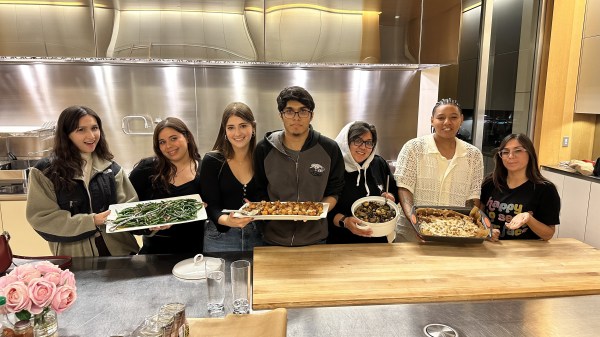
Inspired by the meals I made for my family and friends during the pandemic, I founded Our Seat at the Table to engage with questions of food, community and belonging. Though there are various food-related initiatives that Our Seat will continue to tackle through its programming, I wanted our first endeavor to help with the widespread national issue of food insecurity. Food insecurity, in simplest terms, is when people neither have enough to eat, nor know where their next meal is coming from. The latest State of Food Security and Nutrition in the World (SOFI) report indicates that in comparison to 2019, the number of people worldwide affected by hunger has risen by over 122 million. In the United States, food insecurity is addressed through Supplemental Nutrition Assistance Program (SNAP) benefits, which aim supplement low-income families’ groceries, so that they can access the food that they need to be food secure. But key findings in a recent report from the Robert Wood Johnson foundation highlight and demonstrate that SNAP benefits don’t cover the cost of moderately priced meals in 78% of US counties. With this statistic in mind, it’s unlikely that SNAP benefits are able to cover the costs of healthier options, such as organic produce. Programs such as SNAP – and its inability to adequately address the food needs for so many in this country – highlight a large systemic gap between those who are food insecure and food secure, despite SNAP being touted as a successful safety net for those who are food insecure.

Continue reading “Food, community, and belonging: Our Seat at the Table”

Just Released: Model Strategies in Global Food System Law & Policy

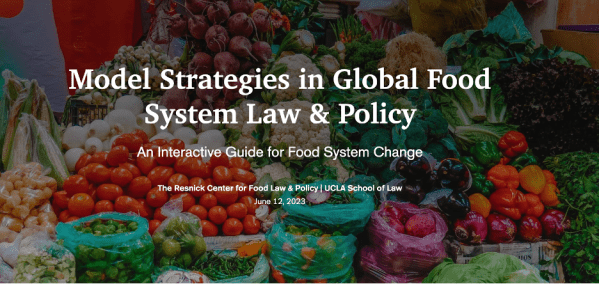
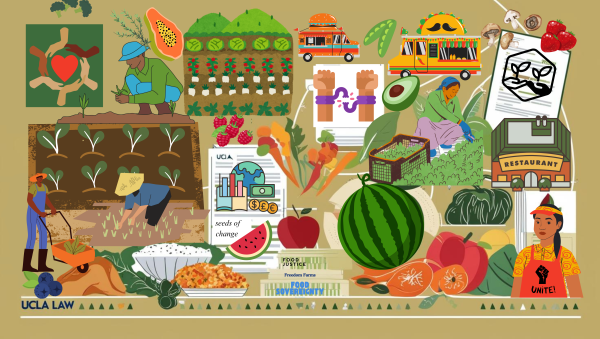
The Resnick Center for Food Law & Policy is thrilled to present: “Model Strategies in Global Food System Law and Policy,” an interactive issue brief series designed to democratize sustainable, equitable, and inclusive systems-thinking approaches to food governance.

This project was made possible due to a generous gift by the non-profit Seeding the Future Van Lengerich Foundation

Drawing from laws, policies, and research from around the world, the series makes the case for a paradigm shift in how we conceptualize and govern food. Rather than adopt narrowly-defined and siloed laws and policies, public and private policymakers should advance food system laws and policies , i.e., solutions that are holistic, multi-disciplinary, and which account for the diverse set of actors, activities, and feedback loops that comprise the food system.

The Resnick Center invites policymakers and other stakeholders to explore the featured model strategies and accompanying issue briefs to learn how countries around the world are successfully leveraging laws and policies to respond to the most pressing and complex food system challenges.

View the interactive story map here.

From Covid 19 to War in Ukraine: Anatomy of the Global Food Crisis in 2022

by Hilal Elver*

In March 2020 the world was shut down along with much of the global economy to avoid the spread of the powerful virus COVID-19. Suddenly, the so-called “efficient” global food supply chains were dismantled, harvests were left in the soil, food workers returned to their homes, the major organizing principle of supply and demand balance all but disappeared, and quite simply, the global food market as we knew it came alarmingly close to collapse. COVID-19 arrived at a time that food production was historically high, and prices low, but constraints on the movements of people and goods left many people without food, and global food systems entered an unusual stalemate. These results were not entirely unpredictable, but the world was unprepared to cope with the challenge. This was true in many countries and regions in both the Global North and Global South. As a result, the number of hungry people has increased by 150 million since the outbreak of the pandemic.

While the world was still struggling with many variants of Covid-19, and full recovery is not yet in sight, the February 24, 2022, invasion of Ukraine by the Russian Federation brought about a further deterioration in global food trade as these two countries happened to be major players in the global grain market.  Today’s food markets are heavily reliant on international food trade. Since the early 1990s, nearly a quarter of all food produced crosses international borders. The high dependency on global grain imports for the food security of many countries in the Middle East and Africa is causing a severe food crisis in many parts of the world.

FAO State of Hunger and Malnutrition Report 2022

On July 6, 2022, in the middle of multiple unresolved crises, the United Nations Food and Agriculture Organization (FAO), World Food Program (WFP), International Fund for Agriculture Development (IFAD) (Those three are called UN Rome-based institutions), World Health Organization (WHO), and United Nations Children Fund (UNICEF) published their annual flagship report on progress toward ending hunger, achieving food security, and improving nutrition. The major message of the State of Food Security and Nutrition in the World Report (SOFI) was that “the world is moving in the wrong direction” to end hunger, food insecurity, and all forms of malnutrition. The SOFI 2022 report projects that nearly 670 million people, or 8% of the world’s population, will be affected by hunger in 2030, instead of the “zero hunger” target Nr. 2 of the Sustainable Development Goals (SDG) that were adopted by the United Nations in 2015. SOFI assesses the relevance of conflicts, including the most recent war in Ukraine, along with climate extremes and economic shocks. Additionally, for the first time, the report adds growing inequalities as major drivers of food insecurity and malnutrition.

Continue reading “From Covid 19 to War in Ukraine: Anatomy of the Global Food Crisis in 2022”

A Science and Policy Interface in Global Food Governance:

 The High Level Panel of Experts of the World Committee of Food Security

by Hilal Elver*

Global food insecurity is a highly complicated, persistent, and multi-dimensional issue that involves multiple sectors, various players, and policy domains (McKeon 2021). It appears in various ways in the different regions of the world, and it has a vast variety of interdependent underlying structural causes that are also linked to other global issues. In times of massive crises, the international community focuses on establishing effective food governance (McKeon 2015).  The sudden spike of food prices in 2007-2008 created major political uprisings in many developing countries. At that time, improving global food governance became a central focus of international discussions. As a result, in 2009, the Committee of the World Food Security (CFS) (originally created in 1974 as a UN intergovernmental body) was reformed and renewed to serve as a forum for review and follow up for food security policies. Since then, CFS is widely seen as the “foremost inclusive international and intergovernmental platform”for food security and nutrition globally.

Continue reading A Science and Policy Interface in Global Food Governance:

Dr. Sara Bleich, Director of Nutrition Security and Health Equity for the Food and Nutrition Service, USDA, appears on Repast

Repast is the food law and policy podcast produced by the Resnick Center for Food Law and Policy. Each month Michael Roberts and Diana Winters interview a thought leader in the field of food law and policy to discuss past achievements, current developments, and future challenges. You can find Repast on Apple Podcasts, Spotify, or wherever you listen to podcasts.

This month , Michael and Diana talk with a very special guest–Dr. Sara Bleich, the Director of Nutrition Security and Health Equity for the Food and Nutrition Service, USDA.   Dr. Bleich is leading the department’s work to counter food and nutrition insecurity in the United States.  In this episode, Dr. Bleich discusses the USDA’s Actions on Nutrition Security, the difference between food security and nutrition security, health equity, structural racism, the upcoming historic White House Conference on Hunger, Nutrition, and Health, and much more.

Dr. Sara Bleich is on leave from her tenured position as a Professor of Public Health Policy at the Harvard T.H. Chan School of Public Health.  She is a well-regarded public health policy expert specializing in food and nutrition policy and the author of more than 150 peer-reviewed publications. Her research centers on food insecurity, as well as racial injustice within the social safety net. Dr. Bleich holds a PhD in Health Policy from Harvard University and a Bachelor’s degree in psychology from Columbia University.

In the first year of the Biden administration, Dr. Bleich served as Senior Advisor for COVID-19 in the Office of the Secretary. In January 2022, she transitioned to her new role as the first Director of Nutrition Security and Health Equity at the Food and Nutrition Service at USDA.  She will elaborate more on this role today.  From 2015-2016, she served as a White House Fellow in the Obama Administration, where she worked in USDA as a Senior Policy Advisor for Food, Nutrition and Consumer Services and with the First Lady Michelle Obama’s Let’s Move! Initiative. 

Michael T. Roberts is the Executive Director of the Resnick Center for Food Law & Policy at UCLA Law.

Diana Winters is the Deputy Director of the Resnick Center for Food Law & Policy at UCLA Law.

For more on the USDA’s Actions on Nutrition Security, see here.

See here for Secretary Vilsack’s address on the USDA’s Actions on Nutrition Security.

See here for the USDA’s new blog series on nutrition security.

Look here for information about the upcoming White House Conference on Hunger, Nutrition, and Health.

Website Powered by WordPress.com.

Up ↑