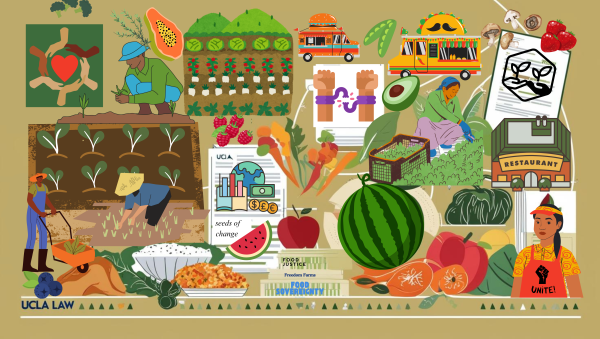
Introducing the Food, Race, and Equity Initiative

by Heliya Izadpanah and Lavanya Sathyamurthy*

This is Part I of a two-part post.

Dreaming of Food Justice in Law

By Heliya Izadpanah

UCLA Law was my dream school. Like many law schools, it catered to my interests in human rights law and environmental law. But what made the decision to attend UCLA Law a no-brainer were two rare institutional assets–its groundbreaking Critical Race Studies program paired with one of the few Food Law programs then existing in the nation.

I was a passionate advocate for food systems justice. We all interact with food daily, yet its production and distribution are rarely observed in modern society. People often don’t know the conditions under which their food is produced or the legal machines maintaining these systems. But when it comes down to it, it’s virtually impossible to identify even a single food item that isn’t riddled with disparities of race, rights, and inequity. From growing food, to harvesting, processing, transportation, access, and health outcomes, every aspect of food systems is steeped in disparities of race, gender, wealth, status, and ability.

As a teenager, I was inspired by Black Power activists and other POC leaders steeped in food systems—Fannie Lou Hamer and the Freedom Farms Collective, Black Panthers like Erika Huggins who created the nation’s first free breakfast program, and Shirley Chisholm, a key architect of WIC and SNAP programs. Similarly, I looked up to the founding organizers of Farmworkers United—Dolores Huerta and Cesar Chavez—for their achievements in food production. Each of these leaders knew the power of food, revealing its power to either hold one in oppression or to act as a focal point for movement building, community power, sovereignty, and emancipation. I was eager to learn how to use law as a tool for food systems justice and get involved in the food law program.

Continue reading “Introducing the Food, Race, and Equity Initiative”

Introducing the Food, Race, and Equity Initiative, Part II

by Heliya Izadpanah and Lavanya Sathyamurthy*

This is Part II of a two-part post.

Why Start Here?

by Lavanya Sathyamurthy


UCLA, home to the Resnick Center for Food Law and Policy and the Critical Race Studies Program, is the perfect place to start a movement focused on infusing issues of equity into food law curricula. The Resnick Center for Food Law and Policy adopts a multi-faceted approach to legal research and scholarship, through courses, conferences, and academic collaboration. The Center offers various classes at the law school. Specifically, the ‘Food Law and Policy Seminar’ exposed me to a wide variety of approaches to food law. As my classmates presented on the right to food and food advertising to children, I realized that food law intersects with every area of law. Immediately, I wanted to connect food law with my background in critical race studies and, more specifically, my experiences as an Asian-American navigating the higher education food landscape. I wrote my paper about the importance of data disaggregation among racial groups within the Asian-American diaspora in crafting solutions to combat food insecurity at the University of California campuses.

Continue reading “Introducing the Food, Race, and Equity Initiative, Part II”

Restricted Access to the “First Food”: Dissecting Breastfeeding Injustices 

August was Breastfeeding Awareness Month. But as Chidera Anthony-Wise discusses below, this issue is critical year-round.

by Chidera Anthony-Wise*

Introduction 

The first food countless infants receive upon arrival into the world is breast milk. The health benefits of breastfeeding are remarkable for babies and mothers. Breast milk strengthens nervous system development and ocular ability of infants. Through breastfeeding, antibodies are introduced to infant immune systems, combatting various diseases. Conditions such as asthma, cardiovascular disease, obesity, type 1 diabetes, and sudden infant death syndrome (SIDS) are less likely among babies that are breastfed. Similarly, lactation is associated with a reduced risk in ovarian and breast cancers and type 2 diabetes in nursing mothers. According to the World Health Organization (WHO), it is strongly recommended to exclusively breastfeed babies for the first 6 months of life and subsequently accompany solid foods with breastmilk for up to 2 years or beyond. Still, there are a plethora of challenges that hinder the adherence to this expert advice. 

Breast milk offers all the nutrients, proteins, and hydration a baby needs for those first 6 months. The release of breast milk is through a “supply and demand” mechanism. If a nursing mother does not have preexisting health conditions that would limit milk production, a full supply of breast milk is dependent on feeding frequency. The provision of formula milk can decrease breast milk supply due to reduced breastfeeding sessions. Despite the WHO recommendation, 2.7 million of the 3.6 million infants born annually in the United States consume formula milk by the age of three months. 

Continue reading “Restricted Access to the “First Food”: Dissecting Breastfeeding Injustices “

Edible Vaccines: The Intersection of Agriculture, Medicine, and Regulation

by Chidera Anthony-Wise*

Farmers might just be the new pharmacists. 

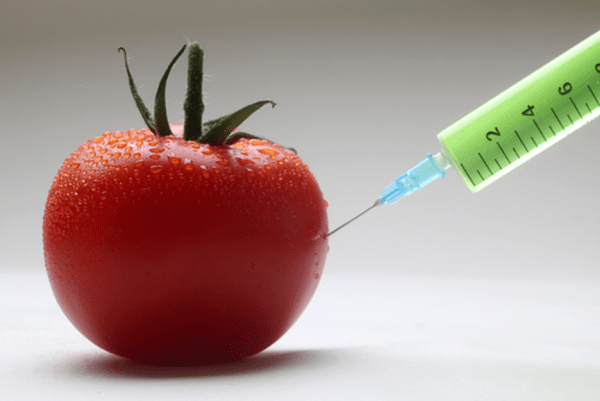
Through scientific breakthroughs, plant products can be genetically modified to deliver immunity against diseases. These “edible vaccines” present remarkable possibilities at the intersection of agriculture and biotechnology. 

One such possibility is to assist immunization efforts on national and global scales. Many low-income nations and US cities such as Chelsea, Massachusetts and Hyde Park, New York lack essential access to vaccines due to expensive costs, maintenance challenges, and improper distribution. The use of common fruits and vegetables as vehicles to immunity could, for this reason, be a tool toward achieving equity. In addition to disease protection, edible vaccines can also be used to alleviate malnutrition because highly nutritious foods, such as tomatoes, lettuce, bananas, corn, and rice, are frequently used as host plants. 

History

In the 1990s, Dr. Charles Arntzen and his team spearheaded the production of an early edible vaccine, a surface protein antigen A derived from Streptococcus mutans successfully expressed in tobacco. This edible vaccine has the capability of alleviating infectious endocarditis, or bacteria occupation in the inner lining of the heart. Arntzen and his colleagues went on to develop a heat-labile toxin, B subunit in potatoes to potentially treat hepatitis B. There is a large focus on protein production in relation to edible vaccine efficacy, as antibodies and protective white blood cells are created by the immune system in the presence of spike (S) proteins. Therefore, to showcase that plant-derived hepatitis B surface antigen could generate a mucosal immune response, host plant potatoes have been optimized to become protein-rich. Other edible vaccine examples include transgenic carrots against HIV and E coli, lettuce against malaria, and spinach against rabies.

Continue reading “Edible Vaccines: The Intersection of Agriculture, Medicine, and Regulation”

Food, community, and belonging: Our Seat at the Table

by Marin Milken*

[This is one in a series of occasional posts by Los Angeles high school students working with and studying food systems.]

Inspired by the meals I made for my family and friends during the pandemic, I founded Our Seat at the Table to engage with questions of food, community and belonging. Though there are various food-related initiatives that Our Seat will continue to tackle through its programming, I wanted our first endeavor to help with the widespread national issue of food insecurity. Food insecurity, in simplest terms, is when people neither have enough to eat, nor know where their next meal is coming from. The latest State of Food Security and Nutrition in the World (SOFI) report indicates that in comparison to 2019, the number of people worldwide affected by hunger has risen by over 122 million. In the United States, food insecurity is addressed through Supplemental Nutrition Assistance Program (SNAP) benefits, which aim supplement low-income families’ groceries, so that they can access the food that they need to be food secure. But key findings in a recent report from the Robert Wood Johnson foundation highlight and demonstrate that SNAP benefits don’t cover the cost of moderately priced meals in 78% of US counties. With this statistic in mind, it’s unlikely that SNAP benefits are able to cover the costs of healthier options, such as organic produce. Programs such as SNAP – and its inability to adequately address the food needs for so many in this country – highlight a large systemic gap between those who are food insecure and food secure, despite SNAP being touted as a successful safety net for those who are food insecure.

Continue reading “Food, community, and belonging: Our Seat at the Table”

The Poisoning of the Gerber Generation:

How Public Nuisance Law Could Address Heavy Metals in Baby Food in the Face of Regulatory Failure

by Lillian Matchett*

A cheerful jingle plays as beaming babies flash across a white background.  These children are the “Gerber Generation,” the voiceover tells you, and they have some big news to share: the nutrition they get in their first five years of life can affect their health forever.   “Think about that,” they say.

Gerber launched its Gerber Generation campaign in 2010 in the face of increased attention on childhood obesity, focusing on the health and nutritional needs of young children at a vital point in their development.  Gerber was right: what a child consumes in the first few years of their life is critically important, but as it turned out, there were other substances in at least some of the Gerber Generation’s food that could have a profound and lasting impact on children’s health.  In 2021, Gerber was one of several companies exposed for selling baby food containing concerning levels of heavy metals—toxins which, even in small amounts, can cause severe and irreversible cognitive impairment and physical illness in young children.

In 2021, a congressional subcommittee issued two reports finding high levels of heavy metals—lead, arsenic, cadmium, and mercury—in commercial baby foods from seven major manufacturers.  Heavy metals were present in baby foods from all companies, often at concentrations many times than that allowed under existing regulations for other food products.  The reports also illuminated failures of industry self-regulation, revealing that companies largely do not test their final products and often do not adhere to their own internal standards. 

Predictably, a deluge of litigation followed the release of the Congressional Reports.  Despite well-documented findings of high heavy metal levels in baby food and the known effects those substances have on children, lawsuits have thus far been mostly unavailing, failing on issues of causation and standing, though many are still making their way through the courts.  Regulatory and legislative solutions have also fallen short.  The FDA and Congress attempted to address the issue, but the FDA’s response has been slow and unenforceable, while legislation lacks bipartisan support, and has stalled in committee. 

Continue reading “The Poisoning of the Gerber Generation:”

Dr. Sara Bleich, Director of Nutrition Security and Health Equity for the Food and Nutrition Service, USDA, appears on Repast

Repast is the food law and policy podcast produced by the Resnick Center for Food Law and Policy. Each month Michael Roberts and Diana Winters interview a thought leader in the field of food law and policy to discuss past achievements, current developments, and future challenges. You can find Repast on Apple Podcasts, Spotify, or wherever you listen to podcasts.

This month , Michael and Diana talk with a very special guest–Dr. Sara Bleich, the Director of Nutrition Security and Health Equity for the Food and Nutrition Service, USDA.   Dr. Bleich is leading the department’s work to counter food and nutrition insecurity in the United States.  In this episode, Dr. Bleich discusses the USDA’s Actions on Nutrition Security, the difference between food security and nutrition security, health equity, structural racism, the upcoming historic White House Conference on Hunger, Nutrition, and Health, and much more.

Dr. Sara Bleich is on leave from her tenured position as a Professor of Public Health Policy at the Harvard T.H. Chan School of Public Health.  She is a well-regarded public health policy expert specializing in food and nutrition policy and the author of more than 150 peer-reviewed publications. Her research centers on food insecurity, as well as racial injustice within the social safety net. Dr. Bleich holds a PhD in Health Policy from Harvard University and a Bachelor’s degree in psychology from Columbia University.

In the first year of the Biden administration, Dr. Bleich served as Senior Advisor for COVID-19 in the Office of the Secretary. In January 2022, she transitioned to her new role as the first Director of Nutrition Security and Health Equity at the Food and Nutrition Service at USDA.  She will elaborate more on this role today.  From 2015-2016, she served as a White House Fellow in the Obama Administration, where she worked in USDA as a Senior Policy Advisor for Food, Nutrition and Consumer Services and with the First Lady Michelle Obama’s Let’s Move! Initiative. 

Michael T. Roberts is the Executive Director of the Resnick Center for Food Law & Policy at UCLA Law.

Diana Winters is the Deputy Director of the Resnick Center for Food Law & Policy at UCLA Law.

For more on the USDA’s Actions on Nutrition Security, see here.

See here for Secretary Vilsack’s address on the USDA’s Actions on Nutrition Security.

See here for the USDA’s new blog series on nutrition security.

Look here for information about the upcoming White House Conference on Hunger, Nutrition, and Health.

Website Powered by WordPress.com.

Up ↑