President Trump Signs Executive Order to Keep Meat Processing Plants Open

by Diana Winters

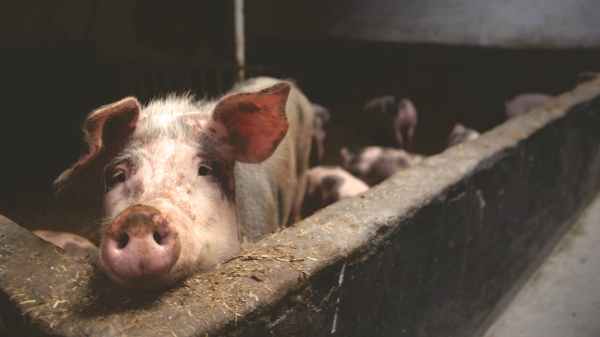
Thousands of workers at meat processing and packing plants have contracted coronavirus* and over 20 have died.  As of last week 13 plants had closed down for some period of time resulting in a significant reduction in the nation’s meat slaughter (pork and beef) capacity.

Yesterday, April 28, President Trump signed an Executive Order declaring meat plants “critical infrastructure” and directing the Secretary of Agriculture, Sonny Perdue, to ensure that processing plants remain open.

The Order requires that continued operations be in compliance with guidance from the CDC and OSHA regarding safety in plants, but because this guidance is voluntary, labor representatives fear that workers will continue to be put at risk by working in meat plants.  Moreover, some meat plant workers insist they will not be ordered to come to work.

Some scholars have speculated that the main purpose of the Order is to block local objections and potentially protect the meat processing and packing industry from liability for coronavirus contracted on the job.  The issue of tort liability is being discussed more broadly in relation to the gradual reopening of the economy, and certain representatives for business are asking the Trump administration to include a liability shield in any future relief legislation.

As we consider the effects of this Executive Order, perhaps this is a good time to remember that poor diet has been linked to worse outcomes from Covid-19, and that excess meat consumption has been linked to many diet-related diseases.  Maybe a (temporary) reduction in the meat supply can be tolerated?


*Many of the articles linked in this post, as well as many others, are linked in the Resnick Center’s UCLA Law LibGuide to Covid-19 and Food Law.

Forthcoming Scholarship: “A Palatable Option for Sugar-Coated Palates”

by Diana Winters

UPDATE: The article was published Summer 2021, and can be found here.

Some good news!  UCLA Law 2L Nicholas Miller’s article, “A Palatable Option for Sugar-Coated Palates: Labeling as the Libertarian Paternalism Intervention that American Consumers Need”, will be published in the University of Florida Journal of Law & Public Policy early in 2021.

Nicholas is a second year law student at UCLA, where he is involved in a range of activities including OUTLaw and the Dukeminier Awards Journal of Sexual Orientation and Gender Identity Law. As the son of a caterer and a lawyer, he was naturally drawn to food law, which combines his love of food and his desire to understand the legal frameworks that protect society and guide behavior. He chose to write about labeling – specifically of sugar content – because it raises the issue of how to balance progressive public health policy and the historically American fear of paternalistic overreach by the government. He sees this dynamic of public health initiatives that impede on individual liberty at play now, amid the coronavirus pandemic, and hopes his analysis will help advance the dialogue on how best to guide people to make good decisions about their health.

Here is the abstract for the article:

Addressing nutritional health for Americans has proven uniquely challenging in a marketplace flooded with non-nutritious food products.  Compounding the issue, consumers consistently misjudge the contents of these processed foods and undervalue their pernicious effect.  At the same time, consumers are wary of overly intrusive or paternalistic government interventions, such as bans and portion limits.  This paper reflects on the effectiveness (or lack thereof) of previous attempts by the FDA to combat public health threats.  Finally, the paper proposes a path forward, with growing political momentum, that builds on the innovative food labeling models being tested in markets around the world.

We can’t wait to see this in print.

*If you would like to have forthcoming food law scholarship featured in the blog, please contact Diana Winters.*

Feeding Children During the Pandemic – HER teleconference

by Diana Winters

There has been a recent spate of articles about several studies showing that a very high number of patients who ended up hospitalized with Covid-19 had underlying health conditions, with obesity being one of the most common.[1]  These studies are largely observational and preliminary, but have still garnered attention.  At the same time, concerns about supply chain disruption and increased economic insecurity have also highlighted the need to prepare for a rise in global hunger and malnutrition.  With this backdrop, as well as the announcements that many schools across the country will be closed for the rest of the school year, Healthy Eating Research (HER) held a teleconference for media on feeding children during the pandemic, which discussed availability, distribution, and nutritional content.  HER is a national program of the Robert Wood Johnson Foundation (RWJF), which supports research on policy, systems, and environmental strategies that promote healthy eating among children.  The call addressed many issues around feeding children during this crisis, including the following.

During a normal school year, schools across the country provide approximately 30 million children with free and reduced-price school meals.  These meals provide up to two-thirds of these children’ daily nutritional needs.  As of right now, however, 48 states have closed their schools because of the Covid-19 pandemic, and 30 states have announced that schools are closed until the fall.  The impact of this on the availability and quality of food for children is immense.

There has been significant federal legislation to address feeding children during the pandemic.  This legislation includes Pandemic EBT, where states can request waivers to provide SNAP benefits for the families of children eligible for free or reduced-price lunch, emergency benefits, where all SNAP beneficiaries can receive emergency benefits, funds to bolster new SNAP enrollees, and legislation to adapt the emergency feeding of children during school closures to encompass summer feeding nutritional standards.

All of these actions are taking place while the Trump administration is simultaneously trying to weaken nutritional standards for school lunches.  In mid-April, a federal court struck down a 2018 Agriculture Department rule that reversed nutrition standards for sodium and whole grains in school meal programs.

Moreover, the Trump administration has taken action to cut down on SNAP benefits.  The four major reforms the administration has pushed–including making it harder for states to request time limit waivers, restricting states’ ability to make families categorically eligible based on their eligibility for another program, standardizing the method for determining state allowances, and denying noncitizens citizenship or green cards if they participate in federal aid programs—are currently stalled during the pandemic.

Dr. Sara Bleich, Professor of Public Health Policy at the Harvard Chan School of Public Health, estimates that the SNAP rolls will go up to higher numbers than during the 2008 recession because of the unprecedented unemployment figures.

More legislation is needed to protect children from food insecurity and the resulting health detriments, said Dr. Bleich.  Dr. Bleich explained that we should look for the government to increase the size of SNAP benefits, which is a proven policy intervention to stimulate the economy and improve health, to provide personal protective equipment (PPE) for food service staff, and to provide more funding for school districts impacted by the school year closures.

Elisabet Eppes, MPH, Program Innovation Director at the National WIC Association, spoke about how the WIC (Women, Infants and Children) program is adapting to the pandemic.  WIC is a special supplemental nutrition program for pregnant and postpartum women, and their infants and small children.  It is a federal program, administered and run by states, that provides nutrition education, health care referrals, breast feeding support, and nutrition funding.  It is provided through paper vouchers and electronic benefit cards.

The WIC program is facing steep challenges during the pandemic.  Many WIC office are closed as the staff helps with other pandemic-related tasks.  WIC participants are having trouble acquiring WIC food because of food supply problems at grocery stores.  At the same time, more families need WIC right now because of increased unemployment.  WIC agencies are adapting to the pandemic, and legislation has been passed and is pending to provide the program with extra money and to ease administrative requirements.  Moreover, states are exploring possibilities for online orders and curbside pickups.

The impact of the pandemic on feeding children is immense, and its effects will be felt for years to come, on our nation’s public health and on its economy.  These issues are of critical importance.


[1] The articles here can be found linked on the Resnick Center’s guide to food law and Covid-19 resources, found here.

Meat Production and Covid-19 – Shortages Coming?

by Diana R. H. Winters

One of the country’s largest pork processing facilities announced that it is closing indefinitely.  The Smithfields Foods, Inc. plant in Sioux Falls, South Dakota will close after almost 300 of its workers tested positive for coronavirus.  The plant employs 3700 workers and produces about four percent of the pork production in the United States.

Other major meat producers, including JBS USA and Tyson, have closed facilities after workers tested positive, and in some instances, died.

These closures illuminate significant worker safety problems at meat production plants.  Manufacturers have been slow to provide protective equipment to low-wage workers standing close together to process meat and have pressured employees to remain working even if sick.

Moreover, these closures are one of many Covid-19 food supply chain issues resulting from the shutdown, which also include the inability of food producers to repackage food meant for institutional or restaurant use for retail use.  The New York Times reported on the resulting massive food waste this past weekend.

All of the articles linked in this post can be found in the Resnick Center’s and the UCLA Law Library’s resource guide to Covid-19 and food law.  Here in the blog we will occasionally highlight important trends and stories we see emerging.  Please explore our guide, and forward relevant material for inclusion in the guide.


Schools and Food

Every day I get email updates from the Los Angeles Unified School District, where my two younger children are students.  These emails discuss distance education and celebrate the amazing teachers working to keep their students learning, but the emails are focused on food.  The amount of children who depend on the school system for at least two of their meals per day is staggering.  To attempt to address this need, the district, the second biggest school district in the country, opened 60 grab and go food centers for its students and their families.  Yesterday it provided 90,000 meals.

In Los Angeles, 80% of students qualify for free or reduced-price meals, and in some areas the percentage is close to 90%.  The New York School system includes close to 114,000 homeless children.

Right now, we have to feed these kids, but this crisis has made stunningly clear the role of schools in our food system, the magnitude of which is far broader than school lunch and shows that arguments about the nutritional profile of school food are of immense and critical importance.


By 2030 50% of American adults will be obese, and 25% will be severely obese

by Diana R. H. Winters

If the predictions from a recent New England Journal of Medicine article (pay-walled, but 3 free articles a month available with account creation) come true, the implications–for our nation’s health, for our health care system, and for our economy–are vast.  The study shows that by 2030, almost half of American adults will be obese and a quarter will be severely obese.  The study authors were meticulous in their methods to increase the reliability of their projections.

The study found that there is great variation among states, with over 29 states projected to have higher than 50% obesity, and a large variation in the prevalence of obesity according to income.  Severe obesity will be much more common among low-income adults than higher income adults.

The study also notes that the health consequences of this magnitude of obesity in the population are enormous, and will likely increase socioeconomic disparities.

Although the researchers are light on policy suggestions, the authors do write that, “a range of sustained approaches to maintain a healthy weight over the life course, including policy and environmental interventions at the community level that address upstream social and cultural determinants of obesity, will probably be needed to prevent further weight gain across the BMI distribution.”

In the New York Times, Jane E. Brody notes in covering this study that the United States has done very little to address the food environment that has led to such a marked increase in obesity (since 1990, obesity in the United States has doubled).  Policy interventions such as taxes on sugar-sweetened beverages, portion control, and partnering with restaurants and food manufacturers to reformulate food to be more healthy would be a start.

In fact, another article published today in the New York Times shows that multifaceted policy intervention can have a huge effect on consumption.  It is four years since Chile passed a series of sweeping laws to combat obesity including raising taxes on sugar-sweetened beverages, and “advertising restrictions on unhealthy foods, bold front-of-package warning labels and a ban on junk food in schools,” and there has been a marked drop in the consumption of sugar-sweetened beverages.  That article cited a public health policy professor from Harvard University who said “the early results suggested that a raft of food policies, not just stand-alone measures like soda taxes, were needed to address a growing obesity crisis that is affecting nations rich and poor.”

As the study and these articles note, time is short.  The costs of obesity at this magnitude are enormous – on quality of life, on health care spending, on the economy, on socioeconomic disparities.  We need these policies, and we need them now.


For Your Meatless Monday Reading Pleasure

by Diana R. H. Winters

Recently there has been a lot of interest in plant-based meat substitutes and their potential role in reducing global meat consumption and the environmental impact of meat production.

This week’s Economist discussed how plant-based meat can reshape the market, and its environmental potential.  The article, under the headline of “Fake Moos“, explains, however, that companies marketing plant-based meat substitutes must radically increase their reach to make much of a difference.

In today’s New York Times, David Yaffe-Bellany discusses how this may happen in “The New Makers of Plant-Based Meat?  Big Meat Companies.”  This article explains that Tyson, Smithfield, Purdue, and other meat producers are moving into the meat-substitute space.  The oddest product being introduced?  A “blended” product introduced by Purdue and Tyson, which combines meat and vegetable protein.  Weird.

And last week, Tad Friend at The New Yorker profiled Impossible Burger, and its founder’s ambition to “wipe out all animal agriculture and deep-sea fishing by 2035.”

Why the sudden fascination with bleeding vegetable protein?  Perhaps it rings a hopeful note after last month’s bleak climate news, providing a way forward for individual action.  But first, we have to stop flying these burgers across the Atlantic…..

Once again, scientists say not to give children juice

by Diana R. H. Winters

In my house, I frown on recreational juice drinking by my children.  My kids get juice on their birthdays, sometimes.

I am happy to say that a panel of scientists has issued new nutritional guidelines for children supporting my draconian approach.  Kids under five should drink milk and water, and every once in a while, a half of a cup of 100% fruit juice.

And although I am delighted to have these recommendations to hand to my poor kids when they ask for juice, I do wish this wasn’t news, because as coverage of this study explains, “[r]ecommendations to limit juice are not new.”

Dr. Richard Besser, president and chief executive of the Robert Wood Johnson Foundation says, “When we talk about empty calories that are consumed through beverages and the number of calories people get from sugar-sweetened drinks, we’re not just talking about soda . . . Juice is another source of calories that nutritionally aren’t terrific.”


New Scholarship: The New Food Safety

by Diana Winters

Emily M. Broad Leib and Margot Pollans recently posted The New Food Safety, forthcoming in the California Law Review, on SSRN.  The article argues for a comprehensive definition of “food safety” that encompasses “acute ingestion-related illness” (narrow food safety), “whole-diet, cumulative ingestion-related risks that accrue over time” (intermediate food safety), and “risks that arise from food production or disposal” (broad food safety).  The articles discusses why our current divided regulatory approach is problematic, and may actually exacerbate food-related harms.  In addition to calling for an expanded definition of “food safety,” the article proposes better interagency coordination and the creation of a single Food System Safety agency.

This compelling work  is applicable outside of the context of food, and will appeal broadly to scholars of the regulatory space.

From The Economist: Death of the Calorie

by Diana R. H. Winters

“What we…know, however, suggests that counting calories is very crude and often misleading…. a  growing body of research shows that when different people consume the same meal, the impact on each person’s blood sugar and fat formation will vary according to their genes, lifestyles and unique mix of gut bacteria…[and] the amount of energy we absorb from food depends on how we prepare it..”                                                                    -Peter Wilson, “Death of the Calorie”

Today I taught a segment of a pre-written nutrition curriculum to my son’s fourth grade class on serving sizes.  Imagine my dismay when I picked up the script twenty minutes (oops) before I was to teach the class and found that it wanted me to teach the kids that serving sizes were recommended portions, not a reflection of what Americans actually eat (which they are, by law).  The fundamental lesson, however, contained some decent guidance–people should eat less protein (although the lesson didn’t recognize any protein but animal) and processed foods, and eat more fruits,vegetables, and other whole foods.  This simple prescription, also taught by Michael Pollan (“Eat food, not too much, mostly plants”), is more effective by far than teaching people to rely on serving sizes and calorie counting to eat healthy and maintain body weight.

This article in The Economist’s 1843 magazine on our misguided reliance on calories to measure our food intake addresses this concept, and is a fascinating and important read.

Website Powered by WordPress.com.

Up ↑