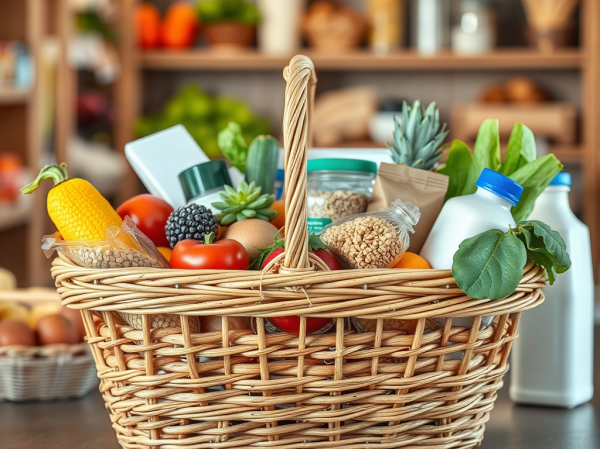
SNAP Policy Updates – Resnick Center + LAFPC Weekly Updates

[This post is cross-posted from the Los Angeles Food Policy Council blog.]

by Daniel Schettini*

Lawsuit Against USDA Over SNAP Restrictions

Date: March 11, 2026

On Wednesday, 5 SNAP recipients sued the USDA and the Agriculture Secretary in the U.S. District Court of the District of Columbia, challenging the approval of five state SNAP waivers. They claim that the USDA violated the APA and exceeded the authority of the Food and Nutrition Act of 2008. Specifically, they argue that the approval of the waivers were “arbitrary and capricious, an abuse of discretion, and were not in accordance with the law.”

Impact: The waivers being sued over, as detailed in a later section of this update, allow states to bar participants from using benefits on soda, energy drinks, candy, and other desserts as a move towards implementing the MAHA agenda. Thus far, 22 states have been approved for waivers by the USDA. While the lawsuit is still pending, Plaintiff counsel believes that this is a clear violation of the APA at the very least because the USDA failed to provide notice and comment. This action is still very new though, and something that I, as well as you all, should definitely keep an eye on.

Links/Resources:

Bloomberg News – Court Dockets

USDA faces lawsuit challenging state SNAP waivers

Food Stamp Recipients Sue Over Bans on Sugary Drinks

Continue reading “SNAP Policy Updates – Resnick Center + LAFPC Weekly Updates”
The Urgent Need to Update the Regulation of GM Crops

by Alice Carli*

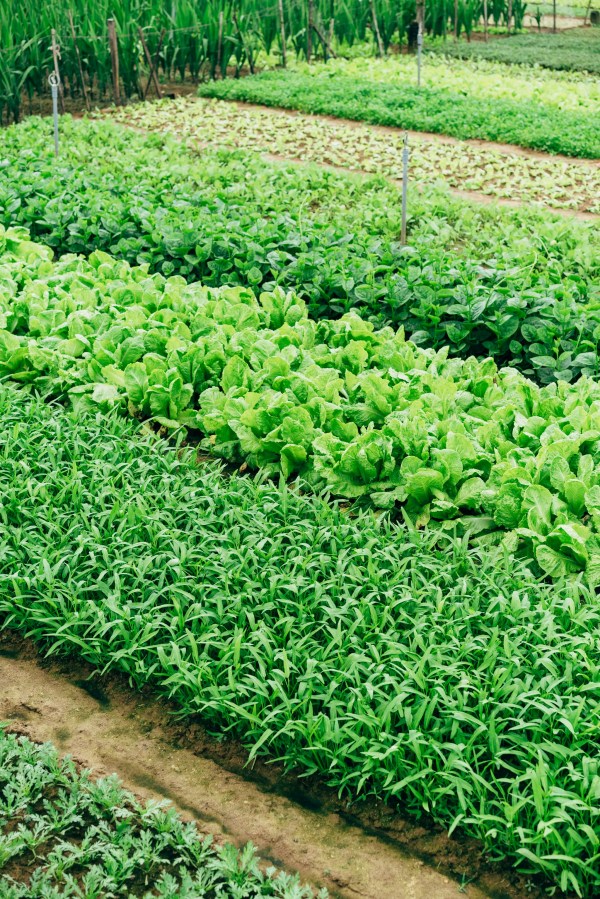
Humans have been altering plants for upwards of 10,000 years through a wide variety of techniques for genetic modification. In the 20th century, scientists developed transgenic genetic engineering, which combines DNA from two or more sources to achieve a desired trait. This discovery fundamentally altered our ability to manipulate crops and opened a Pandora’s box of commercial possibilities and political conflicts. More recently, the advent of CRISPR and other precision gene editing technologies has resurfaced tensions around the role of genetically modified (“GM”) crops in our agricultural and food systems.

Despite these longstanding tensions, the U.S. has the world’s largest production of GM crops by acreage, and it is estimated that over 75% of processed foods on our supermarket shelves contain genetically engineered ingredients.

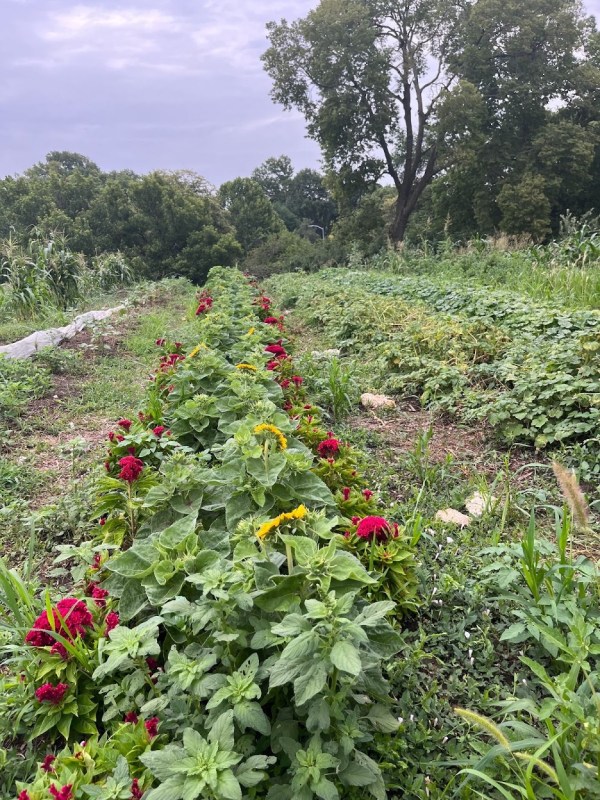
At the same time, the country faces systemic sustainability challenges exacerbated by climate change and intensive monoculture farming. These include flooding, soil degradation, air and water pollution, and biodiversity collapse. Significant and holistic changes to U.S. agriculture are needed to tackle these problems.

If regulated effectively, GM crops have the potential to make U.S. agriculture more sustainable and climate resilient. When designed with climate-smart features, these crops can significantly enhance nutrient or photosynthesis efficiency, provide flood, drought, and disease resistance, and even improve soil carbon sequestration.

Continue reading “The Urgent Need to Update the Regulation of GM Crops”

Discovering agricultural careers with the USDA: a summer program for teens

by Rosalie Winters*

[This is one in a series of occasional posts by Los Angeles high school students working with and studying food systems.]

This summer I attended the AgDiscovery program at Lincoln University in Jefferson City, Missouri. AgDiscovery is a program for high school students, and it is run by the USDA at multiple land grant universities nationwide. It aims to help teenagers explore careers in agricultural sciences. Each program across the country is unique, specializing in animal science, plant science, agribusiness, or a combination of the three, with pieces added that may explore topics like agricultural history or urban farming. You are only allowed to apply to one school, so it is important to choose one that includes things you are passionate about. The program at Lincoln is a combination, providing students with an introduction to the many moving parts that make up the country’s agricultural systems. This appealed to me because while I was very interested in agriculture, I knew almost nothing about it. 

The program at Lincoln included four distinct components. The first of these was a lecture series on varying agricultural topics. For example, we heard an etymologist speaking about different invasive species of insects and how they can affect various crops; a speaker discussing native plants and showing us some of the different species native to Missouri; and had a lesson on scientific writing and how to put together research. These informative lectures allowed us to gain a background for the things that we were seeing and experiencing in person. 

Continue reading “Discovering agricultural careers with the USDA: a summer program for teens”

Dr. Sara Bleich, Director of Nutrition Security and Health Equity for the Food and Nutrition Service, USDA, appears on Repast

Repast is the food law and policy podcast produced by the Resnick Center for Food Law and Policy. Each month Michael Roberts and Diana Winters interview a thought leader in the field of food law and policy to discuss past achievements, current developments, and future challenges. You can find Repast on Apple Podcasts, Spotify, or wherever you listen to podcasts.

This month , Michael and Diana talk with a very special guest–Dr. Sara Bleich, the Director of Nutrition Security and Health Equity for the Food and Nutrition Service, USDA.   Dr. Bleich is leading the department’s work to counter food and nutrition insecurity in the United States.  In this episode, Dr. Bleich discusses the USDA’s Actions on Nutrition Security, the difference between food security and nutrition security, health equity, structural racism, the upcoming historic White House Conference on Hunger, Nutrition, and Health, and much more.

Dr. Sara Bleich is on leave from her tenured position as a Professor of Public Health Policy at the Harvard T.H. Chan School of Public Health.  She is a well-regarded public health policy expert specializing in food and nutrition policy and the author of more than 150 peer-reviewed publications. Her research centers on food insecurity, as well as racial injustice within the social safety net. Dr. Bleich holds a PhD in Health Policy from Harvard University and a Bachelor’s degree in psychology from Columbia University.

In the first year of the Biden administration, Dr. Bleich served as Senior Advisor for COVID-19 in the Office of the Secretary. In January 2022, she transitioned to her new role as the first Director of Nutrition Security and Health Equity at the Food and Nutrition Service at USDA.  She will elaborate more on this role today.  From 2015-2016, she served as a White House Fellow in the Obama Administration, where she worked in USDA as a Senior Policy Advisor for Food, Nutrition and Consumer Services and with the First Lady Michelle Obama’s Let’s Move! Initiative. 

Michael T. Roberts is the Executive Director of the Resnick Center for Food Law & Policy at UCLA Law.

Diana Winters is the Deputy Director of the Resnick Center for Food Law & Policy at UCLA Law.

For more on the USDA’s Actions on Nutrition Security, see here.

See here for Secretary Vilsack’s address on the USDA’s Actions on Nutrition Security.

See here for the USDA’s new blog series on nutrition security.

Look here for information about the upcoming White House Conference on Hunger, Nutrition, and Health.

Website Powered by WordPress.com.

Up ↑