The Urgent Need to Update the Regulation of GM Crops

by Alice Carli*

Humans have been altering plants for upwards of 10,000 years through a wide variety of techniques for genetic modification. In the 20th century, scientists developed transgenic genetic engineering, which combines DNA from two or more sources to achieve a desired trait. This discovery fundamentally altered our ability to manipulate crops and opened a Pandora’s box of commercial possibilities and political conflicts. More recently, the advent of CRISPR and other precision gene editing technologies has resurfaced tensions around the role of genetically modified (“GM”) crops in our agricultural and food systems.

Despite these longstanding tensions, the U.S. has the world’s largest production of GM crops by acreage, and it is estimated that over 75% of processed foods on our supermarket shelves contain genetically engineered ingredients.

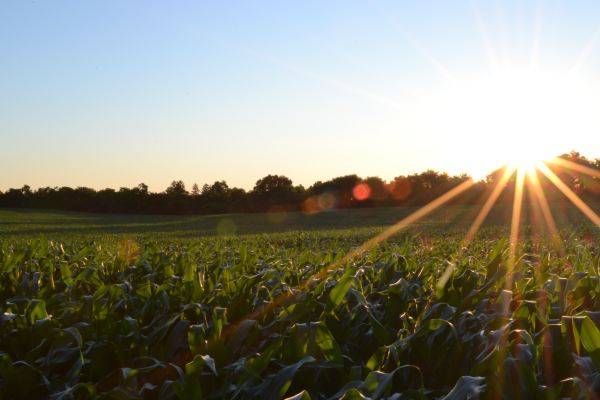
At the same time, the country faces systemic sustainability challenges exacerbated by climate change and intensive monoculture farming. These include flooding, soil degradation, air and water pollution, and biodiversity collapse. Significant and holistic changes to U.S. agriculture are needed to tackle these problems.

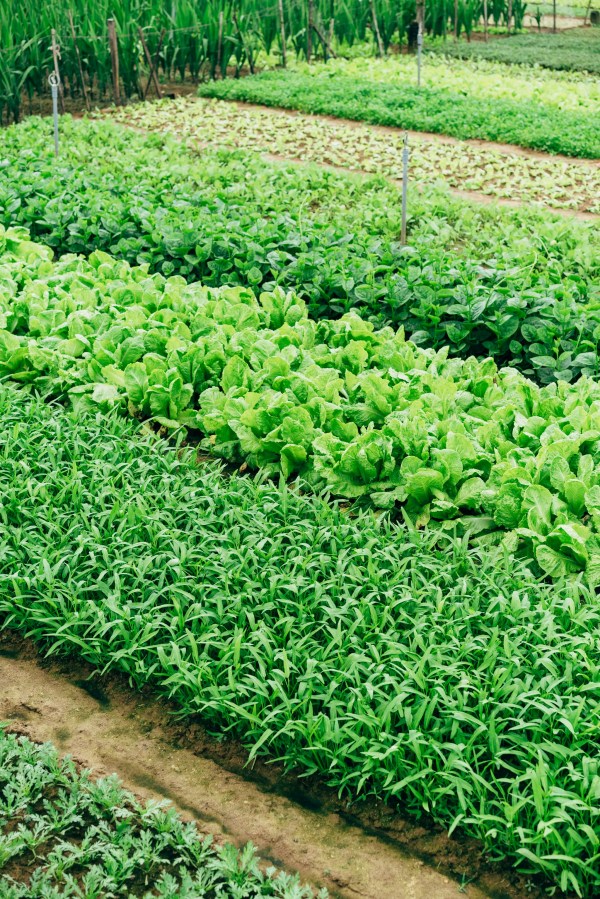
If regulated effectively, GM crops have the potential to make U.S. agriculture more sustainable and climate resilient. When designed with climate-smart features, these crops can significantly enhance nutrient or photosynthesis efficiency, provide flood, drought, and disease resistance, and even improve soil carbon sequestration.

Continue reading “The Urgent Need to Update the Regulation of GM Crops”

The Poisoning of the Gerber Generation:

How Public Nuisance Law Could Address Heavy Metals in Baby Food in the Face of Regulatory Failure

by Lillian Matchett*

A cheerful jingle plays as beaming babies flash across a white background.  These children are the “Gerber Generation,” the voiceover tells you, and they have some big news to share: the nutrition they get in their first five years of life can affect their health forever.   “Think about that,” they say.

Gerber launched its Gerber Generation campaign in 2010 in the face of increased attention on childhood obesity, focusing on the health and nutritional needs of young children at a vital point in their development.  Gerber was right: what a child consumes in the first few years of their life is critically important, but as it turned out, there were other substances in at least some of the Gerber Generation’s food that could have a profound and lasting impact on children’s health.  In 2021, Gerber was one of several companies exposed for selling baby food containing concerning levels of heavy metals—toxins which, even in small amounts, can cause severe and irreversible cognitive impairment and physical illness in young children.

In 2021, a congressional subcommittee issued two reports finding high levels of heavy metals—lead, arsenic, cadmium, and mercury—in commercial baby foods from seven major manufacturers.  Heavy metals were present in baby foods from all companies, often at concentrations many times than that allowed under existing regulations for other food products.  The reports also illuminated failures of industry self-regulation, revealing that companies largely do not test their final products and often do not adhere to their own internal standards. 

Predictably, a deluge of litigation followed the release of the Congressional Reports.  Despite well-documented findings of high heavy metal levels in baby food and the known effects those substances have on children, lawsuits have thus far been mostly unavailing, failing on issues of causation and standing, though many are still making their way through the courts.  Regulatory and legislative solutions have also fallen short.  The FDA and Congress attempted to address the issue, but the FDA’s response has been slow and unenforceable, while legislation lacks bipartisan support, and has stalled in committee. 

Continue reading “The Poisoning of the Gerber Generation:”

Discovering agricultural careers with the USDA: a summer program for teens

by Rosalie Winters*

[This is one in a series of occasional posts by Los Angeles high school students working with and studying food systems.]

This summer I attended the AgDiscovery program at Lincoln University in Jefferson City, Missouri. AgDiscovery is a program for high school students, and it is run by the USDA at multiple land grant universities nationwide. It aims to help teenagers explore careers in agricultural sciences. Each program across the country is unique, specializing in animal science, plant science, agribusiness, or a combination of the three, with pieces added that may explore topics like agricultural history or urban farming. You are only allowed to apply to one school, so it is important to choose one that includes things you are passionate about. The program at Lincoln is a combination, providing students with an introduction to the many moving parts that make up the country’s agricultural systems. This appealed to me because while I was very interested in agriculture, I knew almost nothing about it. 

The program at Lincoln included four distinct components. The first of these was a lecture series on varying agricultural topics. For example, we heard an etymologist speaking about different invasive species of insects and how they can affect various crops; a speaker discussing native plants and showing us some of the different species native to Missouri; and had a lesson on scientific writing and how to put together research. These informative lectures allowed us to gain a background for the things that we were seeing and experiencing in person. 

Continue reading “Discovering agricultural careers with the USDA: a summer program for teens”

Exploring the Legal and Policy Implications Behind ‘High on the Hog’: Potential Solutions Forward (Part 4 of 4)

There are a variety of policy solutions that have the potential to help elevate and preserve Black cuisine and resolve inequities faced by Black Americans in the American food system. This post will explore ideas that relate to the preservation of Black culinary tradition, supporting Black farmers and culinary professionals, and increasing the access of culturally-relevant foods to Black communities in order to honor the richness of America’s culinary landscape. 

Preservation of Black Culinary Traditions

The preservation of Black culinary traditions is important to ensure that Black communities are able to celebrate their cultural heritage and to allow for greater recognition of Black people’s contributions to the culinary world. Initiatives like funding programs and grants to support culinary research, education, and documentation of traditional Black food practices could help with this cultural preservation. Furthermore, educational initiatives that introduce Black American cuisine into school curricula have the ability to educate young people about the cuisine’s significance and influence on American food. FoodCorps is an AmeriCorps grantee that has begun undertaking this type of initiative. During black history month of this year (February 2023), the organization held educational programming at elementary schools which taught black history through a culinary lens. 

Continue reading “Exploring the Legal and Policy Implications Behind ‘High on the Hog’: Potential Solutions Forward (Part 4 of 4)”

Exploring the Legal and Policy Implications Behind ‘High on the Hog’: Black Farmers, Land Loss and Its Implications (Part 3 of 4)

Throughout “High on the Hog”, one can see a deep connection between Black American culinary traditions and farming. However, this connection has been threatened by a variety of policies that have limited Black American land ownership and access. For example, certain policies by the USDA, which has earned itself a description as “the last plantation,” such as allowing local (mostly white) farmers to determine Black farmers’ eligibility for USDA funding, have led to Black Americans’ loss of land. In Pigford v. Glickman, the racial discrimination class-action brought against the USDA by Black farmers, the USDA agreed to the largest civil-rights settlement in U.S. history of $1.25 billion. However, many eligible Black farmers have not been compensated

The number of Black farmers in America has decreased dramatically over the past 100 years, with less than 2 percent of farms in the United States owned or operated by Black Americans. This figure is a significant decrease from 1920, when 14.3% of American farms were operated by Black farmers. While there was a small increase in the number of Black farmers from 1.3% to 1.4% between 2007 and 2012, both Black rural and urban farmers continue to face challenges including land access, zoning laws, and financing. Public policies in the agricultural sector have historically disproportionately favored large-scale farmers and contributed to the marginalization of Black farmers. 

Continue reading “Exploring the Legal and Policy Implications Behind ‘High on the Hog’: Black Farmers, Land Loss and Its Implications (Part 3 of 4)”

Exploring the Legal and Policy Implications Behind ‘High on the Hog’: Intellectual Property and Cultural Erasure (Part 2 of 4)

In “High on the Hog” episode three, we learn the stories of Hercules Posey and James Hemings, the enslaved private chefs of George Washington and Thomas Jefferson respectively. They were widely known and widely praised, yet there are no written recipes attributed to either chef. In Stephen Satterfield’s conversation with Hatchet Hall chefs Brian Dunsmoor and Martin Draluck, the chefs hint at the idea that Martha Washington’s widely praised recipe books may in fact contain recipes developed by the enslaved Hercules. 

Dishes like macaroni and cheese have become an American staple, yet most Americans are unaware that the dish was perfected and popularized by Hemings. Black Americans have long been culinary pioneers in this country and have shaped American cuisine at large. The erasure of Black American’s culinary contributions diminishes Black people’s role in America’s cultural tapestry and perpetuates the idea that Black cuisine is isolated from American cuisine at large. 

Furthermore, cultural erasure of Black culinary traditions is a significant risk because Black communities historically have faced limited access to resources and opportunities in the food industry. Unequal access to capital and credit have likely hindered the ability of Black chefs, restaurateurs, and food entrepreneurs to establish and grow their businesses. The lack of representation and access further perpetuates the erasure of Black culture within the food industry and hampers the promotion and preservation of Black culinary traditions.

Continue reading “Exploring the Legal and Policy Implications Behind ‘High on the Hog’: Intellectual Property and Cultural Erasure (Part 2 of 4)”

Exploring the Legal and Policy Implications Behind ‘High on the Hog’: The Rise of Black Culinary Tradition (Part 1 of 4)

This four-part blog series is inspired by the Netflix docu-series, “High on the Hog: How African American Cuisine Transformed America.” I will delve into the legal and public policy implications behind the narratives presented by series host, Stephen Satterfield, throughout the show’s four episodes. This blog series aims to explore the impact of laws and policies on the development and preservation of Black Americans’ culinary heritage. 

There’s little doubt that the history of slavery in the Black American story is a factor in the culture’s culinary development. “Soul food is the African-American version [of comfort food] —  a cuisine forged during several centuries as a response to persistent trauma from slavery and oppression,” says lawyer, public policy advisor, and culinary historian Adrian Miller

Continue reading “Exploring the Legal and Policy Implications Behind ‘High on the Hog’: The Rise of Black Culinary Tradition (Part 1 of 4)”

Remedying Discrimination Against Black Farmers

by Rachel Long*

The United States Department of Agriculture (USDA) has a long history of discrimination against Black farmers. While there have been some successful attempts at seeking compensation,[i] USDA – and the country – have a long way to go before justice is served to Black farmers.[ii] I wrote a paper on potential remedies to past discrimination against Black farmers. 

In 2021, Congress attempted to remedy some of the historic discrimination against Black farmers: the American Rescue Plan Act (ARPA) included two provisions aimed at helping Black and other socially disadvantaged farmers (SDFs).[iii] The provisions purported to forgive up to 120% of certain loans of qualified farmers[iv] and was intended to “respond to the cumulative impacts of systemic discrimination and barriers to access” that such farmers have historically faced from USDA.[v]

Continue reading “Remedying Discrimination Against Black Farmers”

Just Released: Model Strategies in Global Food System Law & Policy

The Resnick Center for Food Law & Policy is thrilled to present: “Model Strategies in Global Food System Law and Policy,” an interactive issue brief series designed to democratize sustainable, equitable, and inclusive systems-thinking approaches to food governance.

This project was made possible due to a generous gift by the non-profit Seeding the Future Van Lengerich Foundation

Drawing from laws, policies, and research from around the world, the series makes the case for a paradigm shift in how we conceptualize and govern food. Rather than adopt narrowly-defined and siloed laws and policies, public and private policymakers should advance food system laws and policies , i.e., solutions that are holistic, multi-disciplinary, and which account for the diverse set of actors, activities, and feedback loops that comprise the food system.

The Resnick Center invites policymakers and other stakeholders to explore the featured model strategies and accompanying issue briefs to learn how countries around the world are successfully leveraging laws and policies to respond to the most pressing and complex food system challenges.

View the interactive story map here.

Seeding the Future Foundation Supports Resnick Center

The Resnick Center is excited to share our good news!  

We have received a generous gift of $300,000 to our endowment fund from the non-profit, Seeding the Future Foundation, founded by Dr. Bernhard van Lengerich. Dr. van Lengerich, a leader in food science and technology, also serves as an outside advisory board member for the Resnick Center.  

Since its inception, the Seeding the Future Foundation has significantly contributed to transforming the food system.  Its unique Challenge Awards Program, hosted by the Institute of Food Technologists, awards up to $1 million in grants and prizes annually for highly impactful innovations to generate healthier people and a planet.  Since 2021, Seeding the Future has received over 1,500 submissions from academic and research institutions, non-profits, and for-profits, representing over 75 countries, for innovation across the food system.  

The endowment gift to the Resnick Center will forward the missions of the Center and of Seeding the Future by supporting legal education and the development of scholarship and tools to bolster innovation that provides equitable access to safe, nutritious, sustainable, affordable, and trusted food.  

Thanks to a previous operational gift from Seeding the Future, the Resnick Center has developed a Model Food Regulatory Strategies Initiative to be launched in the second half of 2023. The Initiative identifies and amplifies positive systems-thinking approaches to food law and policy by showcasing select model regulatory strategies derived and synthesized from best regulatory practices worldwide.  This new endowment funding from Seeding the Future will enable the Resnick Center to continue to develop these types of initiatives, strategies, and tools to encourage and facilitate innovation for healthier people and the planet.   

Website Powered by WordPress.com.

Up ↑