
SNAP Policy Updates – Resnick Center + LAFPC Weekly Updates

[This post is cross-posted from the Los Angeles Food Policy Council blog.]

by Daniel Schettini*

Lawsuit Against USDA Over SNAP Restrictions

Date: March 11, 2026

On Wednesday, 5 SNAP recipients sued the USDA and the Agriculture Secretary in the U.S. District Court of the District of Columbia, challenging the approval of five state SNAP waivers. They claim that the USDA violated the APA and exceeded the authority of the Food and Nutrition Act of 2008. Specifically, they argue that the approval of the waivers were “arbitrary and capricious, an abuse of discretion, and were not in accordance with the law.”

Impact: The waivers being sued over, as detailed in a later section of this update, allow states to bar participants from using benefits on soda, energy drinks, candy, and other desserts as a move towards implementing the MAHA agenda. Thus far, 22 states have been approved for waivers by the USDA. While the lawsuit is still pending, Plaintiff counsel believes that this is a clear violation of the APA at the very least because the USDA failed to provide notice and comment. This action is still very new though, and something that I, as well as you all, should definitely keep an eye on.

Links/Resources:

Bloomberg News – Court Dockets

USDA faces lawsuit challenging state SNAP waivers

Food Stamp Recipients Sue Over Bans on Sugary Drinks

Continue reading “SNAP Policy Updates – Resnick Center + LAFPC Weekly Updates”
Executive Director Roberts on Partnering with the FAO on its Constitution Exhibition

by Michael T. Roberts

This post is the first of two by Executive Director Roberts on the FAO’s constitutional framework.

The Resnick Center is honored to be a partner to the Food and Agriculture Organization of the United Nations (FAO). The FAO was established in 1945 when its Constitution was signed and ratified by nations meeting in Quebec, Canada.  It was created as part of U.S. President Franklin D. Roosevelt’s broader efforts to advance the “Freedom from Want,” an aspiration he articulated in response to the catastrophic human suffering caused by hunger and malnutrition. The vision of an international organization grounded in governance principles was also central to the post-World War II global reordering.

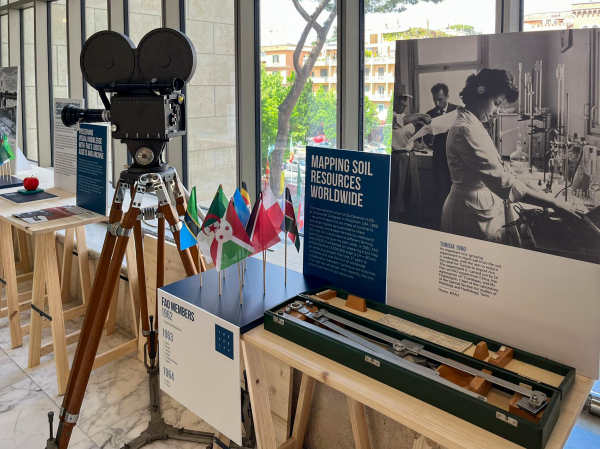
In May, I was honored to attend the next phase of a Constitution Exhibition in Rome – a project that I helped create that celebrates and contextualizes the role of the FAO Constitution in shaping the organization’s operations and aspirations. The exhibition complements my ongoing research and writing on the development of FAO’s constitutional framework from 1943 to 1945, as well as its further development and subsequent application in global food governance through 1965.

Continue reading “Executive Director Roberts on Partnering with the FAO on its Constitution Exhibition”

Website Powered by WordPress.com.

Up ↑