Is Pizza Still a Vegetable?

by Stephanie Teuber – 2L, UCLA Law


Many K-12 students in Los Angeles, as well as throughout the U.S., rely on public schools for at least one meal each day. Although school lunch programs serve an important purpose, they are often left out of legal conversations. On February 27, with the support of a grant from the Semel Healthy Campus Initiative, the Food Law Society and Education Law Society at UCLA Law teamed up to host Is Pizza Still a Vegetable? What’s Next for School Lunch.

Through a panel conversation, moderated by Dr. Wendy Slusser, an Assistant Clinical Professor of Child Health Policy, Pediatrics, and Health Equity at the UCLA Geffen School of Medicine, students learned about the history of school lunch programs, their current state, and (of course) whether pizza qualifies as a vegetable.

Each panelist contributed a unique perspective to the conversation. Following Dr. Slusser’s historical overview of these programs and a short video, Diana Winters, Assistant Director of Scholarship at the Resnick Center for Food Law and Policy, provided background on the trajectory of school lunch programs under the Trump administration, and the role of the federal government in administering these programs. Ivy Marx, a Senior Nutrition Specialist with LAUSD, explained how school lunch programs are administered in Los Angeles, and voiced the challenges presented by both budget constraints and picky children. Paula Sirola, the Executive Director of Seeds to Plate, stressed the impact of nutrition education on a child’s overall well-being, and how Seeds to Plate’s interactive gardening program helps foster a more holistic learning experience. Cheryl Leahy, General Counsel at Compassion Over Killing (COK), explained COK’s animal-welfare focused approach to school lunch reform, articulating concerns regarding the role of industrial agriculture interests in school lunch policy, and highlighting the organization’s efforts to reduce meat consumption in schools through legal and policy advocacy.

Over 100 students RSVP’d for the panel, and feedback has been overwhelmingly positive. Law students appreciated that they were exposed to the diverse perspectives of the panelists, and found the conversation both lively and productive. As finals season approaches and meal-prep takes the backseat, the most reassuring news of the day was perhaps at the close of the event, when Ivy Marx answered the most obvious outstanding question: yes, pizza is still a vegetable.*

*LAUSD pizza has whole wheat crust and no added sugar.

Panel

“Public Values in Conflict with Animal Agribusiness Practices” Conference at UCLA Law

By Michael T. Roberts


On February 23, 2019, the Resnick Center for Food Law and the UCLA Animal Law and Policy Program hosted a one-day conference at UCLA Law titled, “Public Values in Conflict with Animal Agribusiness Practices.” The conference featured three panels about subjects relevant to closing the gap between public values and animal agribusiness practices. These three panels addressed  the role and utility of undercover investigations, production method issues and consumer perceptions of labels, and private agreements with corporations as a way to improve business practices that affect workers and animals and to reduce animal products.

This conference was part of a joint Initiative on Animals in Our Food System between the Resnick Center and the UCLA Animal Law and Policy Program and funded by a generous gift from the Animal Welfare Trust. We previously co-hosted with the Animal and Law and Policy Program a Roundtable discussion on the legal and business considerations in how investments are made in plant-based enterprises. We have also incorporated law and policy issues related to animals in the food system in our classes and events. The Center is grateful for its association with the UCLA Animal Law and Policy Program and looks forward to future joint activities.

The Resnick Center and The Promise Institute at UCLA Law Host UN Food and Agriculture Organization Director-General José Graziano da Silva

by Diana R. H. Winters

On February 15, 2019, the Resnick Center for Food Law and Policy and The Promise Institute for Human Rights at UCLA Law hosted the UN Food and Agriculture Organization (FAO) Director-General José Graziano da Silva, who gave a talk titled, “A Global Perspective on Regulating and Promoting Nutrition.”  We were honored to host the Director-General for this important presentation.

In his talk, Graziano da Silva emphasized the critical need for regulation regarding healthy food.  He explained that while there are regulations regarding food safety, global entities have entirely failed to regulate for the nutritional value of food.  The world is grappling with a crisis of malnutrition—a broad concept that includes obesity as well as hunger—and this crisis is exacerbated by the failure of regulation.  Malnutrition costs the world economy between three and five billion dollars a year, which is approximately 3% of the global economy.  This problem must be seen as a public issue, Graziano da Silva said, not an individual one, and it is critical that countries find a way to work together.  This is the foremost challenge the FAO faces.

Graziano da Silva was introduced by Hilal Elver, the Global Distinguished Fellow at the Resnick Center for Food Law & Policy, and the United Nations Special Rapporteur on the Right to Food.  The video recording of the entire event can be found here.

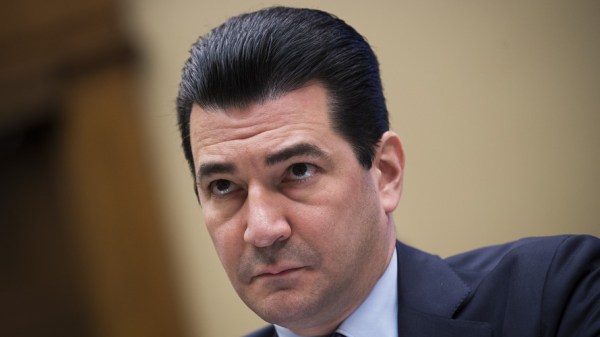
FDA Commissioner Scott Gottlieb resigns

by Diana R. H. Winters

Much of the coverage of the resignation of FDA Commissioner Scott Gottlieb highlights his work to regulate the e-cigarette and tobacco industries and his mixed record on the opioid addiction epidemic.  See here, here, and here, for example.  Despite criticism for delaying certain e-cigarette regulations, Commissioner Gottlieb stood out in the Trump administration for his willingness to regulate and to challenge the tobacco, e-cigarette, and drug industries.  Similarly, and surprisingly, the FDA under Gottlieb continued to move ahead with certain Obama era nutrition policy initiatives and began to spearhead some of its own.  The agency moved ahead with changes to the nutrition facts label, with requirements that certain restaurants post calories on menus, and with an FDA initiative to reduce sodium levels in the food supply.  Moreover, in a speech to the National Food Policy Conference delivered in March 2018, Gottlieb outlined a new FDA nutrition strategy, designed to reduce the toll that poor nutrition takes on Americans’ health.  Gottlieb explained that the FDA would “use our tools and authorities to create better ways of communicating nutrition information to consumers so they can be empowered to make good choices. And we’ll advance new ways to make science-based claims that provide more incentives for food manufacturers to produce products with more healthful attributes.”

What’s next for the FDA?  As the FDA’s tobacco and e-cigarette initiatives are now up in the air, so are those regarding nutrition policy.

Website Powered by WordPress.com.

Up ↑