

By Melissa Deng*
Coconut Cult, Cocojune, Cocoyo –– lately, it feels like these names have taken center stage in the yogurt fridge of large retail grocery stores. Coconut “yogurts” have been all the rage, fueled by social media buzz and their branding as a vegan alternative to traditional dairy yogurt. Typically sitting alongside other yogurt competitors in the dairy fridge, Cocoyo touts itself as a “raw coconut yogurt” with “200 billion probiotics.” A quick search for Coconut Cult on TikTok reveals videos from proclaimed dieticians and ordinary food influencers claiming that in order to reap the full benefits, you can only eat one spoonful of its multi-serve jar a day. Some content creators lay out other “rules” as follows: don’t you dare use a metal spoon, lest you invoke the wrath of the live cultured probiotics; don’t double-dip (a maxim on its website that appears on some jars); the list goes on.
Even if the crowdsourced rules of Coconut Cult don’t draw the ire of the Food and Drug Administration (FDA), its labeling might. Coconut Cult jars proclaim on the front label that it is a “Probiotic Coconut Yogurt”; the ingredients on the back label for the original flavor include organic coconut cream, organic coconut meat, organic coconut water, and a spate of probiotic cultures. Noticeably missing is any mention of dairy.
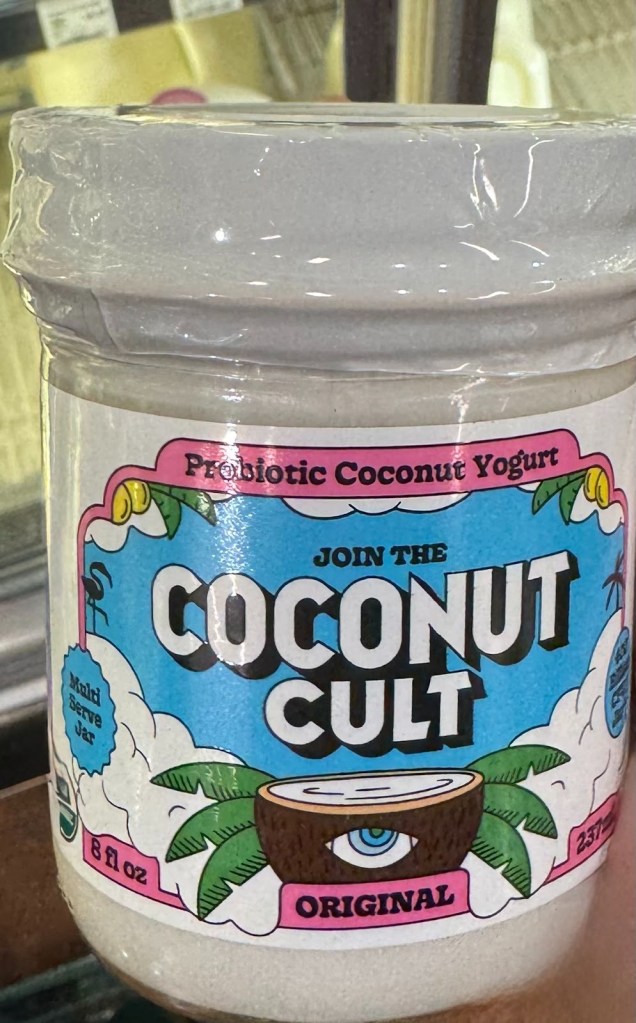
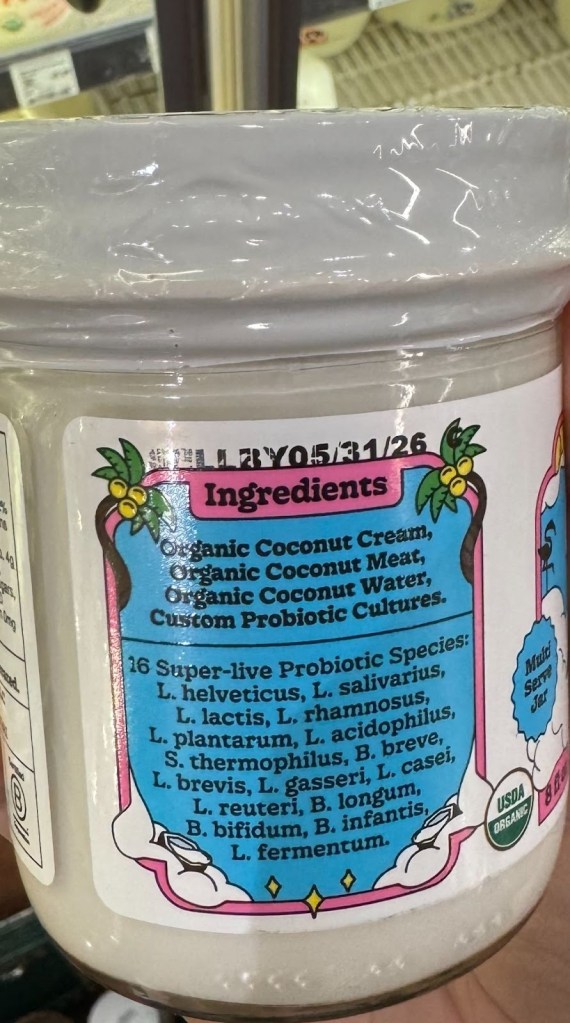
Photos taken by the author on February 18, 2026 at Whole Foods Market.
Maybe that would make sense at first glance, since coconut “yogurt” is generally considered to be a plant-based alternative to traditional yogurt. But for a product to meet the FDA’s “standard of identity” of “yogurt,” it has to contain dairy. When the FDA establishes a standard of identity for a food or drink, a product seeking to be classified under that category must meet specific ingredient, characteristic, and production standards. While not every food or drink item has a standard of identity, products must adhere to the relevant standard of identity if it exists to be in compliance with FDA guidelines. In this case, Code of Federal Regulations Title 21, Section 131.200(b) provides that yogurt is produced from culturing “cream, milk, partially skimmed milk, skim milk, and the reconstituted versions of these ingredients may be used alone or in combination as the basic dairy ingredients in yogurt manufacture.” Therefore, any product that labels itself “yogurt” needs to meet the requisite composition and ingredients listed under that standard.
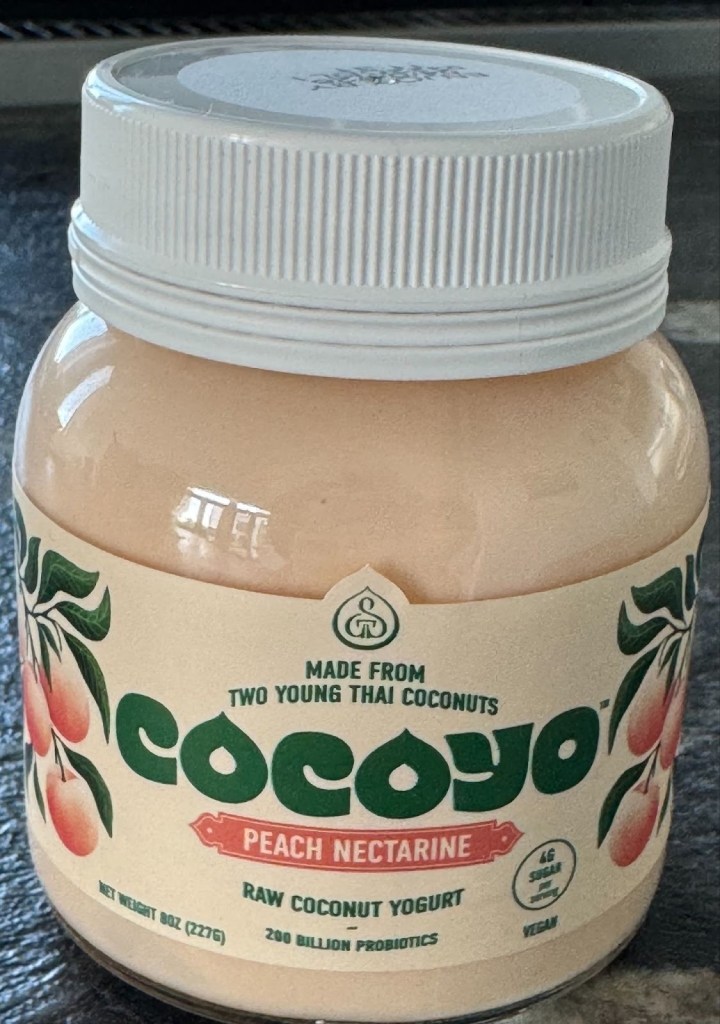
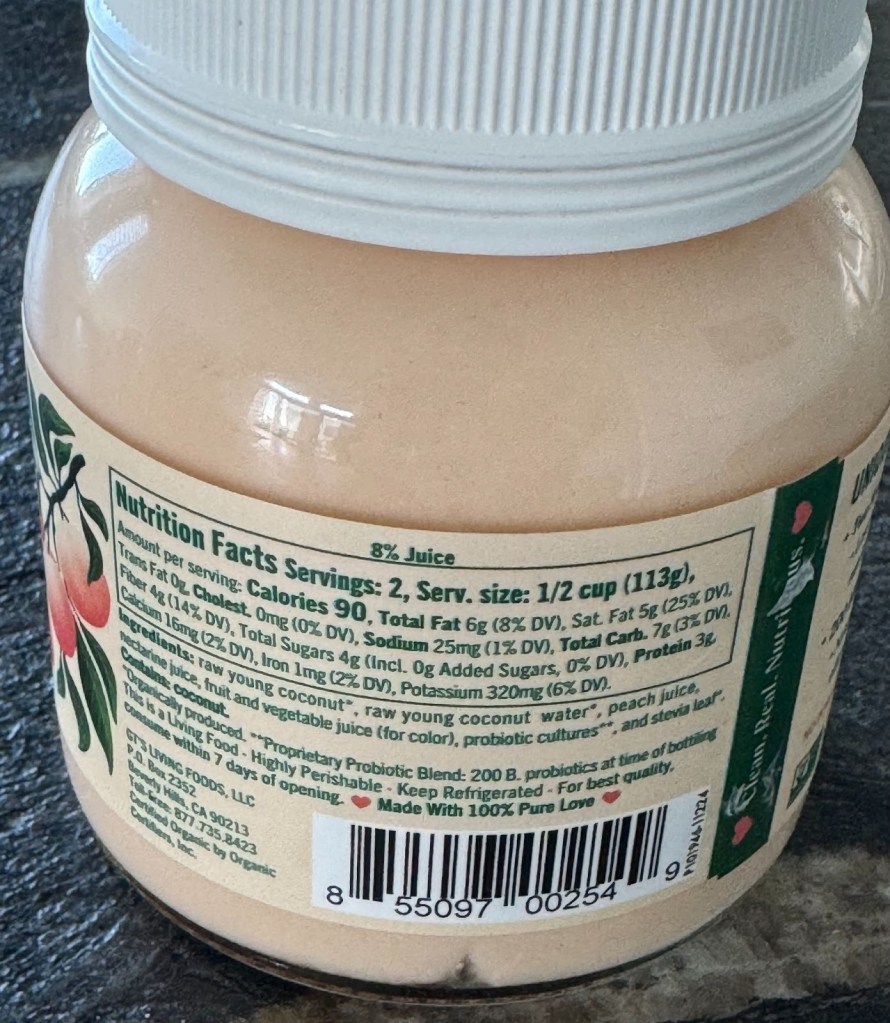
Photos taken by the author on February 18, 2026 after purchasing the product from Whole Foods Market.
So would a reasonable consumer think that Coconut Cult is actually a yogurt, or would they believe it squarely to be a plant-based alternative to yogurt instead? Would they believe that Coconut Cult or other yogurt alternatives has the same nutritional content as traditional yogurt? And why do we care what a reasonable consumer would think? Well, a reasonable consumer’s perspective is paramount in class action litigation alleging that a product’s label constitutes false advertising, for example. In determining whether a label was deceptive or misleading, California courts will look at what a reasonable consumer––either the public at large or a targeted consumer of the product specifically––would have understood the label to mean.
This potential sour discourse over yogurt, as well as the importance of consumer perspective, harkens back to the recent debate over whether plant-based milk alternatives (PBMAs)––like almond milk and soy milk––can be labeled as “milk” (defined as the “lacteal secretion of cows” specifically). One primary question in this debate was whether a reasonable consumer would actually believe they were consuming a liquid containing dairy when drinking one of these alternatives. In 2019, the National Federation of Milk Producers, likely concerned about the impact of these plant-based milks on their business, submitted a comment to FDA arguing that “misbranded plant-based dairy imitators” were causing “rampant consumer confusion.” In addition, the Federation argued that this “misbranding” was contributing to a national nutrition crisis because the average consumer would believe that plant-based milk alternatives would provide the same nutritional value as cow’s milk, particularly when it comes to protein.
Ultimately, in January 2025, FDA reaffirmed a 2023 draft guidance maintaining that common or usual names of plant-based “milks” (e.g., almond milk) “have been established by common usage,” although the agency recommends that PBMAs manufacturers voluntarily provide a nutrient statement comparing nutritional content with traditional cow’s milk. In coming to this conclusion, the FDA relied on the over thirteen thousand comments it received in 2018 that indicated that consumers generally knew that PBMAs did not contain dairy milk and specifically bought PBMAs as an alternative to milk. However, that same review of those comments and consumer studies also revealed that many consumers did not realize that PBMAs had different nutritional content in comparison to milk, hence the recommended voluntary nutrient statement.
Coconut yogurt-alternative brands therefore have some difficult issues to contend with. Utilizing a label with the word “yogurt” without any indication that it is a yogurt alternative may open up brands to warning letters from the FDA, or even plaintiff-side class action litigation under state theories of unfair competition and false advertising.
Qualifying the verbiage on the label could help shield these brands from liability. Other coconut yogurt-alternative brands like Cocojune have tried to avoid this problem by labeling their products with “organic cultured coconut” on the front. Cocojune does not have any mention of yogurt on its “Pure Coconut – Organic Cultured Coconut” single-serve container, opting instead to label itself as “dairy-free” and including a list of probiotic cultures, which taken together imply that it is a yogurt alternative. However, it should be noted that Cocojune’s website labels its product as a “plant-based yogurt.” Brands should be mindful of maintaining advertising consistency in order to stay fully compliant with existing FDA guidelines.
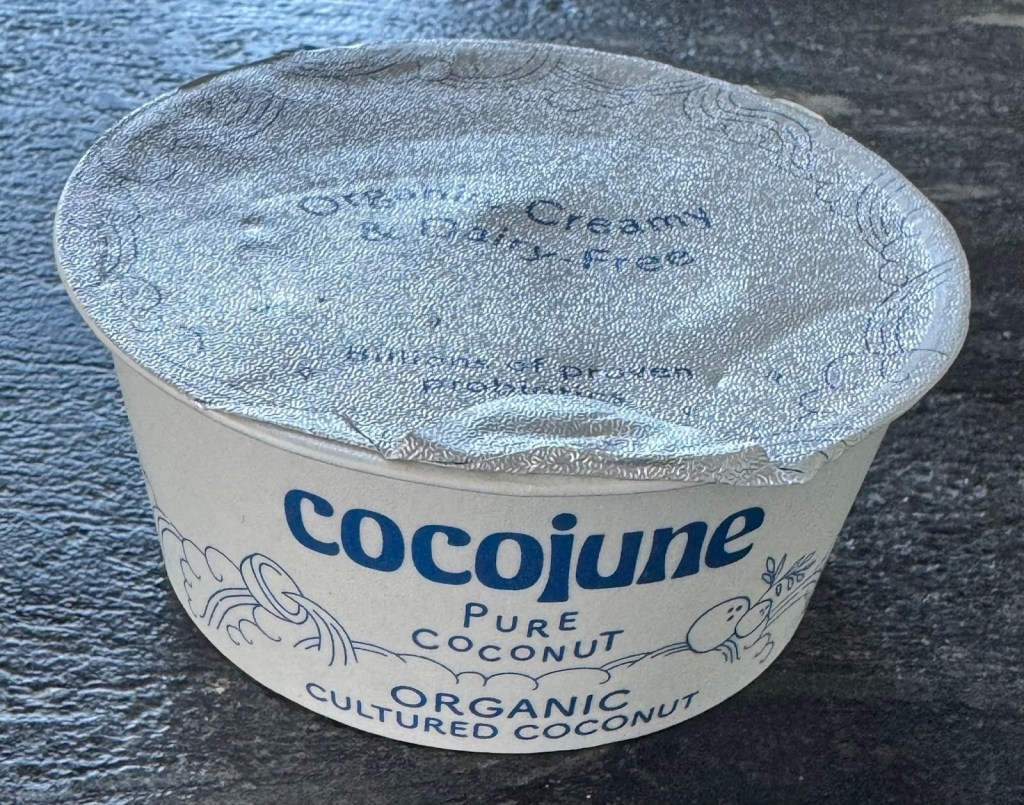
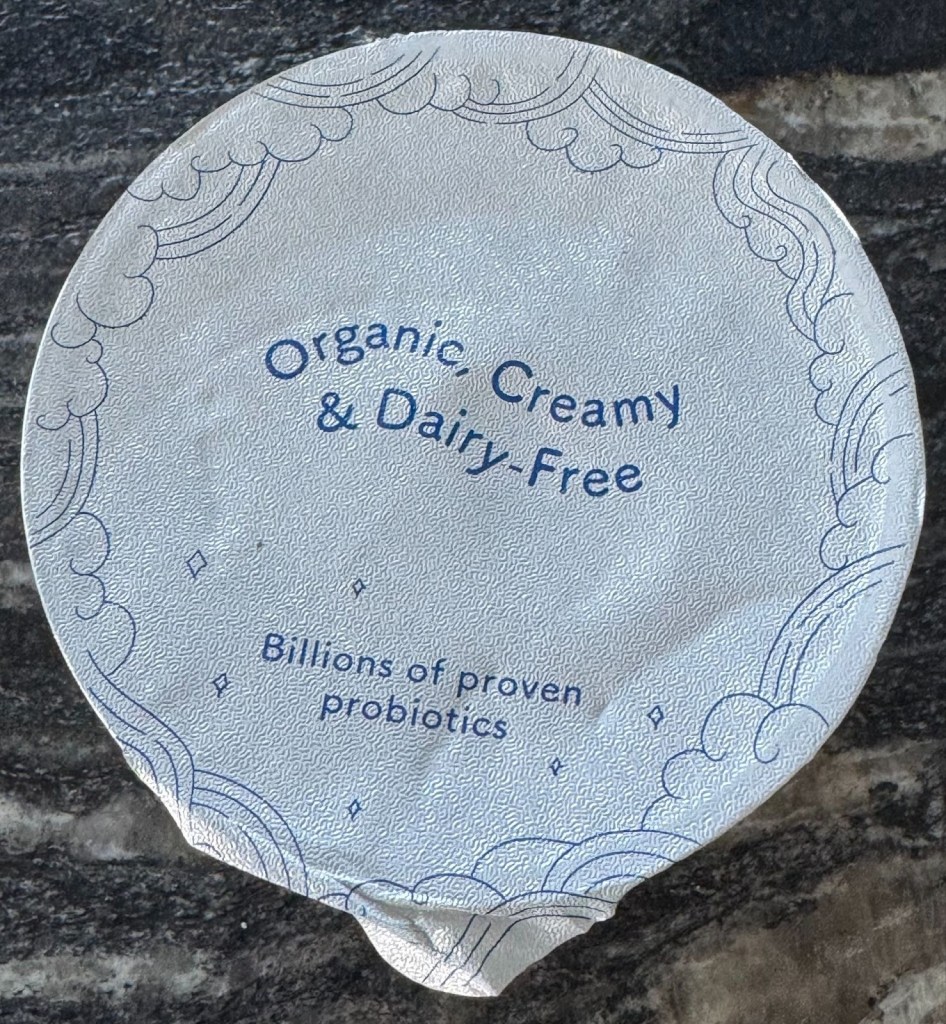
Photos taken by the author on February 18, 2026 after purchasing the product at Whole Foods Market.
Coconut Cult, Cocoyo, and other brands that utilize package labeling stating that it is unequivocally a “coconut yogurt” should be mindful that yogurt’s standard of identity under the FDA relies on the inclusion of dairy––at least for now. Furthermore, no clear movement has been made to gather comments regarding consumer perception of whether coconut yogurt alternatives are actually yogurt, or contain the same nutritional content as traditional yogurt. If the milk controversy was any indicator, coconut yogurt alternatives will continue to be milked for all their worth, but brands should consider adding a new probiotic to the mix: an FDA-compliant product name on the front. If not, they may find themselves getting hit by falling coconuts.
*Melissa Deng is a 3L at UCLA School of Law and was the 2024–25 Co-Chair of Food Law Society at UCLA Law. This is her second post for On Food Law. You can find the first, on a project she has spearheaded regarding food allergen training in restaurants, here. You can find Melissa on LinkedIn here.
 On Food Law
You must be logged in to post a comment.