
by Melissa Deng*
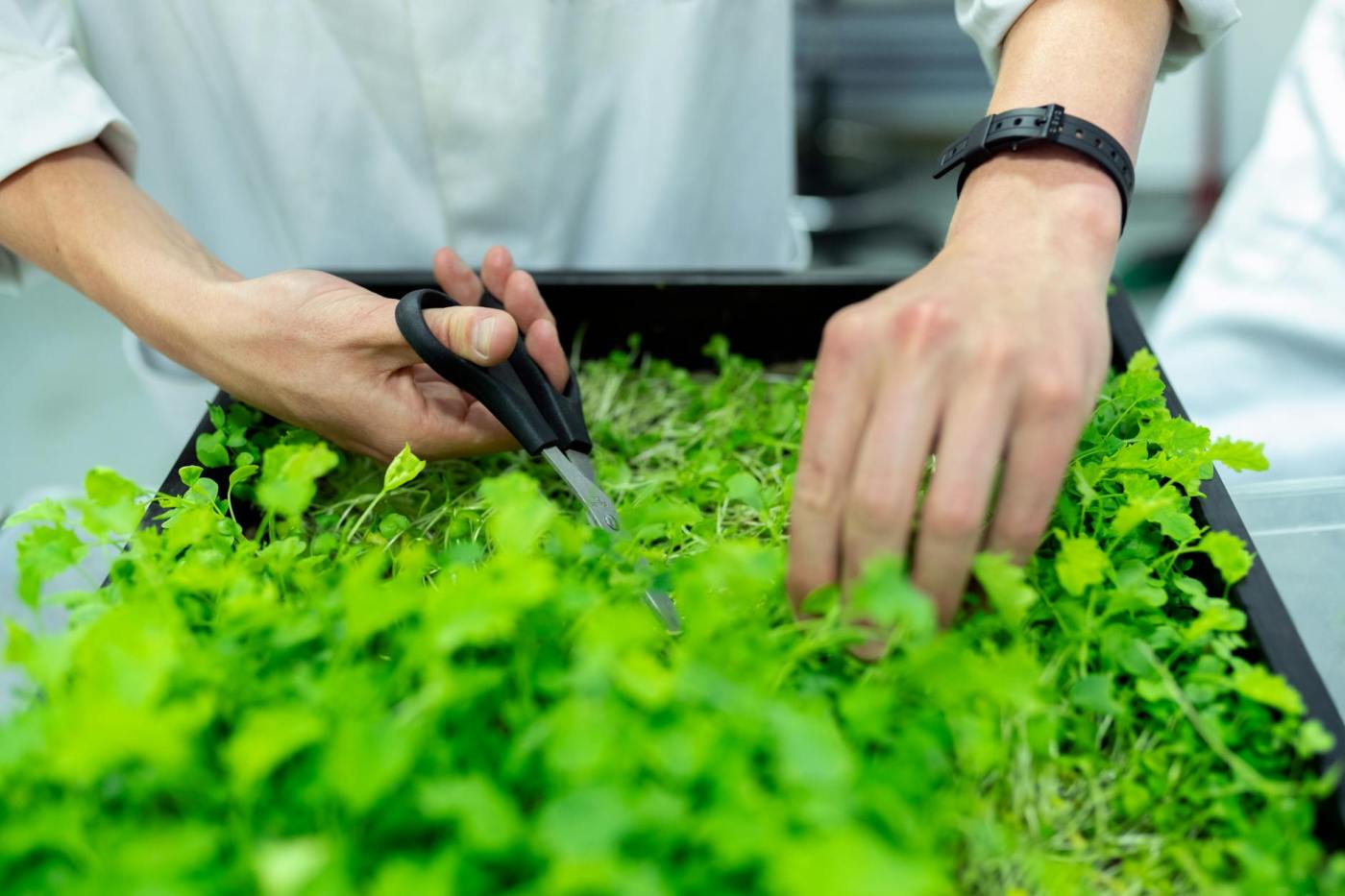
If someone offered you a choice between a regular food and a “superfood,” which one would you pick? Would your decision change if the superfood cost more? Maybe you would be more inclined to buy it because it seems like the healthier choice. I know I have grappled with that dilemma with microgreens––young seedlings of various vegetables and other plants, including broccoli and kale.
Even just a few years ago, I only knew of microgreens as that extra sprinkle on a sandwich, or a purely aesthetic touch adorning the infamous avocado toasts when they were all the rage. But about a year ago, I began seeing more on various social media platforms about microgreens being the next “superfood,” a term which invokes the elevation of microgreens into a higher echelon of food. That got me interested, and microgreens are now always the star of my grocery list. It seems like I’m not the only one. A 2023 study noted that “in recent years, the demand of microgreens has increased due to their nutritional as well as phytochemical components,” which is reflected in the fact that microgreens are now often sold out when I go to the grocery store.
I didn’t start buying microgreens because I heard that they were tasty. Rather, it was the hype about microgreens’ “superfood” status that enticed me. I naively understood that word at face value to mean that it was one of those magical foods that was just purely “good for you.” And in my initial searches, the headlines and information about microgreens’ benefits seemed to support that conclusion. One study stated that microgreens could be “40 times more nutrient-denser than mature vegetables.”
As a student of food and drug law, my next instinct was to see if the Food and Drug Administration (FDA) had any guidance about superfood labeling; for example, guidance stating that foods cannot be labeled “superfoods” unless they meet a certain threshold of nutrients or at least meet the “healthy” thresholds. But there was nothing on the FDA website to confirm or refute this popular social media idea of superfoods being the end-all-be-all panacea to life’s woes. And because the FDA hasn’t issued any sort of guidance on superfood labeling, everyday consumers like me will probably go with the Merriam-Webster definition of “superfood,” which classifies under its purview foods “(such as salmon, broccoli, or blueberries) that [are] rich in compounds (such as antioxidants, fiber, or fatty acids) considered beneficial to a person’s health.” From this definition, it would seem like foods labeled as superfoods could only have positive effects on your health, right?
What quickly becomes apparent is the potential for misleading labeling and consumers like me paying a price premium for products that they believe are purely good for them, or otherwise have a healthy edge over other foods––a phenomenon known as the “health halo” effect. Because the FDA hasn’t stepped in with guidance on superfood labeling, there is a lack of acknowledgment of the nuance of these supposed superfoods, and how they might not be entirely “good.” The plethora of websites touting kale’s superfood status, for example, fail to mention that kale has some compounds which may interact with other nutrients and prevent their absorption. And generally, superfood labeling does not acknowledge that “some superfoods can be harmful to health if overused.”
Comparatively, the European Union early on in 2007 enacted a law that banned “superfood” labeling “on packaging unless scientific evidence backed the claim.” While this may have cut down on superfood marketing and labeling, consumers may still be misled. Let’s say a product is authorized to label itself as a superfood based on one scientifically-supported health claim regarding one attribute of the product. As an ordinary consumer, I would probably just think of it as an overall superfood and feel confident spending more money on it; in other words, I’d think that because the product passed the superfood labeling test, it must be the best thing to eat.
The issue with superfood labeling and the impact of the FDA’s absence on this subject can be summed up best by a UC Davis article which aptly notes that “The food industry needs only some scientific research on a particular food, some well-worded news articles, and a catchy food marketing campaign, and it too could be a newly discovered ‘superfood.’” If the FDA does not step in with guidance or warning letters, companies will continue to profit off a price premium from “superfood” labeling. Or, as with many microgreen products, the products themselves say nothing about being a superfood––but social media hype delivers the superfood messaging for them to the benefit of those companies.
As someone who was first enticed by microgreens as a “superfood,” I get it. It would be reassuring to know that there is a superhero of the food world that you can count on; that one food that you can eat every meal of the day to consider yourself healthy. But companies are aware of this desire too, which is reflected in both the labeling and often expensive price of their superfood products. The biggest superpower we can elect for ourselves in this case might just be eating in a balanced manner rather than hoping to be saved by a superfood in shining armor.
*Melissa Deng is a 3L at UCLA School of Law and was the 2024–25 Co-Chair of Food Law Society at UCLA Law. This is her second post for On Food Law. You can find the first, on a project she has spearheaded regarding food allergen training in restaurants, here. You can find Melissa on LinkedIn here.
 On Food Law