Safe to Eat? States vs. Feds in the Food Dye Debate

by Candace Yamanishi*

There is a shifting sentiment against the use of synthetic food dyes in the US food supply. As citizen-led advocacy groups have been raising their voices about the health concerns of artificial food dyes, several states have introduced or passed legislation banning or limiting the use of certain synthetic food dyes in food products. These efforts reflect the growing concerns over links between artificial dyes (such as Red No. 3, Yellow No. 5, and others) and potential effects on children’s learning and attention, as well as possible risk of carcinogenic effects. These state-wide initiatives have now captured the attention of the federal government and the larger food industry as a whole. Since the U.S. Food and Drug Administration (FDA) maintains nationwide regulatory authority over food additives, a crucial question emerges: can state bans and restrictions on FDA approved food dyes stand, or will they be preempted by federal law?

Continue reading “Safe to Eat? States vs. Feds in the Food Dye Debate”

To Eat or Not to Eat: For Consumers in a City Without a Food Allergen Ordinance, The Choice Could Be Life or Death

by Melissa Deng*

For many of us without food allergies, we don’t think twice about choosing to dine at a restaurant or order take-out––often, the biggest concern is picking which restaurant you feel like eating at, what to order, and comparing costs.  But for individuals with food allergies, the choice between dining in and ordering out can mean life or death.  Even so, cities you might think are more “food allergy-friendly” like Los Angeles, which has a colloquial reputation for having a vibrant food scene, may not have an ordinance specifically governing food allergen training in restaurants––even while more than fifty percent of adults with food allergies and over forty percent of children with food allergies in the United States have experienced a severe food allergic reaction (of note is that emergency treatment for anaphylaxis resulting from a food allergic reaction increased by 377 percent between 2007 and 2016). 

What gives?  For starters, the restaurant industry is of course profit-driven, and restaurant associations have a significant impact on lobbying for or against legislation.  From an economic perspective, restaurant management might be wary of the increased costs an ordinance specifically mandating food allergen training would impose, compounded by the fact that the restaurant industry generally experiences high turnover (reportedly, there was a 28% average turnover rate for restaurants in LA last year).  From a legal perspective, restaurants might not want to face increased liability: with an ordinance that mandates training, plaintiffs can more easily make a prima facie case of negligence by showing that the restaurant’s conduct deviated from an established standard of care.  And from a psychological perspective, restaurant staff might have misconceptions about their role in preventing food allergic reactions (for example, believing that the onus falls solely on customers to order a dish that doesn’t have food allergens) and might not realize the potentially fatal consequences, such as anaphylaxis resulting from a food allergic reaction.   What this means is that consumers with food allergies are unfairly subjected to a burdensome and dangerous dining experience where each restaurant chooses which food allergen procedures to follow and to what degree. 

It is precisely this issue that drove us at the Resnick Center for Food Law & Policy, in collaboration with a professor and clinical immunologist at UCLA, to begin collecting both hospital-based and anecdotal evidence on instances of food-related anaphylaxis in the city, and pursuing the task of proposing a food allergy ordinance in the City of Los Angeles that will mandate a separate food allergen training for all restaurant employees in the city.  In the beginning stages of the project, we sought to answer two underlying questions: how do restaurants communicate allergen information to their consumers; and are they effectively training their personnel in allergen disclosure for menu labeling or food handling?

Continue reading “To Eat or Not to Eat: For Consumers in a City Without a Food Allergen Ordinance, The Choice Could Be Life or Death”

Food, community, and belonging: Our Seat at the Table

by Marin Milken*

[This is one in a series of occasional posts by Los Angeles high school students working with and studying food systems.]

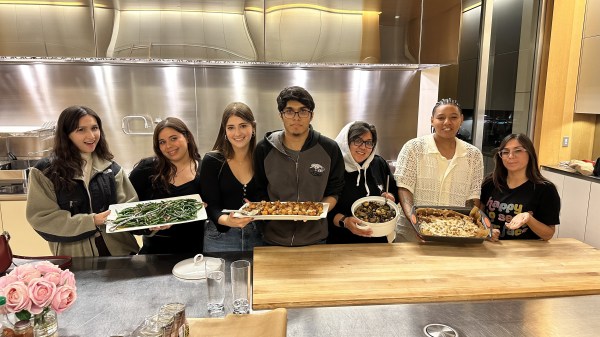
Inspired by the meals I made for my family and friends during the pandemic, I founded Our Seat at the Table to engage with questions of food, community and belonging. Though there are various food-related initiatives that Our Seat will continue to tackle through its programming, I wanted our first endeavor to help with the widespread national issue of food insecurity. Food insecurity, in simplest terms, is when people neither have enough to eat, nor know where their next meal is coming from. The latest State of Food Security and Nutrition in the World (SOFI) report indicates that in comparison to 2019, the number of people worldwide affected by hunger has risen by over 122 million. In the United States, food insecurity is addressed through Supplemental Nutrition Assistance Program (SNAP) benefits, which aim supplement low-income families’ groceries, so that they can access the food that they need to be food secure. But key findings in a recent report from the Robert Wood Johnson foundation highlight and demonstrate that SNAP benefits don’t cover the cost of moderately priced meals in 78% of US counties. With this statistic in mind, it’s unlikely that SNAP benefits are able to cover the costs of healthier options, such as organic produce. Programs such as SNAP – and its inability to adequately address the food needs for so many in this country – highlight a large systemic gap between those who are food insecure and food secure, despite SNAP being touted as a successful safety net for those who are food insecure.

Continue reading “Food, community, and belonging: Our Seat at the Table”

The Poisoning of the Gerber Generation:

How Public Nuisance Law Could Address Heavy Metals in Baby Food in the Face of Regulatory Failure

by Lillian Matchett*

A cheerful jingle plays as beaming babies flash across a white background.  These children are the “Gerber Generation,” the voiceover tells you, and they have some big news to share: the nutrition they get in their first five years of life can affect their health forever.   “Think about that,” they say.

Gerber launched its Gerber Generation campaign in 2010 in the face of increased attention on childhood obesity, focusing on the health and nutritional needs of young children at a vital point in their development.  Gerber was right: what a child consumes in the first few years of their life is critically important, but as it turned out, there were other substances in at least some of the Gerber Generation’s food that could have a profound and lasting impact on children’s health.  In 2021, Gerber was one of several companies exposed for selling baby food containing concerning levels of heavy metals—toxins which, even in small amounts, can cause severe and irreversible cognitive impairment and physical illness in young children.

In 2021, a congressional subcommittee issued two reports finding high levels of heavy metals—lead, arsenic, cadmium, and mercury—in commercial baby foods from seven major manufacturers.  Heavy metals were present in baby foods from all companies, often at concentrations many times than that allowed under existing regulations for other food products.  The reports also illuminated failures of industry self-regulation, revealing that companies largely do not test their final products and often do not adhere to their own internal standards. 

Predictably, a deluge of litigation followed the release of the Congressional Reports.  Despite well-documented findings of high heavy metal levels in baby food and the known effects those substances have on children, lawsuits have thus far been mostly unavailing, failing on issues of causation and standing, though many are still making their way through the courts.  Regulatory and legislative solutions have also fallen short.  The FDA and Congress attempted to address the issue, but the FDA’s response has been slow and unenforceable, while legislation lacks bipartisan support, and has stalled in committee. 

Continue reading “The Poisoning of the Gerber Generation:”

Reflections on the 6th Annual Food Law Conference: Current Trends & Perspectives Beyond the Beltway

by Alexa Libro*

Earlier this year, I had the pleasure of attending CLE International’s 6th Annual Food Law Conference. I vividly remember attending the previous food law conference in San Francisco in February of 2020, deliberating on whether it was appropriate to shake hands and how often to use hand sanitizer. A lot has changed since then, including food law. This evolution of food law was demonstrated in every session of this year’s food law conference. Ann Oxenham, the Acting Director of the Office of Compliance in the Center for Food Safety and Applied Nutrition (CFSAN) at the US Food and Drug Administration spoke of tech-enabled traceability as a part of the FDA’s new era of smarter food safety. The General Counsel Roundtable session exemplified how food businesses had to adapt to navigate supply chain issues, labor issues, and remote work. Thus, ending the conference with a session on the future of food law was the perfect way to reflect on how food law has evolved and surmise its next evolution.

In the Future of Food Law session, Michael Roberts, the Executive Director of the Resnick Center, moderated a conversation with two of his former students, Evan Graham Arango and Jason Lawler. The conversation illustrated why food is currently top of mind for everyone, not just food lawyers. The pandemic forced us to think about where our food comes from. For many, it was the first experience with gardening or baking bread. For many, it was the first experience not finding numerous items on a grocery list. For many, it was the first or worst experience with food insecurity.

Evan Graham Arango, the owner, founder and farmer at Ojai Roots Farm in Ojai, California noted people’s interest in regenerative agriculture and eating locally. I’m speculating that many people, like me, watched documentaries about regenerative agriculture, such as Kiss the Ground and Biggest Little Farm, when they were stuck inside, and were inspired. Regenerative agriculture and its potential to sequester carbon from the atmosphere brings to the forefront the connection between our food system and climate change

Jason Lawler, an associate at Sidley Austin LLP, elaborated on how his work around the business of food interfaces with climate change realities. Businesses are aware that consumers vote with their wallets, which encourages existing businesses to voluntarily offset carbon and new businesses to form with the goal of sequestering greenhouse gases.

Michael Roberts posits that the future of food will revolve around information. As artificial intelligence gives us more insights into what to grow, how to grow it, where to grow it, and when to market it, he wonders how to democratize that information and ensure fairness in data collection and ownership. As a consumer, I wonder how all that information will be relayed to me so I can make good food choices. To all the current and aspiring food lawyers, I look forward to seeing how we navigate the future of food law and reflecting on our progress at the next food law conference.    

*Alexa is graduating this year from UCLA Law. She graduated from UCLA with a BS in neuroscience with highest honors and a minor in biomedical research in 2017. At UCLA School of Law, she has been coexecutive chair of the Food Law Society and is currently chief managing editor of the Journal of Environmental Law & Policy. She is also a research assistant with the Resnick Center.


Service with FoodCorps

by Lucy Weiss*

With a background in Food Studies, an interest in food law and policy, and a belief in the power of education, I was searching for ways to combine my passions when a professor recommended FoodCorps to me. FoodCorps is an AmeriCorps service fellowship program focusing on student access to healthy food in schools that partners with local community organizations and school districts around the U.S. Service members participate in three primary activities: providing hands-on lessons, encouraging healthy school meals, and promoting a schoolwide culture of health. For example, members teach gardening and cooking and facilitate taste tests of new and different foods, although the COVID-19 pandemic limits some of what we are able to do. A number of service members also work with the cafeteria staff and school districts to ensure healthy food options are available and promoted at school lunches. Each state and site partner have different needs and therefore service varies from position to position. 

Continue reading “Service with FoodCorps”

Addressing Student Food Insecurity with a SNAP

by Kyle Winterboer*

As students return to in-person school, it is an important time to revisit the issue of food insecurity across America’s educational system. Particularly in Higher Education, recent studies suggest student food insecurity levels had reached as high as 38% in Spring 2020 and 5.8 of every 10 students experienced some form of basic needs insecurity. These rates have dramatically increased throughout the duration of the pandemic because students sent home for lock-down no longer had access to the already limited forms of support available in person on campuses.

A common tool used to fight food insecurity is the Supplemental Nutrition Assistance Program (SNAP). Despite its successes in reducing hunger and the economic benefits the program introduces to stimulate local economies, SNAP has many limitations and needs reform to better address food insecurity. One such limitation is that policy makers have long denied students access to SNAP. While the past decade has brought some expansions to grant students access, significant barriers remain. Barriers include restrictive student eligibility criteria and mixed messaging that leaves students misinformed of their eligibility. This policy failure leaves students hungry, many of whom would otherwise be eligible for aid if they were not pursuing higher education.

To show the real human impacts of these policy failings, journalist Alejandra Salgado details student stories in an article that appeared in CalMatters and was shared by Civil Eats: Colleges Rush to Sign Students Up for Food Aid, as Pandemic Rules Make More Eligible | Civil Eats

To provide additional context to the policies described in Salgado’s reporting, the below contains insights from Resnick Center Research Assistant Kyle Winterboer in this policy area. This research comes from his time with the student led research advocacy group “unBox”, the assistance of the UCLA CalFresh Initiative, his own application process amidst the pandemic, and from his time implementing a little known policy solution across UCLA departments to better support students in their SNAP applications.

The Resnick Center thanks the unBox Project and the UCLA CalFresh Initiative for readily sharing information for this report, and their continued dedication to the mission of ensuring equitable access to food for all.

Continue reading “Addressing Student Food Insecurity with a SNAP”

Community Gardens and Urban Farm: Land Acquisition

by Lucy Weiss*

Community gardens and urban farms are often thought of in conjunction with one another. After all, they share similarities; both are places where people, typically small-scale producers, come together to grow fruits and vegetables, and both provide consumers access to local produce. Both community gardens and urban farms benefit those who grow/purchase fresh produce, and the environment more generally. They recharge groundwater, prevent erosion, and mitigate dust impacts to cities. Community gardens and urban farms also face similar challenges including land acquisition, rising water rates, and climate change. Despite their overlaps, it is worth noting the distinctions between community gardens and urban farms, because these differences can  affect how they function. Urban farms typically have the goal of turning a profit whereas community gardens, which are run by residents and non profit organizations, tend to orient themselves toward education and facilitating relationships between people and nature. These divergent goals result in different models of operation. For instance, urban farms have fewer people doing more of the labor and getting paid for it. In community gardens, however, individuals often have their own plots of land and pay a membership fee to garden. Produce grown at community gardens is also eaten by individuals rather than sold for profit. Land acquisition also functions differently for urban farms and community gardens, which I will discuss in this post. 

Continue reading “Community Gardens and Urban Farm: Land Acquisition”

Further Solutions to the Honey Fraud Problem

This is the fourth of four posts by students in the UCLA Law Food Law and Policy Clinic on honey adulteration, honey litigation, and potential policy solutions to the problem of honey fraud.

By Terra Duchene, Aris Prince, Victoria Russell, Candace Yamanishi*

This post outlines the actors who can make a significant impact to the honey fraud problem and suggests potential starting points for solutions.

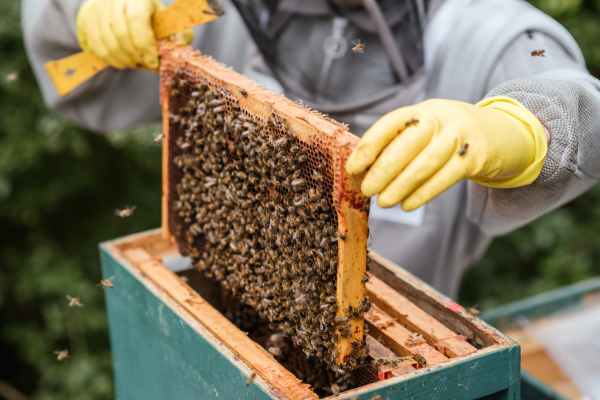
Beekeepers like Chris Hiatt are desperate for a solution. Honey adulteration is a threat to the survival of U.S. bees and beekeepers, which in turn, is a threat to food growing in the U.S., since 1/3 of the food grown in the U.S. depends directly or indirectly on bees. Just as the bee is endangered, so too is the U.S. beekeeper. The livelihood of essential beekeepers, the well-being and survival of honeybees, and, ultimately, the success of crops that are essential to our agricultural system, are being severely endangered by the relatively unknown but extremely large-scale adulteration of honey. Ultimately, putting a stop to honey fraud is vital to our environment and those who dedicate their lives to cultivating it. We must end honey adulteration in all its forms. 

Continue reading “Further Solutions to the Honey Fraud Problem”

Legal Recourse for Self-Regulation in the Honey Industry

This is the third of four posts by students in the UCLA Law Food Law and Policy Clinic on honey adulteration, honey litigation, and potential policy solutions to the problem of honey fraud.

By Terra Duchene, Aris Prince, Victoria Russell, Candace Yamanishi*

The American honey industry has been aware of the honey fraud problem for a long time. This post outlines fraudulent conduct in the honey certification space and describes a new California lawsuit that tackles honey adulteration.

 In 2010, four North American honey packers and importers set up a certification program called True Source to guarantee the origin, safety, and purity of honey. Since the program’s creation, True Source participation has flourished. True Source representatives told the UCLA Food Law & Policy Clinic (“the Clinic”) that as of January 2021, 40% of honey sold in the USA and Canada is True Source Certified, and there are 820 participating companies: 22 packers, 23 importers, 95 exporters, and 680 beekeepers.

The True Source concept is simple. In theory, honey certified by the organization is regularly tested by third party laboratories for authenticity and is designed to allow honey to be tracked from the consumer, back through the supply chain, to the country of origin and the beekeeper who harvested the honey from the beehive. (True Source Standard; Complaint). The True Source participants are supposedly required to comply with specific standards (the “True Source Certified Standard”) to ensure the traceability and authenticity of honey at each stage in the supply chain.

Pages: 1 2

Website Powered by WordPress.com.

Up ↑