The Urgent Need to Update the Regulation of GM Crops

by Alice Carli*

Humans have been altering plants for upwards of 10,000 years through a wide variety of techniques for genetic modification. In the 20th century, scientists developed transgenic genetic engineering, which combines DNA from two or more sources to achieve a desired trait. This discovery fundamentally altered our ability to manipulate crops and opened a Pandora’s box of commercial possibilities and political conflicts. More recently, the advent of CRISPR and other precision gene editing technologies has resurfaced tensions around the role of genetically modified (“GM”) crops in our agricultural and food systems.

Despite these longstanding tensions, the U.S. has the world’s largest production of GM crops by acreage, and it is estimated that over 75% of processed foods on our supermarket shelves contain genetically engineered ingredients.

At the same time, the country faces systemic sustainability challenges exacerbated by climate change and intensive monoculture farming. These include flooding, soil degradation, air and water pollution, and biodiversity collapse. Significant and holistic changes to U.S. agriculture are needed to tackle these problems.

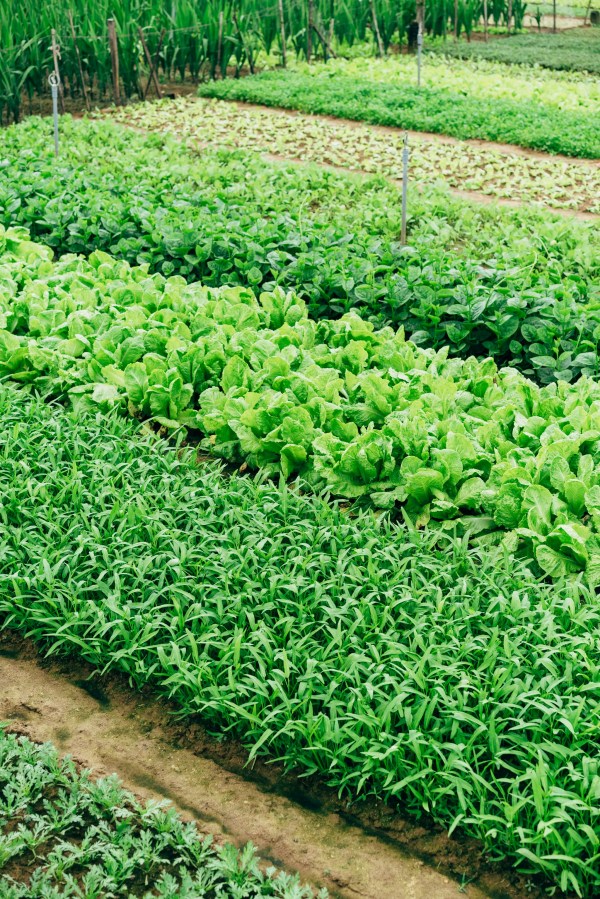
If regulated effectively, GM crops have the potential to make U.S. agriculture more sustainable and climate resilient. When designed with climate-smart features, these crops can significantly enhance nutrient or photosynthesis efficiency, provide flood, drought, and disease resistance, and even improve soil carbon sequestration.

Continue reading “The Urgent Need to Update the Regulation of GM Crops”

Food, community, and belonging: Our Seat at the Table

by Marin Milken*

[This is one in a series of occasional posts by Los Angeles high school students working with and studying food systems.]

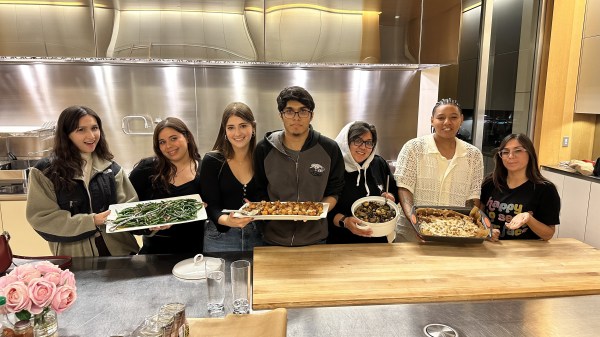
Inspired by the meals I made for my family and friends during the pandemic, I founded Our Seat at the Table to engage with questions of food, community and belonging. Though there are various food-related initiatives that Our Seat will continue to tackle through its programming, I wanted our first endeavor to help with the widespread national issue of food insecurity. Food insecurity, in simplest terms, is when people neither have enough to eat, nor know where their next meal is coming from. The latest State of Food Security and Nutrition in the World (SOFI) report indicates that in comparison to 2019, the number of people worldwide affected by hunger has risen by over 122 million. In the United States, food insecurity is addressed through Supplemental Nutrition Assistance Program (SNAP) benefits, which aim supplement low-income families’ groceries, so that they can access the food that they need to be food secure. But key findings in a recent report from the Robert Wood Johnson foundation highlight and demonstrate that SNAP benefits don’t cover the cost of moderately priced meals in 78% of US counties. With this statistic in mind, it’s unlikely that SNAP benefits are able to cover the costs of healthier options, such as organic produce. Programs such as SNAP – and its inability to adequately address the food needs for so many in this country – highlight a large systemic gap between those who are food insecure and food secure, despite SNAP being touted as a successful safety net for those who are food insecure.

Continue reading “Food, community, and belonging: Our Seat at the Table”

A Science and Policy Interface in Global Food Governance:

 The High Level Panel of Experts of the World Committee of Food Security

by Hilal Elver*

Global food insecurity is a highly complicated, persistent, and multi-dimensional issue that involves multiple sectors, various players, and policy domains (McKeon 2021). It appears in various ways in the different regions of the world, and it has a vast variety of interdependent underlying structural causes that are also linked to other global issues. In times of massive crises, the international community focuses on establishing effective food governance (McKeon 2015).  The sudden spike of food prices in 2007-2008 created major political uprisings in many developing countries. At that time, improving global food governance became a central focus of international discussions. As a result, in 2009, the Committee of the World Food Security (CFS) (originally created in 1974 as a UN intergovernmental body) was reformed and renewed to serve as a forum for review and follow up for food security policies. Since then, CFS is widely seen as the “foremost inclusive international and intergovernmental platform”for food security and nutrition globally.

Continue reading A Science and Policy Interface in Global Food Governance:

Dr. Sara Bleich, Director of Nutrition Security and Health Equity for the Food and Nutrition Service, USDA, appears on Repast

Repast is the food law and policy podcast produced by the Resnick Center for Food Law and Policy. Each month Michael Roberts and Diana Winters interview a thought leader in the field of food law and policy to discuss past achievements, current developments, and future challenges. You can find Repast on Apple Podcasts, Spotify, or wherever you listen to podcasts.

This month , Michael and Diana talk with a very special guest–Dr. Sara Bleich, the Director of Nutrition Security and Health Equity for the Food and Nutrition Service, USDA.   Dr. Bleich is leading the department’s work to counter food and nutrition insecurity in the United States.  In this episode, Dr. Bleich discusses the USDA’s Actions on Nutrition Security, the difference between food security and nutrition security, health equity, structural racism, the upcoming historic White House Conference on Hunger, Nutrition, and Health, and much more.

Dr. Sara Bleich is on leave from her tenured position as a Professor of Public Health Policy at the Harvard T.H. Chan School of Public Health.  She is a well-regarded public health policy expert specializing in food and nutrition policy and the author of more than 150 peer-reviewed publications. Her research centers on food insecurity, as well as racial injustice within the social safety net. Dr. Bleich holds a PhD in Health Policy from Harvard University and a Bachelor’s degree in psychology from Columbia University.

In the first year of the Biden administration, Dr. Bleich served as Senior Advisor for COVID-19 in the Office of the Secretary. In January 2022, she transitioned to her new role as the first Director of Nutrition Security and Health Equity at the Food and Nutrition Service at USDA.  She will elaborate more on this role today.  From 2015-2016, she served as a White House Fellow in the Obama Administration, where she worked in USDA as a Senior Policy Advisor for Food, Nutrition and Consumer Services and with the First Lady Michelle Obama’s Let’s Move! Initiative. 

Michael T. Roberts is the Executive Director of the Resnick Center for Food Law & Policy at UCLA Law.

Diana Winters is the Deputy Director of the Resnick Center for Food Law & Policy at UCLA Law.

For more on the USDA’s Actions on Nutrition Security, see here.

See here for Secretary Vilsack’s address on the USDA’s Actions on Nutrition Security.

See here for the USDA’s new blog series on nutrition security.

Look here for information about the upcoming White House Conference on Hunger, Nutrition, and Health.

ENVIRONMENT AND HUMAN RIGHTS DURING ARMED CONFLICT: NORMATIVE AND LEGAL FRAMEWORK

Protection of Right to Food and Environment in Times of Armed Conflict

by Hilal Elver*

The following is the keynote address given by Hilal Elver to the Geneva Academy on June 8, 2022. Footnotes at end of article.

Internal and international armed conflicts are one of the major reasons for increased food insecurity and malnutrition. Despite well-established norms of international human rights law and international humanitarian law protecting the right to food, hunger and  malnutrition, as well as famine has skyrocketed in last few years. There is a shocking failure in addressing criminal acts of deliberate starvation and other severe violations of a fundamental human right: the “right to food.” This non-compliance by States and other political actors as well as the reluctance to implement existing international norms to protect human rights and the environment in times of war is a critical failure of international community.

Most recently, the war in Ukraine has elevated catastrophic hunger and malnutrition levels to the top of the global agenda. The war has raised awareness of ongoing widespread hunger and malnutrition even beyond Ukraine, as the parties to the conflict are the major players of global agricultural trade.

Article 11 of the International Covenant on Economic Social and Cultural Rights specifically recognizes “the fundamental right of everyone to be from hunger,” which further imposes an obligation on States to ensure “the satisfaction of, at the very least, the minimum essential level” of this right under all circumstances, including the times of war. Freedom from hunger is accepted as part of customary international law, rendering it binding for all states regardless of whether they are party to the Covenant. States cannot put aside or postpone the realization of this core component of the body of economic and social rights. According to their international legal obligations, States must continue to take deliberate and targeted steps using all appropriate means to fulfill these rights, even in times of conflict.  Yet, 60% of the people suffering from hunger and malnutrition globally live in conflict-ridden places, mostly in the Middle East and Africa.

Continue reading “ENVIRONMENT AND HUMAN RIGHTS DURING ARMED CONFLICT: NORMATIVE AND LEGAL FRAMEWORK”

Call for experts – High Level Panel of Experts on Food Security and Nutrition

The High Level Panel of Experts on Food Security and Nutrition (HLPE) is the United Nations body for assessing the science related to world food security and nutrition. 

During its 46th plenary session, the Committee on World Food Security requested the HLPE to produce a report on “Reducing inequalities for food security and nutrition”. As part of the report elaboration process, the HLPE is now calling for interested experts to apply to the ad-hoc Project Team for this report.   

Experts wishing to apply to this call shall find all the information here.

The importance of food literacy

by Rose Sarner* (Guest Blogger)

“It’s one thing to provide people with food and it’s another to teach food literacy.” According to Fast Company, in 2021, “54 million Americans do not have access to healthy food,” and according to NPR, “80 percent of Americans fail to eat the recommended amounts of fruits and vegetables.”  

Healthful food and its many benefits are not an everyday reality for many families in the world. Here in the United States, young kids, teens, and adults have little knowledge about the foods they are putting into their bodies, where the food is coming from, or how different foods affect their overall health. The programs that are in place that are supposed to “educate” Americans are not engaging, clear, or very informative and this failing has contributed to the current health and obesity crisis in the United States. Making health sustainable is a multifaceted issue that has many layers. Many individuals fall short of taking care of their health issues because they do not know how to make a life switch and sustain their progress. 

Our schools can play an important role in changing dietary habits by educating students on food literacy.  According to The Centers for Disease and Prevention, “US students receive less than 8 hours of required nutrition education each school year, which is far below the 40–50 hours that are needed to affect behavior change.” Additionally, educators are encouraged to teach nutritional education classes at schools; however, given the important role a person’s consumption of healthy foods has in preventing chronic diseases and supporting good health, ideally, educators would provide students with more hours of nutritional instruction. Research has proven a connection between healthy diets and one’s emotional well-being, and how emotions may influence eating habits (The Centers for Disease and Prevention). Due to the large number of required classes in many schools across the country, administrators and teachers should consider ways to integrate nutrition education into their existing curriculums.  

Continue reading “The importance of food literacy”

Commentary – It is Time for the United States to Learn About the Right to Food.

by Hilal ElverMichael T. RobertsDiana R.H. Winters, and Melissa Shapiro

Cross-posted on HilalElver.org

On US Election Day 2021, the state of Maine voted in favor of a constitutional “right to food”—a historic development for a country that has long refused to recognize the human right to food.

Will the US finally acknowledge that this right actually exists?

Maine is officially the first US state to recognize a right to food. On Election Day this year, more than 60% of voters agreed that Maine should amend the state constitution “to declare that all individuals have a natural, inherent and unalienable right to grow, raise, harvest, produce and consume the food of their own choosing for their own nourishment, sustenance, bodily health and well-being.” Put simply, those in Maine will have agency over how they procure their food within the bounds of food safety laws and quality controls. The “right to food” amendment, which was proposed by Rep. Billy Bob Faulkingham (R-Winter Harbor) and received bipartisan support, was welcomed by a diverse constituency comprising small farmers, libertarians, liberals and those who believe that local producers should not have to compete with corporate food interests.

 Observing how Maine practically applies the “right to food” amendment in furtherance of the stated objective is critical. It will be necessary for Maine legislators to work closely with other state agencies to ensure that emerging programs and policies do not violate federal and state laws. It is also important for future decision-making to involve open consultation and participation from civil society and private sector. Being a trailblazer means that the path forward is not always clear; but those who have already dismissed the historic amendment as an empty promise or inoperable language are missing the point: Maine’s constitutional amendment is a transformative step towards the United States’ formal recognition of the human right to food.

Continue reading “Commentary – It is Time for the United States to Learn About the Right to Food.”

Service with FoodCorps

by Lucy Weiss*

With a background in Food Studies, an interest in food law and policy, and a belief in the power of education, I was searching for ways to combine my passions when a professor recommended FoodCorps to me. FoodCorps is an AmeriCorps service fellowship program focusing on student access to healthy food in schools that partners with local community organizations and school districts around the U.S. Service members participate in three primary activities: providing hands-on lessons, encouraging healthy school meals, and promoting a schoolwide culture of health. For example, members teach gardening and cooking and facilitate taste tests of new and different foods, although the COVID-19 pandemic limits some of what we are able to do. A number of service members also work with the cafeteria staff and school districts to ensure healthy food options are available and promoted at school lunches. Each state and site partner have different needs and therefore service varies from position to position. 

Continue reading “Service with FoodCorps”

Addressing Student Food Insecurity with a SNAP

by Kyle Winterboer*

As students return to in-person school, it is an important time to revisit the issue of food insecurity across America’s educational system. Particularly in Higher Education, recent studies suggest student food insecurity levels had reached as high as 38% in Spring 2020 and 5.8 of every 10 students experienced some form of basic needs insecurity. These rates have dramatically increased throughout the duration of the pandemic because students sent home for lock-down no longer had access to the already limited forms of support available in person on campuses.

A common tool used to fight food insecurity is the Supplemental Nutrition Assistance Program (SNAP). Despite its successes in reducing hunger and the economic benefits the program introduces to stimulate local economies, SNAP has many limitations and needs reform to better address food insecurity. One such limitation is that policy makers have long denied students access to SNAP. While the past decade has brought some expansions to grant students access, significant barriers remain. Barriers include restrictive student eligibility criteria and mixed messaging that leaves students misinformed of their eligibility. This policy failure leaves students hungry, many of whom would otherwise be eligible for aid if they were not pursuing higher education.

To show the real human impacts of these policy failings, journalist Alejandra Salgado details student stories in an article that appeared in CalMatters and was shared by Civil Eats: Colleges Rush to Sign Students Up for Food Aid, as Pandemic Rules Make More Eligible | Civil Eats

To provide additional context to the policies described in Salgado’s reporting, the below contains insights from Resnick Center Research Assistant Kyle Winterboer in this policy area. This research comes from his time with the student led research advocacy group “unBox”, the assistance of the UCLA CalFresh Initiative, his own application process amidst the pandemic, and from his time implementing a little known policy solution across UCLA departments to better support students in their SNAP applications.

The Resnick Center thanks the unBox Project and the UCLA CalFresh Initiative for readily sharing information for this report, and their continued dedication to the mission of ensuring equitable access to food for all.

Continue reading “Addressing Student Food Insecurity with a SNAP”

Website Powered by WordPress.com.

Up ↑