

By Lavanya Sathyamurthy*
In law school classrooms across the country, professors and students grapple with society’s most challenging issues and how to address them through the legal system. How can we ensure access to reproductive healthcare after the Supreme Court eliminated the constitutional right to abortion inDobbs v. Jackson Women’s Health Organization? How can we meet the needs of our unhoused population when several cities, including Los Angeles, have passed ordinances that ban camping on public property, criminalizing homeless encampments? Through these discussions, students are introduced to important concepts such as community lawyering, which encourages lawyers to work collaboratively with impacted communities, and cultural competency, which describes the ability to work effectively with people from different backgrounds. Theoretical discussions in seminars provide the basis for how students will eventually approach social justice issues in practice. However, the most fruitful learning opportunities arise at the intersection of pedagogy and practice, in clinical courses.
Clinical courses are a cornerstone of the law school curriculum. In the classroom, students learn both legal theories, such as abolition in the criminal context, and practical skills, such as client interviewing and legal research. In the field, they apply this knowledge to serve clients, taking on primary responsibility for every aspect of their case. Through these courses, students learn how to translate theory into practice to zealously advocate for their clients. Clinics also serve an important role in the community, offering assistance to and building relationships with local marginalized populations.
Duke Law Professor Allison Korn, director of the Duke Health Justice Clinic and a leader in the field of clinical legal education, can certainly attest to the importance of clinical coursework. Throughout her career, she has approached clinical education from every angle. She has designed and taught various clinical courses, including UCLA Law’s Food Law and Policy Clinic. She has overseen UCLA Law’s experiential program. She has even led national workshops on teaching social justice in the clinical classroom. In this interview, we discuss how her community engagement experiences informed her decision to enter clinical teaching and her process for designing clinical courses in various academic environments. We also explore her takeaways from overseeing clinical courses at UCLA Law and leading a national webinar series on curriculum development, as well as her goals for the Duke Health Justice Clinic.
Q: Even before clinical teaching, you have a lot of community engagement experience, from co-founding the Student Hurricane Network in law school to working at Bronx Defenders and National Advocates for Pregnant Women. Can you talk about that and how it motivated you to enter clinical education?
First of all, I think that there is tremendous value in direct services work, particularly if you’re a student interested in social justice or interested in pursuing a pathway in public interest law! In the post-Katrina environment in the Gulf Coast, I was beginning to learn the limitations of the law and the ways in which lawyers can use their tools to work within systems that actively oppress or malign or disenfranchise groups. So often, my clients in Bronx Family Court or Bronx Criminal Court would walk out, not necessarily feeling like they had won, even though we had gotten the order we wanted or the outcome we wanted.
I knew that I wasn’t equipped to spend my life within those systems and began exploring ways in which I could begin to try and chip away at the systemic issues that I was confronting, and that my clients were confronting. With National Advocates for Pregnant Women[AK1] [now called Pregnancy Justice], I got an exposure to that, because we did more amicus advocacy, appellate advocacy and legislative advocacy.
As part of the legislative advocacy work, I was going into legal classrooms and having town halls, engaging with students who were also excited about figuring out what their pathways were going to be. I felt like I got the same rush that I had previously gotten, when I would be preparing to go to trial.
It [clinical teaching] wasn’t something that I knew I was going to do in law school. I only tried to continue to follow my passion in ways that I felt were an investment in the future and an ability to sustain the work that I love doing.
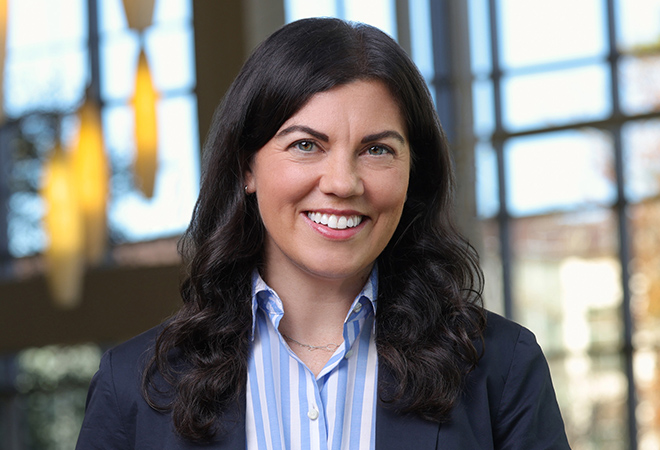
Allison Korn, Duke Law School
Q: In your clinical roles, specifically at the University of Baltimore School of Law, you supervised both direct representation and legislative advocacy projects? How did your prior experiences prepare you for this position?
I think that balance is really important. Advocacy is strengthened by experience in direct services. Specifically, in the Food Law and Policy Clinic, we saw that municipalities can draft solid and progressive ordinances and the state can come up with powerful legislation, at least on the page. But if they haven’t engaged with the community, then the implementation suffers, however well- intentioned the drafting is.
Q: You have also designed some of your own courses, both at the University of Mississippi School of Law and at UCLA Law, where you established the Food Law and Policy Clinic. Can you talk me through the process of designing these clinics? What did you want to prioritize?
Teaching at Mississippi was my first foray into the classroom. I was given this opportunity to design this course.Because I’m an alum of University of Mississippi Law School, I was trying to fill a gap that I knew was there when I was a student.
Mississippi presents a whole host of opportunities to pursue social justice. It is a place that is rife both with social and legal problems, and also with a long history of justice warriors. But unfortunately, at least during my law school experience, we weren’t given the opportunity to engage with social justice very much. So, I was hoping this class would give students an opportunity to explore what’s happening in their home state.
Poverty law issues and social justice issues impact not only Mississippians, but people across the nation. This course was informed by my clients’ experiences in the Bronx and in the Gulf Coast. We delved into issues like government benefits, housing, food, nutrition, child welfare and criminal justice. It was a discussion-based course, rather than a traditional lecture course.
It was fabulous to learn from and understand my students. Many of my students, for instance, had had experiences with housing instability. It was a real eye-opening experience and an opportunity to engage more deeply with the student body.
At UCLA, I received a lot of freedom and resources to build the Food Law and Policy Clinic from the ground up. I approached it as more of a public health-focused course rather than one that was strictly about food law and policy. I saw food insecurity and nutritional issues in the city and beyond, as kind of a canary in the coal mine when it came to other social issues. Everyone has a connection to food. It’s easier to bring people to the table, so to speak, to talk about other legal, social, and policy issues. So, although on paper it looks like food policy is very different from my previous experiences, like in public defense, they’re actually not, in my view.
What I tell my students all the time is that good lawyering is won and lost on relationships, and the relationships that you pursue with your individual clients, your peers, your supervisor, and other stakeholders. So, I would say that our top priority in the food law and policy clinic was teaching how to build, nurture, sustain, and leverage those relationships towards our goals.
Q: You have worked in so many different academic environments. How have you catered your teaching to every environment?
In some ways, Duke Law students and UCLA Law students are very similar. In other ways, they’re very, very different.
A large percentage [AK2] of our students go into Big Law in New York. We have a much smaller cohort of public interest students than the Epstein Program at UCLA.
In terms of learning objectives, I am a little bit more strategic about the materials that I present at Duke. For some students at Duke, the clinic experience represents their first exposure to community lawyering concepts.
So, I’m often populating my materials with introductory lessons on some of those social justice concepts that aren’t necessarily baked into the legal curriculum.
Q: In addition to your role as director of the Food Law and Policy Clinic, you also served as the assistant dean of experiential education at UCLA Law. What did you learn from overseeing all the clinics at the law school?
One of UCLA’s greatest strengths is that it is open to a myriad of opportunities when it comes to student learning.[AK3]
The Dean at the time was motivated to expand the experiential curriculum by leaps and bounds. Overseeing that was both exciting and also complicated and challenging. Being part of a clinic is very distinct from being in a legal services externship.
In an externship setting, for instance, a student works with a supervisor. In general, the [AK4] supervisor gives them a list of tasks and the student delivers upon those tasks.
In a clinical setting, there’s a specific methodology and pedagogy. It is part of the intellectual life of the law school curriculum. It is meant to not only introduce students to client representation or policy advocacy, but also to help the students take ownership of their cases. In that way, I’m less of a supervisor who delegates tasks and more of someone who is mentoring, teaching, and helping shape my students’ professional identity.
That is to say that it is not as easy as taking in a client, connecting them with a student, and overseeing the operations. It is a very deliberate and distinct process, so one can imagine how all the opportunities for experiential course offerings are also the challenges. When you are setting up a clinic and offering services free of charge to folks who otherwise cannot access counsel, you are setting expectations with that community. You need to establish accountability with that community. If you are setting up a clinic for one year, you need to anticipate that either you or someone else is going to fill that void when your students graduate or when the clinic’s no longer offered. So it cannot just be about student learning, even though that is a top priority.
Q: Shifting to curriculum development, you co-created a national webinar series-Teaching Justice-as part of the Clinical Legal Education Association’s Best Practices Committee. Can you talk about the biggest takeaways from this experience?
It is certainly a labor of love. My colleagues and I recognized that national clinical conferences are wonderful but expensive to attend.
Though it’s changed a lot in the last decade[AK5] , the conferences also tended to feature some of the same veteran clinical teaching voices nationally each and every time.
When we initiated the series, we wanted to gain a deeper understanding of how clinicians were incorporating burgeoning social movements into their curriculum. At the time, there were a lot of social movements, such as the Black Lives Matter movement, and there [AK6] was a lot of law student activism around immigration and labor issues.
We wanted to create a mechanism through which we could identify more junior voices in the Legal Academy who were teaching clinics, and we wanted to understand how they were teaching the concept of justice in their clinical classrooms. Then, we wanted to make it accessible to everyone, regardless of their research budget or level of access to national clinical legal conferences. The series has been a tremendous community builder.[AK7]
Q: What advice have you learned from these seminars?
Professor Norrinda Hayat, who is now at Fordham, wrote a piece called Freedom Pedagogy and was kind of unpacking it in her webinar session. She mentioned how she brings in Afrofuturism through Octavia Butler-esque Science Fiction stories to teach students how to use narrative tools to strengthen their advocacy[AK8] . That really spoke to me because I try to emphasize the power of narrative theory and storytelling as well.
Professor Rachel Lopez [AK9] coined the concept, ‘participatory scholarship,’ which she co-presented with 2 of her former clients, whom she helped obtain clemency after being in prison for decades. They co-authored a piece with her and co-taught a doctrinal criminal course with her at Drexel. It was so powerful to hear from them about their experience working with and contributing to a clinic.
Q: What have been hurdles in implementation?
Time. Because our students have to get equipped and comfortable to represent clients within just a few weeks’ time, and we only have a couple hours in a seminar session to deliver substantive training and to introduce this abstract notion of justice, when they haven’t even met a client yet. That’s a very tall order. So, we try as much as possible to thread justice learning into every aspect of clinical teaching.
Different schools also have different constraints on teaching certain subject matter or participating in legislative advocacy. Also, students sometimes push back on learning the more abstract aspects of lawyering when they feel like they need to be ready to practice once they graduate.
Q: Finally, I wanted to touch on your current role as the Director of the Health Justice Clinic at Duke Law. Can you talk about your work at the Duke Health Justice Clinic?
It is a really fun clinic to teach! The driver, as a clinician, is always he love and admiration that I have for my students, because they’re just the best. At Duke, I am lucky to have such tremendous students. They’re very bright and understand legal concepts, but they’re also kind and compassionate people who approach our client work with empathy and commitment. That makes everything else fall into place a lot easier.
The Health Justice Clinic is Duke’s oldest clinic. It was started in the 90s to provide for the legal needs of people affected by HIV and AIDS, at a time when there were virtually no legal or social services available to that population. The clinic would help with issues around discrimination, destigmatization, decriminalization, seeking federal benefits, and inadequate access to health care. Now that medical advancements have made living with HIV much easier, though discrimination is still a factor, I’ve had a lot of freedom to adapt our docket with that mission in mind. We primarily work on three tasks.
First, we have a partnership with a group of doctors at Duke University Hospital who treat patients with a history of drug use or opioid use disorder. We’re currently interviewing these patients to understand their barriers to accessing healthcare, the discrimination they have faced, and the stigma they experience. We are going to analyze that data and then adapt our docket to address some of those legal barriers.
We also represent clients who are seeking federal benefits through the Social Security Administration. If they’ve been denied a couple of times, then they’re able to appeal their case before an administrative law judge. Our students are going through medical records to build a case and then presenting that case to that judge when we get the opportunity to do so.
Finally, we have a few cases involving compassionate release. We represent federal prisoners, primarily in federal medical centers, who have serious or terminal illnesses. They are petitioning the federal government for a reduction in sentence that would allow them to live out the rest of their lives in their communities, where they could receive health care and spend time with their families as they convalesce.
Q: What are your goals for the clinic moving forward?
A lot of our docket does depend on the federal administrative state, and we will see what if any changes to the Social Security Administration impact our clients’ ability to access federal benefits and make adjustments as needed.
As for compassionate release, we have been focusing on federal prisoners, but there is a push to strengthen North Carolina’s state-based compassionate release program. I think we would like to focus our attention on the more local community. Then, we could access our clients a little bit more easily, which would make the relationships a lot more meaningful for our students.
Professor Korn’s passion for community engagement has shone through in every stage of her legal career, from community organizing in law school to working for advocacy organizations and teaching clinical courses. Her reflections highlight the importance of balancing direct services with policy advocacy and the value of learning from students and professors in different academic environments. Clinical education, at Duke Law and around the country, will constantly adapt to address the most pressing issues faced by our communities, from mass deportations to reproductive health care access.
*Lavanya Sathyamurthy is a 2025 graduate of UCLA Law and a Research Affiliate with the Resnick Center.
 On Food Law
You must be logged in to post a comment.