Executive Director Roberts on Partnering with the FAO on its Constitution Exhibition

by Michael T. Roberts

This post is the first of two by Executive Director Roberts on the FAO’s constitutional framework.

The Resnick Center is honored to be a partner to the Food and Agriculture Organization of the United Nations (FAO). The FAO was established in 1945 when its Constitution was signed and ratified by nations meeting in Quebec, Canada.  It was created as part of U.S. President Franklin D. Roosevelt’s broader efforts to advance the “Freedom from Want,” an aspiration he articulated in response to the catastrophic human suffering caused by hunger and malnutrition. The vision of an international organization grounded in governance principles was also central to the post-World War II global reordering.

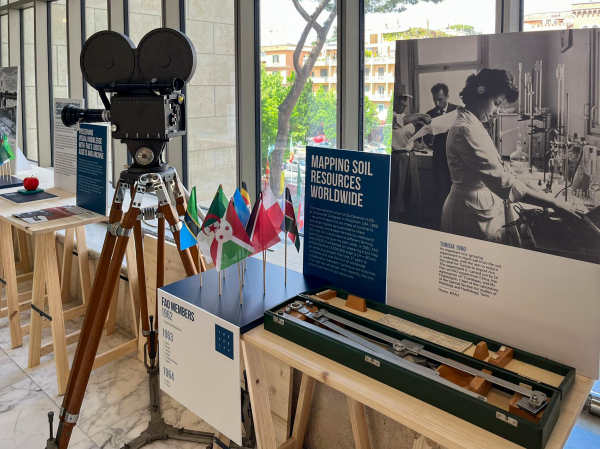
In May, I was honored to attend the next phase of a Constitution Exhibition in Rome – a project that I helped create that celebrates and contextualizes the role of the FAO Constitution in shaping the organization’s operations and aspirations. The exhibition complements my ongoing research and writing on the development of FAO’s constitutional framework from 1943 to 1945, as well as its further development and subsequent application in global food governance through 1965.

Continue reading “Executive Director Roberts on Partnering with the FAO on its Constitution Exhibition”

Introducing the Food, Race, and Equity Initiative

by Heliya Izadpanah and Lavanya Sathyamurthy*

This is Part I of a two-part post.

Dreaming of Food Justice in Law

By Heliya Izadpanah

UCLA Law was my dream school. Like many law schools, it catered to my interests in human rights law and environmental law. But what made the decision to attend UCLA Law a no-brainer were two rare institutional assets–its groundbreaking Critical Race Studies program paired with one of the few Food Law programs then existing in the nation.

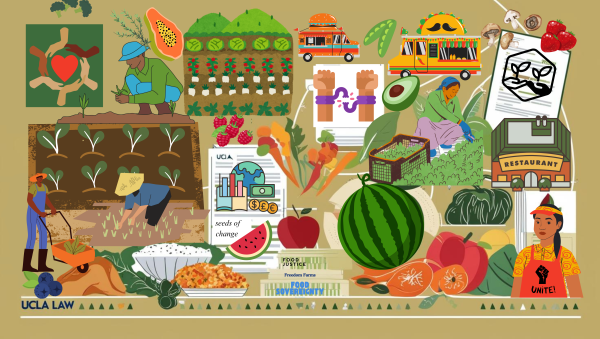
I was a passionate advocate for food systems justice. We all interact with food daily, yet its production and distribution are rarely observed in modern society. People often don’t know the conditions under which their food is produced or the legal machines maintaining these systems. But when it comes down to it, it’s virtually impossible to identify even a single food item that isn’t riddled with disparities of race, rights, and inequity. From growing food, to harvesting, processing, transportation, access, and health outcomes, every aspect of food systems is steeped in disparities of race, gender, wealth, status, and ability.

As a teenager, I was inspired by Black Power activists and other POC leaders steeped in food systems—Fannie Lou Hamer and the Freedom Farms Collective, Black Panthers like Erika Huggins who created the nation’s first free breakfast program, and Shirley Chisholm, a key architect of WIC and SNAP programs. Similarly, I looked up to the founding organizers of Farmworkers United—Dolores Huerta and Cesar Chavez—for their achievements in food production. Each of these leaders knew the power of food, revealing its power to either hold one in oppression or to act as a focal point for movement building, community power, sovereignty, and emancipation. I was eager to learn how to use law as a tool for food systems justice and get involved in the food law program.

Continue reading “Introducing the Food, Race, and Equity Initiative”

Introducing the Food, Race, and Equity Initiative, Part II

by Heliya Izadpanah and Lavanya Sathyamurthy*

This is Part II of a two-part post.

Why Start Here?

by Lavanya Sathyamurthy


UCLA, home to the Resnick Center for Food Law and Policy and the Critical Race Studies Program, is the perfect place to start a movement focused on infusing issues of equity into food law curricula. The Resnick Center for Food Law and Policy adopts a multi-faceted approach to legal research and scholarship, through courses, conferences, and academic collaboration. The Center offers various classes at the law school. Specifically, the ‘Food Law and Policy Seminar’ exposed me to a wide variety of approaches to food law. As my classmates presented on the right to food and food advertising to children, I realized that food law intersects with every area of law. Immediately, I wanted to connect food law with my background in critical race studies and, more specifically, my experiences as an Asian-American navigating the higher education food landscape. I wrote my paper about the importance of data disaggregation among racial groups within the Asian-American diaspora in crafting solutions to combat food insecurity at the University of California campuses.

Continue reading “Introducing the Food, Race, and Equity Initiative, Part II”

Introducing a New Food Law Course: The Public Interest in Agroecological Food Systems

The Resnick Center is excited to introduce a new food law course at UCLA School of Law this fall called “The Public Interest in Agroecological Food Systems: An Investigation,” led by Professor Paula Daniels. This seminar is designed to explore the world of agroecology and public policy approaches to institutionalizing its tenets within the US food system.

In the United States, the modern food system is mostly a private industry, with little public investment and fragmented efforts focused on food access and farm-level grant programs. This course aims to address this disparity by exploring opportunities for public sector engagement and directing the food system towards a holistic approach that aligns with public interest values such as environmental sustainability, worker well-being, small farm viability, and community health.

The course will provide a thorough examination of agroecology as a holistic and integrated approach to sustainable agriculture and food systems. Through case studies and guest lectures, students will gain insight into the underlying principles of agroecology and its practical application. The course will also analyze public policy and program approaches required to institutionalize these principles within the US food system.

For more information, please contact the Resnick Center at resnickcenter@law.ucla.edu.  We encourage any student interested in advocating for a more sustainable and equitable food system to sign up this fall!

Seeding the Future Foundation Supports Resnick Center

The Resnick Center is excited to share our good news!  

We have received a generous gift of $300,000 to our endowment fund from the non-profit, Seeding the Future Foundation, founded by Dr. Bernhard van Lengerich. Dr. van Lengerich, a leader in food science and technology, also serves as an outside advisory board member for the Resnick Center.  

Since its inception, the Seeding the Future Foundation has significantly contributed to transforming the food system.  Its unique Challenge Awards Program, hosted by the Institute of Food Technologists, awards up to $1 million in grants and prizes annually for highly impactful innovations to generate healthier people and a planet.  Since 2021, Seeding the Future has received over 1,500 submissions from academic and research institutions, non-profits, and for-profits, representing over 75 countries, for innovation across the food system.  

The endowment gift to the Resnick Center will forward the missions of the Center and of Seeding the Future by supporting legal education and the development of scholarship and tools to bolster innovation that provides equitable access to safe, nutritious, sustainable, affordable, and trusted food.  

Thanks to a previous operational gift from Seeding the Future, the Resnick Center has developed a Model Food Regulatory Strategies Initiative to be launched in the second half of 2023. The Initiative identifies and amplifies positive systems-thinking approaches to food law and policy by showcasing select model regulatory strategies derived and synthesized from best regulatory practices worldwide.  This new endowment funding from Seeding the Future will enable the Resnick Center to continue to develop these types of initiatives, strategies, and tools to encourage and facilitate innovation for healthier people and the planet.   

Renewed FAO/Resnick Center Partnership

by Michael T. Roberts

I am pleased to announce that the Food and Agriculture Organization (FAO) of the United Nations has renewed its partnership with the UCLA Law Resnick Center for Food Law & Policy. An announcement can be found here.

The FAO is the largest and oldest sub-agency of the UN and is headquartered in Rome, Italy. The partnership was initially formed in 2019 when FAO Director-General José Graziano da Silva visited the Center in Los Angeles and spoke at the law school along with Hilal Elver, former UN Special Rapporteur on the Right to Food and a Global Distinguished Fellow at the Center. I am also appreciative of Hilal’s tireless efforts in pulling together this first meeting.

This renewed partnership will elevate the Resnick Center’s role in developmental work conducted by the FAO Development Law Service and complement the Resnick Center’s growing international and comparative food law focus. This focus consists of an upcoming book on international food law and other publications, the development of an online platform to publish best practices in mission-driven food law approaches based on comparative analysis, and a major white paper exploring optimal international public-private strategies in food regulation.

We also look forward to leveraging these projects into strategic collaboration with leading global universities, law firms, and organizations. Finally, as always, we hope to translate these projects and collaboration into opportunities for law students.

Further Solutions to the Honey Fraud Problem

This is the fourth of four posts by students in the UCLA Law Food Law and Policy Clinic on honey adulteration, honey litigation, and potential policy solutions to the problem of honey fraud.

By Terra Duchene, Aris Prince, Victoria Russell, Candace Yamanishi*

This post outlines the actors who can make a significant impact to the honey fraud problem and suggests potential starting points for solutions.

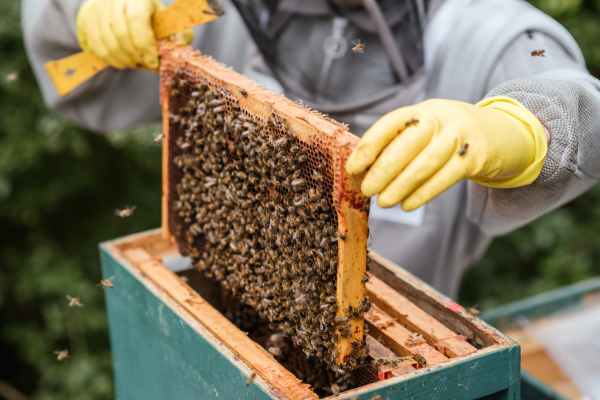
Beekeepers like Chris Hiatt are desperate for a solution. Honey adulteration is a threat to the survival of U.S. bees and beekeepers, which in turn, is a threat to food growing in the U.S., since 1/3 of the food grown in the U.S. depends directly or indirectly on bees. Just as the bee is endangered, so too is the U.S. beekeeper. The livelihood of essential beekeepers, the well-being and survival of honeybees, and, ultimately, the success of crops that are essential to our agricultural system, are being severely endangered by the relatively unknown but extremely large-scale adulteration of honey. Ultimately, putting a stop to honey fraud is vital to our environment and those who dedicate their lives to cultivating it. We must end honey adulteration in all its forms. 

Continue reading “Further Solutions to the Honey Fraud Problem”

Legal Recourse for Self-Regulation in the Honey Industry

This is the third of four posts by students in the UCLA Law Food Law and Policy Clinic on honey adulteration, honey litigation, and potential policy solutions to the problem of honey fraud.

By Terra Duchene, Aris Prince, Victoria Russell, Candace Yamanishi*

The American honey industry has been aware of the honey fraud problem for a long time. This post outlines fraudulent conduct in the honey certification space and describes a new California lawsuit that tackles honey adulteration.

 In 2010, four North American honey packers and importers set up a certification program called True Source to guarantee the origin, safety, and purity of honey. Since the program’s creation, True Source participation has flourished. True Source representatives told the UCLA Food Law & Policy Clinic (“the Clinic”) that as of January 2021, 40% of honey sold in the USA and Canada is True Source Certified, and there are 820 participating companies: 22 packers, 23 importers, 95 exporters, and 680 beekeepers.

The True Source concept is simple. In theory, honey certified by the organization is regularly tested by third party laboratories for authenticity and is designed to allow honey to be tracked from the consumer, back through the supply chain, to the country of origin and the beekeeper who harvested the honey from the beehive. (True Source Standard; Complaint). The True Source participants are supposedly required to comply with specific standards (the “True Source Certified Standard”) to ensure the traceability and authenticity of honey at each stage in the supply chain.

Pages: 1 2

What is Adulteration?

This is the second of four posts by students in the UCLA Law Food Law and Policy Clinic on honey adulteration, honey litigation, and potential policy solutions to the problem of honey fraud.

By Terra Duchene, Aris Prince, Victoria Russell, Candace Yamanishi*

Honey is made when the nectar and sweet deposits from flowering plants are gathered, stored, and dehydrated in honeycomb by honeybees. By definition, honey is a pure, single ingredient natural substance free of other substances or sweeteners. Honey adulteration occurs when real honey is added to or altered in such a way that it modifies its natural composition and integrity.

Adulteration occurs in a variety of forms, the most common being dilution with cheap fillers, sugary syrups, or other additives. This dilution increases the sugar content as well as changes the color and texture of the honey. Some honey producers extract the honey from the honeycomb prematurely[R(1] , or even substitute the nectar usually used to feed honeybees with sugar water to increase honey production and enhance their honey’s sweetness. Other common forms of adulteration include super heating and ultrafiltration or “resin stripping,” which remove pollen and naturally occurring enzymes to “improve” taste and smell and prevent the crystallization that retailers and consumers often find unattractive. Pollen removal is also an effective way to obfuscate efforts to track honey by adding local pollen after removing the foreign source pollen so that adulterators can circumvent labeling laws. Honey blending is another non-obvious form of adulteration where different honeys are blended in varying amounts and often misrepresented as a single type of honey. According to Amina Harris, Director of the Honey and Pollination Center at the UC Davis Robert Mondavi Institute for Wine and Food Science, a honey that has been labeled “Orange Blossom Honey” may be composed of only 28% orange blossom so long as that is the highest percentage present. The other 73% can be composed of any random mixture of various types of honey.

Pages: 1 2

Honey Adulteration and the Precarity of the U.S. Beekeeper

This is the first of four posts by students in the UCLA Law Food Law and Policy Clinic on honey adulteration, honey litigation, and potential policy solutions to the problem of honey fraud.

By Terra Duchene, Aris Prince, Victoria Russell, Candace Yamanishi*

Honey litigation is in the news again. Like previous honey lawsuits such as the Honeygate scandal—in which honey fraudsters were arrested for selling fraudulent honey that passed through U.S. Customs with fraudulent country of origin documents—the honey lawsuit filed March 29, 2021, in United States District Court, Eastern District of California, is targeted at actors responsible for flooding the U.S. market with cheap adulterated honey. Unlike previous lawsuits, this lawsuit focuses on a different set of victims: U.S. beekeepers who have been overwhelmingly harmed by adulterated honey flooding into the North American market.

Numerous commercial beekeepers in the U.S. are sitting on millions of pounds of real honey that they cannot sell. Why? Because the market is flooded with cheap, adulterated honey from out of the country, and producers of real honey in the U.S. are forced to sell at a loss. The Food Law and Policy Clinic at UCLA, an experiential course that partners law students with local and regional non-profit organizations and community groups to advocate for food movements, was paired with lifelong American beekeeper Chris Hiatt. Hiatt is fighting for the survival of his second-generation family business, Hiatt Honey, which has been owned by five Hiatt brothers for over five decades. Hiatt advocates to keep commercial beekeepers in business by preventing the continued proliferation of adulterated honey and honey fraud in the U.S.

Pages: 1 2

Website Powered by WordPress.com.

Up ↑